Automated archive
DLSS 5 vs. Human Pipelines: The Week AAA Tech Stacks Hit a Trust Wall
DLSS 5’s rocky rollout, Capcom’s human-only content stance, and a fracture between ESRB and PEGI have turned pipelines and trust into 2026’s main battleground. This week’s Sector Intelligence Report breaks down what these shifts mean for how you design, ship, and communicate your next game.
AI-generated summary. This archive article does not have a current recorded source check. Check linked sources before relying on details. Editorial policy

Sector Intelligence Report — Week of March 25, 2026
This week’s #gamedev signal traffic is dominated by a single question: who actually controls the frame — the designer, the renderer, or the legal department? From Nvidia’s embattled DLSS 5 rollout to Capcom’s hard ban on generative AI assets, and a quiet but critical fracture in global age-rating standards, the ecosystem is redrawing the boundaries between technology, authorship, and trust.
DLSS 5: When the Renderer Starts Arguing With the Design Doc
Nvidia’s DLSS 5 push has moved beyond a tech story into a design and governance crisis. The new pipeline promises aggressive frame generation and AI-driven reconstruction, but a growing chorus inside the development trenches is flagging a core issue: DLSS 5 doesn’t just optimize the image, it potentially overwrites authored intent.
Designers tune enemy silhouettes, animation timing, and lighting contrast to telegraph danger and enable mastery. With DLSS 5’s more assertive interpolation and upscaling, that authored clarity risks being smeared into probabilistic noise — especially in high-motion combat and low-light scenes. When the renderer becomes a "guessing machine," the feedback loops that underpin fair play and competitive readability can erode.

Compounding the design friction is a severe sentiment problem. Nvidia’s official DLSS 5 reveal trailer is getting hammered, with like ratios hovering around ~16% as players flood the comments with skepticism about latency, visual artifacts, and authenticity. Other tech demos are seeing similar backlash, signaling a broader trust recession in visual AI pipelines.
Nvidia CEO Jensen Huang has gone on the offensive, calling critics "completely wrong" and framing DLSS 5 as an amplifier for art, not a usurper. But that’s precisely where the battle line is forming: if AI-driven reconstruction is a post-process that can materially alter the designer’s authored moment-to-moment cues, then who owns the final frame — the level designer or the ML model?
For #indiegame teams and AA studios, the implications are sharp:
Tactical Takeaways for Developers
- Lock in a visual contract early. If you support DLSS 5, build test suites that validate key gameplay reads (hitboxes, silhouettes, projectile clarity) with and without the tech enabled.
- Design for multi-pipeline reality. Your game now lives across native, DLSS, FSR, and console-specific upscalers. Treat each as a different rendering environment, not just a toggle.
- Communicate your stance. Given the sentiment wave, a clear note in your development update about how you’re using (or intentionally not using) DLSS 5 can become a trust asset with your community.
Capcom’s No-AI-Assets Policy: Human-Only Pipelines as a Competitive Feature
While Nvidia leans hard into AI-augmented rendering, Capcom has drawn a bright red line on the content side: no generative AI assets in its games. Full stop.

This isn’t just a cultural statement; it’s a strategic one. Capcom is:
- Mitigating legal risk around training data provenance and copyright claims.
- Protecting brand consistency by ensuring every asset passes through a human-supervised pipeline.
- Selling trust to players increasingly wary of AI-generated everything.
In a week where DLSS 5 is under fire for potentially diluting artistic intent, Capcom’s human-only stance reads like a counter-programming move: our frames, our art, our liability. Expect this to become a marketing bullet point, especially for narrative-heavy and horror IP where atmosphere and authored detail are central.
For smaller studios, this doesn’t mean you must avoid AI tools entirely, but it does signal a shift: pipeline transparency is becoming part of your brand. If generative tools touch your concept art, VO temp lines, or marketing assets, be ready to explain where, how, and why in your next development update.
ESRB vs. PEGI: Rating Systems Fork, Complexity Rises
On the regulatory front, the ESRB has rejected PEGI’s new age-rating calibration for the US, citing potential confusion for consumers. The result is a standards fork: two major boards now maintain divergent age grids.
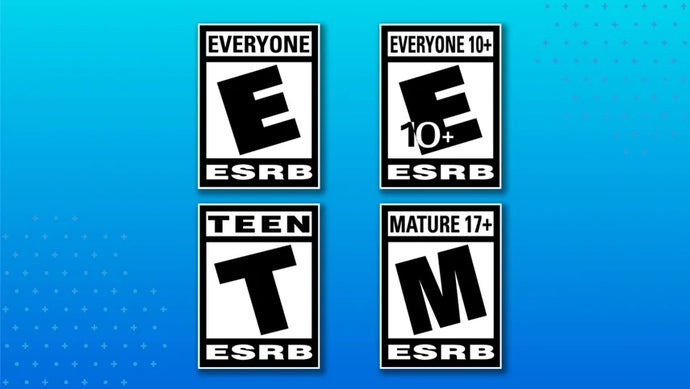
For global launches, this creates a new layer of overhead:
- Messaging complexity: Marketing beats, store pages, and parental guidance now need region-aware copy. A 16+ in one territory may not map cleanly to a Teen or Mature label elsewhere.
- Design friction: Content boundaries (violence depiction, monetization hooks, online interactions) may need territory-specific tuning if you’re operating close to rating thresholds.
- Operational load for #indiegame teams: What used to be a mostly one-pass certification mindset now becomes a multi-track compliance plan.
Studios should treat this as a permanent condition, not a temporary blip. Build rating strategy into your production roadmap early, and document where your content sits against both PEGI and ESRB criteria. That diligence can save weeks of painful last-minute edits.
Ubisoft Powers Down Red Storm: Legacy Nodes Go Dark
Ubisoft’s decision to cease game development at Red Storm Entertainment and cut 105 roles is another reminder that even legacy Tom Clancy strongholds are not immune to topological shifts in AAA networks. For the wider sector, this signals ongoing consolidation pressure and a move toward fewer, larger content hubs.
For developers, especially those displaced or adjacent:
- Expect talent redistribution into smaller studios, co-dev houses, and experimental startups.
- Watch for IP ripple effects as Ubisoft re-routes Clancy-adjacent work to other internal or external teams.
In parallel with the DLSS 5 and Capcom stories, Red Storm’s shutdown underscores the same theme: control over pipelines — technical, creative, and organizational — is the defining battleground of 2026.
Systems-Level Design: Engineering for Emergent Social Play
Amid all the pipeline turbulence, Virgil Watkins’ field report from D.I.C.E. offers a constructive counterpoint: treat multiplayer as infrastructure, not spectacle. His framework for emergent social play emphasizes:
- Flexible rule sets that invite players to bend systems without breaking them.
- Modular tools that let designers iterate quickly on social verbs (trading, teaming, betraying, signaling).
- Player-driven interactions as the primary content engine, rather than scripted set-pieces.
For teams shipping live-service titles or social sandboxes, the lesson is clear: while the industry argues over AI frames and content provenance, your most defensible asset is still the depth of your systems. A well-instrumented, moddable, and extensible core loop will outlast any single rendering fad.
Strategic Briefing: What to Do With This Week’s Intel
For studios across the spectrum, from AAA to #indiegame outfits, here’s how to operationalize this week’s signals:
1. Declare Your Tech Boundaries
- Decide now where you stand on DLSS 5 and generative AI assets.
- Make it part of your public-facing development update cadence to explain why.
2. Build for Multi-Standard Reality
- Treat ESRB and PEGI as separate but equal constraints.
- Budget time and localization passes for rating-specific messaging.
3. Invest in Systems, Not Just Surfaces
- Prioritize emergent-friendly systems design over one-off content drops.
- Instrument your social features so you can see how players actually bend your rules.
The throughline in all of this week’s traffic: trust is becoming a first-class design constraint. Whether it’s trusting the frame, the rating on the box, or the origin of a texture, studios that treat trust as part of their production pipeline — not just PR — will be the ones still standing when the next wave of tools and standards hits.
Sources and corrections
This archive entry does not have a verified article-source list. Images and video embeds alone are not evidence for every claim.
Found an error? Request a correction. Include the passage and a supporting source.