Automated archive
DLSS 5 Backlash, ESRB–PEGI Split, and Saudi Capital Closing on Capcom
DLSS 5 is igniting a fight over who really controls the pixels, just as ratings boards fracture and Saudi capital quietly locks down 10% of Capcom. This week’s Sector Intelligence Report maps the new fault lines every studio needs to track.
AI-generated summary. This archive article does not have a current recorded source check. Check linked sources before relying on details. Editorial policy

Watch: Transmitting Gameplay footage from the field: DLSS 5 reveal trailer under community fire
Sector Intelligence Report — Week of March 16–22, 2026
The last seven days have been defined by three converging fronts: AI-assisted rendering under siege, ratings boards fracturing their standards, and sovereign capital tightening its grip on legacy publishers. For studios and #gamedev leads, this is not background noise — it’s the new operating environment.
DLSS 5: When AI Rendering Collides With Game Design
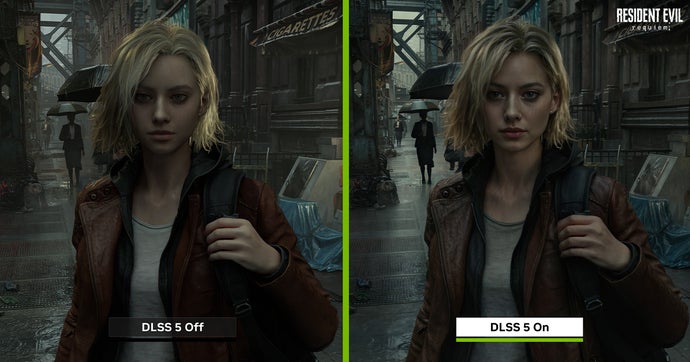
Nvidia’s DLSS 5 has become the flashpoint of the week. On paper, it’s the next leap in AI upscaling and frame generation; in practice, it’s triggering a serious values check inside the development community.
One widely-circulated critique framed DLSS 5 as a direct threat to foundational design pillars: silhouette clarity, animation readability, authored lighting, and systemic feedback. The core argument is simple: if the renderer becomes a probabilistic guesser, every carefully authored cue — from invincibility frames to muzzle flashes at range — risks being smeared into noise.
Players appear to agree. The DLSS 5 reveal trailer is reportedly sitting at around 16% likes on YouTube, with comments dominated by distrust of AI interpolation and suspicions that vendors are chasing synthetic frame counts over visual integrity. That’s a brutal sentiment signal for any tech that expects to be invisible and taken for granted.
Nvidia CEO Jensen Huang has pushed back hard, calling critics “completely wrong” and insisting DLSS 5 is an amplifier of art, not its replacement. For teams in active production, the pragmatic takeaway is this:
- Treat DLSS 5 as a platform constraint, not a free bonus. Design for its artifacts, not around them.
- Prioritise readability testing on AI-upscaled builds, especially in high-tempo combat and competitive modes.
- Communicate clearly in your development update beats how you’re validating visual integrity when DLSS or similar tech is enabled.
If you’re an #indiegame team targeting PC, this is doubly important: your art direction is a key differentiator. Don’t let a third-party pipeline rewrite it without your explicit sign-off.
Ratings Fragmentation: ESRB Rejects PEGI’s New Age Shift
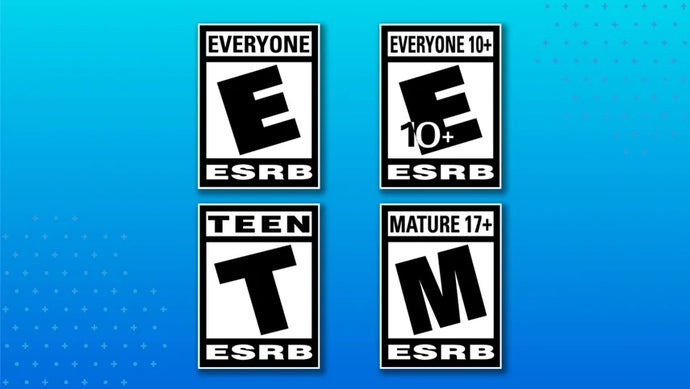
In parallel, the age-rating landscape just got more complicated. The ESRB has rejected PEGI’s new age-rating calibration for the US, citing potential confusion for consumers. That leaves two standards running in parallel rather than converging.
For publishers and production leadership, this is more than bureaucratic trivia:
- Messaging overhead rises: marketing and comms now have to explain divergent labels across territories.
- Compliance pipelines bifurcate: legal and production must track two slightly different rulebooks for content thresholds.
- UX friction risk: parents comparing digital storefronts may see different age badges for the “same” game.
Studios should:
- Lock a ratings strategy doc early in pre-production, with explicit ESRB/PEGI alignment notes.
- Ensure storefront copy, parental guides, and in-game disclosures are synced per region.
- Budget QA and legal time for potential mid-cycle ratings revisions if PEGI’s shift cascades into platform policy changes.
Capital Movements: Saudi Arabia Now Controls 10% of Capcom
On the corporate side, the Electronic Gaming Development Company (EGDC) — controlled by Saudi Crown Prince Mohammed Bin Salman — has acquired a 5% stake in Capcom. This stacks on top of the Saudi Public Investment Fund’s existing 5% from 2022, bringing Saudi-controlled capital to 10% of Capcom.
This is not a passive portfolio play. It fits a clear pattern of Saudi entities building positions across global entertainment and games to secure:
- Long-term exposure to durable IP (Resident Evil, Monster Hunter, Street Fighter)
- Strategic leverage in cross-media deals (film, TV, live events)
- Soft power via cultural exports
For developers, the practical implications:
- Expect more funding channels tied to Saudi-backed initiatives, especially for co-development, esports, and transmedia experiments.
- Japanese publishers may face shareholder pressure to accelerate globalisation of their IP — more live-service experiments, more mobile, more aggressive licensing.
- Teams working with Capcom IP should monitor for shifting priorities in greenlight criteria: recurring revenue, cinematic universes, and franchise elasticity will only become more central.
Structural Shifts: Ubisoft and Warner Bros Montréal Reshape Their Grids
Two major Western publishers quietly reconfigured their internal networks this week.
Ubisoft:
- Named industry veteran Julien Bares (ex-Tencent, ex-2K) as general manager for its new Creative Houses 3 and 5 within the Ubisoft Creative Network.
- Translation: Ubisoft is doubling down on a hub-and-spoke creativity model, centralising high-level IP strategy while letting execution remain distributed.
For teams inside or adjacent to Ubisoft, expect:
- Tighter cross-studio alignment on pillars like open-world structure, monetisation, and service design.
- More portfolio-level directives affecting greenlight, not just project-by-project pitches.
Warner Bros Montréal:
- Reportedly hit with staff cuts, with headcount reductions not yet fully quantified.
- This signals ongoing cost optimisation across WB’s AAA slate, and potential turbulence for any DC-related or live-service projects in the pipeline.
For external partners and vendors, this means:
- Build contingency plans around WB timelines.
- Expect longer decision cycles and more conservative risk profiles on new pitches.
Studio Shutdown: Red Storm Entertainment Goes Dark
Ubisoft is also ceasing game development at Red Storm Entertainment, with 105 roles cut in its North Carolina studio. Red Storm has been a key Tom Clancy node for decades; shuttering its dev operations is a symbolic and practical shift.
Implications:
- The Tom Clancy ecosystem will likely be further centralised into fewer core studios.
- Live products or co-dev initiatives that relied on Red Storm’s expertise may face handoff risk and knowledge loss.
- For the broader #gamedev labour market, this is another injection of experienced AAA talent suddenly in search of stable pipelines.
Indie founders and mid-size studios should read this as an opportunity: there is a growing pool of senior systems, network, and tactical shooter designers who may now be open to equity-based or remote-first propositions.
AI Tools: Between Hype and Reality
Amid the DLSS 5 storm, AI’s broader role in production also came under scrutiny. Take-Two CEO Strauss Zelnick dismissed the notion that tools like Google’s Project Genie can produce hit games at the push of a button as “laughable.”
The signal here is consistent with what seasoned developers already know:
- AI will accelerate content generation, prototyping, and testing.
- It will not replace the hard problems: taste, pacing, market fit, and long-tail live operations.
For both AAA and #indiegame teams:
- Use AI to shorten iteration loops, not to outsource direction.
- Keep a human in the loop for every player-facing system, especially narrative and economy design.
Strategic Takeaways for the Week
- Design for AI-rendered futures now: DLSS 5 and its successors are not optional on PC; bake their constraints into your visual and encounter design.
- Harden your ratings ops: ESRB/PEGI divergence means more complexity — centralise your compliance playbook before it becomes a launch risk.
- Follow the money: Saudi capital’s 10% stake in Capcom is part of a long game. Expect more cross-border funding offers — vet them with a clear IP and governance strategy.
- Plan around studio volatility: With Red Storm offline and WB Montréal downsizing, assume that AAA partner stability is a variable, not a constant.
- Treat AI as leverage, not leadership: From DLSS 5 to Project Genie, the pattern is clear — tools can’t replace creative command. Keep your vision at the centre of every development update.
This sector is not stabilising; it’s reconfiguring. Teams that build flexible pipelines, diversified funding strategies, and clear communication around AI and ratings will be the ones still standing when the dust settles.
Sources and corrections
This archive entry does not have a verified article-source list. Images and video embeds alone are not evidence for every claim.
Found an error? Request a correction. Include the passage and a supporting source.