Automated archive
DLSS 5 Backlash, ESRB vs PEGI Split, and Saudi Capital’s Quiet Capcom Power Play
DLSS 5’s AI‑driven rendering is colliding with core design principles just as ratings standards fracture and studio layoffs reshape the AAA map. Meanwhile, Saudi capital quietly tightens its grip on Capcom, and executives warn that AI is a tool—not a magic button—for the next era of game development.
AI-generated summary. This archive article does not have a current recorded source check. Check linked sources before relying on details. Editorial policy

Watch: Transmitting Gameplay footage from the field: Nvidia DLSS 5 official reveal trailer
Sector Intelligence Report // Weekly Briefing
The last seven days have been a stress test for the games industry’s foundations: rendering pipelines, ratings standards, studio stability, and ownership of legacy IP all came under pressure. This report maps the signal for #gamedev teams, #indiegame outfits, and publishers trying to read the next 12–24 months, not just the next quarter.
DLSS 5: When the Renderer Starts Arguing With Design
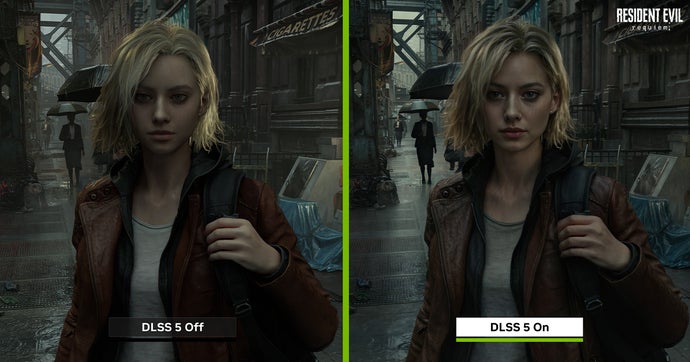
Nvidia’s DLSS 5 has shifted from tech showcase to flashpoint. On paper, it’s the logical next step in AI‑driven upscaling and frame generation. In practice, it’s igniting a core design question: who ultimately authors what players see—your engine, your art team, or Nvidia’s neural net?
A widely shared critique frames DLSS 5 as a direct threat to authored clarity: silhouettes blur, animation timing feels off, and lighting intentions get reinterpreted by a model trained to prioritize temporal stability and perceived sharpness over systemic readability. Designers tune enemy tells and environment contrast for gameplay; DLSS 5 retunes the final image after the fact.
The backlash is measurable. Nvidia’s DLSS 5 reveal trailer is sitting at roughly 16% likes on YouTube, with comment threads dominated by distrust of AI interpolation, ghosting, and input latency concerns. That’s not just marketing noise—it’s a warning that players are no longer passively accepting visual compromises in exchange for higher frame counters.
Nvidia CEO Jensen Huang has gone on record saying critics are "completely wrong" about DLSS 5’s impact on art, arguing it’s an amplifier for developer intent, not a replacement. For studios, the reality will sit somewhere in between: DLSS 5 can absolutely rescue performance budgets, but only if you:
- Treat DLSS modes as design variables, not post‑launch toggles.
- Test encounter readability with DLSS 5 on by default, not as an afterthought.
- Lock in minimum spec and QA passes that account for AI artifacts as part of the gameplay loop.
For #gamedev teams—especially on PC‑first projects—this is now a core development update item, not a late‑stage graphics option.
Ratings Protocol Divergence: ESRB Rejects PEGI’s New Age Grid
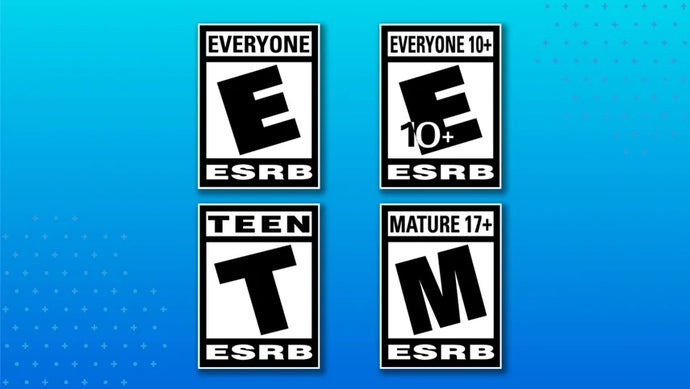
While rendering standards fragment on the tech side, ratings standards are splitting on the policy side. The ESRB has formally declined to adopt PEGI’s new age‑rating calibration for the US, citing potential user confusion.
Practically, this creates a dual‑track compliance landscape:
- Two parallel age systems for global releases.
- Divergent messaging on storefront pages, parental controls, and marketing.
- Extra localization and UX overhead for both AAA and #indiegame teams shipping cross‑region.
For bigger publishers, this is an annoyance; for smaller studios, it’s a planning risk. Every new label, descriptor, and age band is another point where your Steam page, console store tile, and social media creative can drift out of sync. If you’re building a live service or a long‑tail premium title, budget time to:
- Maintain separate ratings copy and icon sets per region.
- Update parental guidance FAQs and community docs to explain discrepancies.
- Align with your distributors early so PEGI vs ESRB mismatches don’t stall certification.
Studio Shockwaves: Red Storm Goes Dark, WB Montréal Tightens
The consolidation wave continues to hit legacy studios. Ubisoft is ceasing game development at Red Storm Entertainment, cutting 105 roles at the North Carolina outfit that helped define the Tom Clancy brand. Red Storm’s shift from active development to silence is more than a headcount story—it’s a signal that Ubisoft is re‑routing its internal network around larger, multi‑IP structures.
In parallel, Ubisoft has appointed industry veteran Julien Bares (ex‑Tencent, ex‑2K) as general manager for Creative Houses 3 and 5 within the Ubisoft Creative Network. Translation: more centralized governance over pipelines and IP, fewer semi‑autonomous fiefdoms like Red Storm.
Warner Bros Montréal is reportedly undergoing staff cuts as well, with unknown headcount reductions. With Gotham Knights still fresh in the rear‑view mirror, any restructuring there raises questions about DC‑related pipelines and WB’s appetite for big, risky AAA bets versus safer licensed plays and transmedia tie‑ins.
For developers, the pattern is clear:
- Fewer mid‑sized AAA studios; more mega‑hubs and outsourced satellite teams.
- Increased pressure on tooling and AI‑assisted workflows to compensate for leaner core teams.
- A premium on transferable skills—engine fluency, live‑ops literacy, and cross‑platform experience.
Capital Injection: Saudi Arabia Quietly Accumulates Capcom
Saudi Arabia’s Electronic Gaming Development Company (EGDC), controlled by Crown Prince Mohammed Bin Salman, has acquired a 5% stake in Capcom—on top of the Public Investment Fund’s existing 5% from 2022. Net outcome: 10% of Capcom is now wired into Saudi capital.

This doesn’t translate to direct creative control today, but it does matter strategically:
- It strengthens Saudi leverage in future funding rounds, partnerships, and co‑development deals.
- It positions Riyadh as a long‑term stakeholder in franchises like Resident Evil, Monster Hunter, and Street Fighter.
- It normalizes a pattern: Saudi entities quietly accumulating minority stakes across Japanese and Western publishers.
For external studios, this could manifest as:
- New co‑funding opportunities tied to regional expansion in MENA.
- More event and esports investment around Capcom IP.
- Potential pressure toward transmedia—film, TV, and theme‑park‑style experiences that align with broader entertainment ambitions.
Executive Signals: AI, Business Models, and the Next Recode
Take‑Two CEO Strauss Zelnick has dismissed the idea that tools like Google’s Project Genie can generate hit games at the push of a button as “laughable.” His stance is that AI will accelerate production but won’t replace the core loop of craft, iteration, and vision.
Hasbro CEO Chris Cocks, meanwhile, is calling for the industry to “think about things differently”—a polite way of saying that current monetisation loops, IP exploitation patterns, and risk models are not built for the next decade.
Connect these dots with Disney’s reinforcement‑learning work on Olaf’s quieter locomotion and you get a consistent theme: AI is moving from novelty to infrastructure. It will:
- Optimize micro‑behaviours (animation, pathing, audio) in ways that are invisible but profound.
- Challenge long‑standing production hierarchies, as tools become more capable.
- Force a re‑evaluation of ownership and authorship, especially when neural nets touch everything from visuals (DLSS 5) to character motion.
For your next development update, the question isn’t “Are we using AI?” but “Where is AI already shaping our game—and are we okay with that?”
Actionable Takeaways for Devs This Week
- Plan around DLSS 5, don’t bolt it on. Treat AI upscaling as a first‑class citizen in your rendering and encounter design, or risk broken readability.
- Budget for ratings divergence. ESRB vs PEGI split means extra UX, marketing, and certification work—especially painful for small #indiegame teams.
- Assume studio volatility. Build careers and pipelines that can survive restructures; prioritize portable skills and cross‑engine fluency.
- Track capital flows, not just headlines. Saudi stakes in Capcom are part of a longer game that will influence funding, partnerships, and IP availability.
- Use AI as augmentation, not fantasy. Genie‑style “one‑click” promises are noise; focus on tools that genuinely compress iteration cycles without erasing your creative fingerprint.
The sector isn’t just evolving—it’s forking. The studios that thrive will be the ones treating these shifts as design constraints, not background noise.
Sources and corrections
This archive entry does not have a verified article-source list. Images and video embeds alone are not evidence for every claim.
Found an error? Request a correction. Include the passage and a supporting source.