Automated archive
Valve vs PlayStation, Saudi Capital in Capcom, and Hasbro’s Call to Recode the Industry
Valve is emerging as PlayStation’s next major rival while Saudi capital quietly locks down 10% of Capcom and Hasbro’s CEO calls for a fundamental recode of games industry strategy. From AI-powered mobile chips to reinforcement-learned robots and shifting publisher portfolios, the next decade of gamedev is being...
AI-generated summary. This archive article does not have a current recorded source check. Check linked sources before relying on details. Editorial policy

Watch: Transmitting Gameplay footage from the field: Hasbro CEO signals a strategic reset for games
Sector Intelligence Report // Breach.gg
Window: Last 7 days
Tags: #gamedev, #indiegame, development update, industry analysis
The last cycle has been less about flashy releases and more about deep structural rewiring: capital flows are shifting, platform power is being challenged, and legacy brands are quietly repositioning for the next decade of interactive entertainment.
1. Hasbro: “Think About Things Differently” or Get Left Behind
Hasbro CEO Chris Cocks is effectively calling time on the current generation of games-business orthodoxy. His message: the video game industry’s existing pipelines and monetisation loops are not future-proof.
For developers and publishers, this translates into three pressure points:
1.1 IP as Systems, Not Just Skins
Hasbro’s catalogue (D&D, Magic, Transformers) has always been systems-heavy. The subtext of Cocks’ warning is that brands must be designed as live, interoperable systems across tabletop, digital, and transmedia – not just licensed skins dropped into gacha funnels.
Actionable read for #gamedev teams:
- Treat IP bibles like design system docs, not just lore dumps.
- Build tooling to share rulesets, economies, and progression models across multiple titles.
1.2 Monetisation: Beyond the Battle Pass Plateau
The “battle pass + cosmetics + seasonal FOMO” stack is saturating. Expect:
- More value-aligned subscriptions (per-franchise or per-ecosystem rather than per-title).
- Experiments in earned ownership (cosmetics, boosts, or access tied to long-term engagement rather than pure spend).
For #indiegame studios, this is both threat and opportunity: the incumbents will experiment slowly; indies can prototype new value exchanges first.
1.3 Player Relationships as Long-Horizon Contracts
Cocks’ framing implies a move from transactional to contractual player relationships: long-term, multi-title, cross-media engagement arcs. Think:
- Cross-game progression vaults.
- Franchise-wide reputation systems.
- Persistent identity that follows players across products.
Studios planning their next development update should assume players will increasingly expect continuity: unlocks, cosmetics, and status shouldn’t die with a single game.
2. Valve vs PlayStation: The Platform War Spills Fully Onto PC
A former Sony dev flagging Valve as PlayStation’s “next big competitor” isn’t hyperbole – it’s a recognition that PC has become a primary front, not a side theatre.
2.1 Steam Deck as a Shadow Console
Valve’s hardware plays (Steam Deck and whatever comes next) are eroding the classic console wall:
- Sony’s first-party games are now expected to eventually ship on PC.
- Once on PC, Steam’s network effects (wishlists, community, modding, deep discounts) pull players into Valve’s orbit, not Sony’s.
For #gamedev teams, this intensifies the importance of:
- PC-first optimisation, even if console is your lead SKU.
- Deep Steam integration (achievements, cloud, community hubs) to ride Valve’s gravitational pull.
2.2 Legal and Licensing Crossfire Around Valve
Valve is simultaneously:
- Updating its stance in the ongoing New York lawsuit (competition and platform behaviour under scrutiny).
- Being sued by the UK’s Performing Right Society for allegedly broadcasting music on Steam without proper clearance.
This has direct implications for studios:
- Expect tighter compliance tooling inside Steam’s backend over time.
- Audit your audio pipelines now: every track, every library, every license. If Valve is being forced into more granular rights management, that friction will cascade down to you.
3. Capital Realignment: Saudi Stakes, NCsoft’s Mobile Push, and Global Production Meshes
3.1 Saudi Arabia Quietly Locks 10% of Capcom
The Electronic Gaming Development Company (EGDC), controlled by Saudi Crown Prince Mohammed Bin Salman, has acquired a new 5% stake in Capcom, on top of the Public Investment Fund’s existing 5% from 2022.
A full 10% of Capcom now sits under Saudi capital influence. While not a controlling share, this is:
- A strategic foothold in a major Japanese publisher with globally resonant IP (Resident Evil, Monster Hunter, Street Fighter).
- A signal that long-horizon, state-backed money is betting on premium AA/AAA IP as the safest store of value in games.
Developers should read this as confirmation that high-trust brands and durable IP will keep commanding outsized attention and funding.
3.2 NCsoft Buys 70% of JustPlay: Mobile Data and Ad-Driven Design
NCsoft’s $202M move to take 70% of Berlin-based mobile studio JustPlay is less about one studio and more about data gravity:
- JustPlay brings Western casual and ad-driven expertise.
- NCsoft gets deeper access to user acquisition, retention, and monetisation telemetry in Western mobile markets.
For mobile #indiegame teams, expect:
- Tougher UA economics as bigger players hoard more data and optimise ad funnels.
- Counterplay through distinctive creative, niche targeting, and community-led growth instead of pure ad spend.
3.3 Remote Control Productions Expands into Brazil
Brazilian studio Gameplan joining Remote Control Productions’ network extends RCP’s distributed development model into Latin America.
This matters because:
- It normalises multi-region, follow-the-sun production even for mid-sized networks.
- It opens more co-dev and work-for-hire pathways for studios in emerging markets.
If you’re a small studio in LATAM or similar regions, this is a proof point: global production meshes are hungry for reliable partners that can plug into existing pipelines.
4. Workforce and Leadership: Quiet Cuts, Loud Commitments
4.1 Warner Bros Montréal: Silent Staff Reductions
Reported staff cuts at Warner Bros Montréal are another data point in the ongoing AAA volatility trend:
- Big-budget, hit-driven pipelines remain fragile to delays and underperformance.
- Internal restructuring can ripple into schedule slips, feature cuts, or full project reboots.
For developers, the signal is clear: portfolio diversification (smaller, more frequent projects alongside tentpoles) is becoming risk management 101.
4.2 ProbablyMonsters Expands Its Leadership Stack
The March 2026 jobs roundup surfaces a key move: ProbablyMonsters is scaling its leadership team while many AAA outfits contract.
Interpretation:
- They’re positioning as a stable, multi-team umbrella that can incubate new IP with shared services.
- This model is increasingly attractive to senior talent burned by boom-and-bust AAA cycles.
If you’re planning your next career move or studio structure, track these umbrella models closely—they’re becoming an alternative to both pure indie and mega-publisher routes.
4.3 Microsoft’s “Always Invest” Directive in Games
Satya Nadella’s statement that Microsoft will “always” invest in video games, even amid Xbox leadership shifts, is a strong long-horizon commitment:
- Cloud, subscription (Game Pass), and cross-platform publishing remain core to Microsoft’s strategy.
- For external developers, Xbox and PC remain viable long-term partners, not experimental side bets.
5. Tech & Tools: AI on the Edge and Quieter Robots
5.1 Sumo x Arm: Testing AI-Driven Mobile Silicon
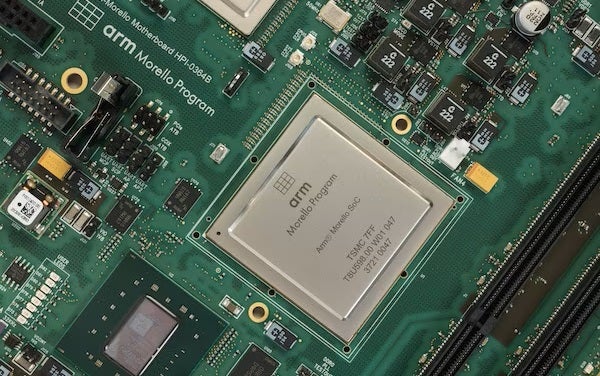
Sumo Digital partnering with Arm to stress-test AI-powered mobile chips is a forward-looking move that should be on every technical director’s radar.
Implications for #gamedev:
- On-device AI will enable smarter NPCs, personalised difficulty, and adaptive content without round-tripping to the cloud.
- Performance, thermals, and latency will define what’s actually shippable—Sumo’s tests will indirectly set expectations for the entire mobile sector.
Studios targeting mobile should start prototyping AI-assisted features that degrade gracefully on non-AI hardware.
5.2 Disney’s Olaf: Reinforcement Learning in the Real World
Disney’s R&D team using reinforcement learning to teach the Olaf robot to walk more quietly is more than a robotics curiosity:
- It’s a real-world example of RL optimising movement profiles under practical constraints (noise, stability, character fidelity).
- The same techniques can be applied to in-game locomotion, animation blending, and crowd behaviours.
For technical animators and AI programmers, this is a nudge to explore learning-based animation systems rather than purely handcrafted state machines.
6. Legacy Brands, Community, and the Long Tail
Larry “Major Nelson” Hryb joining Commodore International as a Community Development Consultant is a small but telling move:
- Legacy hardware brands are seeking modern community operating systems—Discord, social, streaming, and events—rather than relying on nostalgia alone.
- For retro-focused #indiegame teams, this signals more potential collabs, licensing deals, and co-marketing with revived hardware and classic brands.
Combined with Hasbro’s repositioning and Microsoft’s long-term stance, the pattern is clear: heritage IP is being actively retooled, not just preserved.
Strategic Takeaways for Devs This Week
- Re-architect your relationship with players. Think in terms of multi-title, multi-year contracts with your audience, not one-off releases.
- Plan for a PC-first, multi-platform reality. Valve’s rise as a direct PlayStation competitor means PC can’t be treated as an afterthought.
- Assume capital will chase durable IP and data. From Saudi stakes in Capcom to NCsoft’s JustPlay deal, long-term money is following strong brands and strong telemetry.
- Design for volatility. AAA instability and mid-tier consolidation make diversified portfolios and flexible teams a survival trait.
- Prototype around AI at the edge. From Arm’s chips to Disney’s Olaf, the frontier is AI that runs close to the player—on-device, in real time.
Use this week’s intelligence to tune your next development update, pitch deck, or roadmap. The studios that win the next cycle will be the ones already building for this new strategic terrain, not the last generation’s assumptions.
Sources and corrections
This archive entry does not have a verified article-source list. Images and video embeds alone are not evidence for every claim.
Found an error? Request a correction. Include the passage and a supporting source.