Automated archive / Monster Hunter Wilds
Monster Hunter Wilds Sector Intel: Performance War, Driver Directives, and 10★ Threat Escalation
Monster Hunter Wilds has shifted into full infrastructure warfare, rolling out back-to-back patches that tighten performance, lock down exploits, and prep the field for brutal 10★ threats. From strict GPU driver directives to deep rendering optimizations, Capcom is clearly tuning the engine for a more demanding...
AI-generated summary. This archive article does not have a current recorded source check. Check linked sources before relying on details. Editorial policy

Sector Intelligence Report: Monster Hunter Wilds – Systems War and 10★ Threat Readiness
Monster Hunter Wilds just pivoted from routine tuning to full-scale infrastructure warfare. Over the last seven days, Capcom’s deployment cadence has shifted from isolated bug fixes to a coordinated push on performance, stability, and late-game escalation. For hunters, this isn’t just quality-of-life—it’s a strategic reshaping of how the game hits your CPU/GPU and how you engage with endgame 10★ content.
This weekly brief breaks down the latest development update data, what it means for your rigs, and why the current patch window is a critical inflection point for both players and #gamedev observers tracking Monster Hunter Wilds’ live-ops strategy.
Patch 1.041.01.00 & 1.041.02.00: Stability as a Live Operation
Two back-to-back builds—Ver.1.041.01.00 and Ver.1.041.02.00—have been declared mandatory for online hunts and DLC access, signaling that Capcom now treats version parity as a hard requirement for the live ecosystem.
Driver Directives: Hardware as Part of the Design
Both patches come with explicit GPU marching orders:
- NVIDIA: GeForce 581.57+
- AMD: Radeon 25.9.1+ (with a red flag on 25.10.2+ for RX 5500 XT / 7800 XT and similar)
This is a notable move from a #gamedev standpoint. By explicitly naming driver branches and warning that newer AMD drivers may be “hostile variables,” Capcom is:
- Tightening the supported matrix to reduce edge-case instability.
- Acknowledging real-world PC variance instead of pretending all rigs behave the same.
- Treating driver choice as part of the player’s tactical loadout, not a background detail.
For Monster Hunter Wilds players, especially on PC, this effectively turns your driver version into a gameplay-adjacent decision: performance, crashes, and micro-stutter risk are now part of your build planning.
Critical Bug Neutralizations
Patch 1.041.01.00 targets systemic exploits and save integrity:
- Transcendence armor exploit neutralized – Armor can no longer exceed its intended unlocked cap, closing a power-creep loophole that risked destabilizing progression and balance.
- Seikret pendant loadouts secured – Secondary save slot loadouts now persist correctly after restart, a key fix for players running multiple builds.
- Carving HUD alignment corrected – Icon misalignment is resolved, restoring accurate feedback during one of the most time-sensitive post-hunt phases.
Patch 1.041.02.00 continues the cleanup:
- “Cannot hold any more.” Meld Relics blockage disarmed – Mutated Armaments crafting flow is restored, unblocking endgame forging pipelines.
- EW_30d41 communication error eliminated – A platform-wide fix for a title-screen retreat error that threatened online stability.
From a live-ops lens, this is a textbook stabilization wave: lock down exploits, secure inventories, and eliminate blockers in high-engagement systems like Meld Relics.
High-Tier Optimization: Infrastructure Warfare on Performance Bottlenecks
The most aggressive intel this week is the internal performance overhaul framed as “High-Tier Optimization Protocols & 10★ Threat Deployment.” This isn’t a cosmetic polish pass; it’s a structural rework of how Monster Hunter Wilds moves data through its rendering and simulation stack.
Key changes:
- Internal LOD auto-tuning – Level-of-detail now dynamically adjusts 3D assets for maximum clarity at minimal load, suggesting improved distance scaling and smarter mesh/texture swaps.
- Leaner spawn pipeline – Monster and endemic life spawns now run on a more efficient pipeline, likely reducing CPU spikes during encounter initialization and biome traversal.
- Effect caching – Repeated visual effects now hit a cache layer, cutting redundant compute and bandwidth costs on particle-heavy skills and monster attacks.
- Streamlined rendering paths – Frame-level rendering is described as “tighter,” implying reduced overdraw, better batching, or improved culling.
From a #gamedev perspective, this is the kind of mid-cycle optimization pass you usually see reserved for long-tail support, not this early in a game’s life. It suggests Capcom is:
- Future-proofing the engine for heavier late-game content and large-scale events.
- Reducing hardware barriers to keep more players in the online ecosystem.
- Preparing for more ambitious encounters that would have been too costly on the pre-patch pipeline.
For players, the impact is simple: higher frame stability during peak chaos—large monsters, dense effects, and multi-hunter operations—without forcing a hardware upgrade.
10★ Threats, Collaborations, and Endgame Escalation
The same intel drop explicitly name-checks 10★ Zoh Shia, 10★ Gogmazios, and special collaborations as part of the current threat profile.
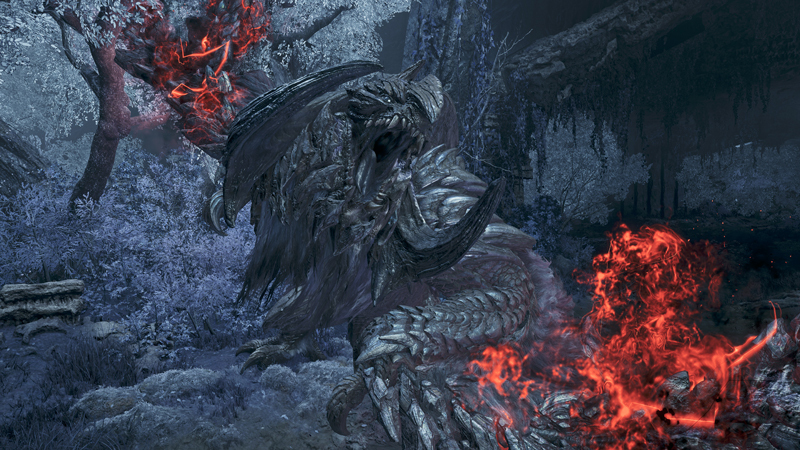
The message is clear: these optimization gains are not theoretical—they’re being banked to fuel 10★ content that pushes both mechanical and technical limits.
Strategically, this aligns with a few trends:
- Endgame as a performance stress test – 10★ hunts are effectively where the engine’s worst-case scenarios live: massive monsters, overlapping effects, and multi-phase arenas.
- Collaborations as concurrency spikes – Special collabs reliably surge player counts. Tightened rendering and driver directives help prevent those spikes from turning into instability events.
- Retention via challenge – By stabilizing systems and raising the ceiling with 10★ threats, Monster Hunter Wilds keeps its most engaged hunters—those most likely to stream, clip, and evangelize—locked in.
For #indiegame developers watching from the outside, this is a case study in how a AAA live title uses technical optimization as content enablement, not just as a patch-note bullet.
Strategic Takeaways for Hunters and Developers
For players:
- Update to Ver.1.041.01.00 and 1.041.02.00 or lose online and DLC access.
- Lock in NVIDIA 581.57+ or AMD 25.9.1+; treat newer AMD drivers with caution until validated.
- Expect smoother hunts, especially in high-effect, high-mobility encounters and 10★ operations.
For #gamedev and #indiegame teams tracking Monster Hunter Wilds:
- This week’s activity shows a deliberate shift from reactive bug fixing to proactive infrastructure optimization.
- Clear hardware directives, explicit exploit closures, and endgame-focused tuning demonstrate how Capcom is aligning technical debt reduction with content escalation.
- Monster Hunter Wilds is positioning its engine and live pipeline for sustained, high-intensity operations—exactly what you want before rolling out more 10★ threats, seasonal beats, and large-scale collaborations.
Monster Hunter Wilds isn’t just stabilizing; it’s arming up. The hunts are getting hotter, but your hardware no longer has to.
Sources and corrections
This archive entry does not have a verified article-source list. Images and video embeds alone are not evidence for every claim.
Found an error? Request a correction. Include the passage and a supporting source.
Your games, in one place
Keep up with Monster Hunter Wilds
Follow this game to collect its posts in your personal feed. Come back to see what you missed.
More to read about Monster Hunter Wilds
- Source-checked briefMonster Hunter Wilds Steam sale cuts price by 25%
A Steam announcement dated October 2 advertises Monster Hunter Wilds at 25% off. It also says two Monster Hunter bundles are discounted, including one pairing Wilds with Monster Hunter Stories 3....
- Source-checked briefMonster Hunter Wilds plans free unlimited hunter edits for 2027
The 2027 launch of Monster Hunter Wilds: Ascendance is planned to remove voucher and fee requirements for repeated hunter appearance edits in the base game. A December 3, 2026 update will...