Automated archive / Monster Hunter Wilds
Monster Hunter Wilds Sector Intelligence: Performance War, 10★ Threats, and Critical Patch Double-Tap
Monster Hunter Wilds just executed a two‑stage stabilization offensive, tightening performance, locking in driver baselines, and clearing critical progression bugs ahead of escalating 10★ threats. This week’s intel shows a studio treating optimization and live-ops like front-line systems, not background maintenance.
AI-generated summary. This archive article does not have a current recorded source check. Check linked sources before relying on details. Editorial policy

Sector Intelligence Report: Monster Hunter Wilds – Week of Feb 27, 2026
Monster Hunter Wilds just pushed through a tightly coordinated systems offensive: back‑to‑back patches, hard driver guidance, and a deep optimization pass aimed squarely at high‑end hunts and late‑game 10★ threats. This isn’t a content drop week—it’s a stability and performance war, and Capcom is clearly treating it like live-ops infrastructure, not a one‑and‑done patch.
In this report we’ll break down what changed, why it matters for serious hunters and #gamedev watchers, and how these moves set the stage for future 10★ deployments and collaborations.
Patch 1.041.01.00 & 1.041.02.00: The Double-Tap Stabilization Push
Capcom didn’t ship a single "catch-all" update—they executed a two‑step stabilization protocol:
Ver. 1.041.01.00 – Systems Stabilization Protocol
The first patch established a new baseline for Monster Hunter Wilds:
- Mandatory for online hunts and DLC – If you’re not on 1.041.01.00 or later, you’re effectively offline. This is Capcom drawing a hard line to unify the player base and simplify live-ops.
- Driver requirements formalized – NVIDIA GeForce 581.57+ and AMD Radeon 25.9.1+ are now the stated minimums. Anything older is a liability; anything newer on AMD (notably 25.10.2+ on RX 5500 XT / 7800 XT and similar) is flagged as a potential instability source.
- Transcendence exploit neutralized – The bug that allowed armor to exceed its intended unlocked state is gone. Balance-wise, this is critical: 10★ content only works if defensive scaling is predictable. Letting armor creep beyond spec would trivialize late‑game design.
- Seikret pendant loadout persistence fixed – Secondary save slot loadouts now correctly persist after restart. Small on paper, but it directly impacts build experimentation and fashion-hunting—the kind of friction that erodes long-term engagement.
- Carving HUD alignment corrected – HUD misalignment during carving is the sort of bug that sounds trivial until it interferes with quick-read loot sessions. For a loot‑driven loop, clarity of post-hunt feedback is non‑negotiable.
Ver. 1.041.02.00 – Flow & Connectivity Reinforcement
The follow-up patch 1.041.02.00 narrows in on progression flow and network integrity:
- Meld Relics "Cannot hold any more." bug resolved – Mutated Armaments were being blocked in the forging pipeline under certain conditions. That’s a direct hit to gear progression pacing. Fixing this restores the intended grind-to-power curve.
- EW_30d41 communication error eliminated – This error triggered when retreating to the title screen. It’s a classic friction point: players doing something completely normal and getting punished with an error code. Removing it stabilizes session transitions across all platforms.
From a #gamedev perspective, the cadence is telling: Patch 1.041.01.00 sets the platform rules (drivers, exploits, UI integrity), while 1.041.02.00 cleans up the progression arteries and network edges. This is what mature live service discipline looks like—small, fast, targeted.
High‑Tier Optimization: Infrastructure Warfare on Performance Bottlenecks
Beyond bug fixes, the most aggressive language this week is reserved for performance. Capcom is openly framing this as "INFRASTRUCTURE WARFARE" rather than a mild tuning pass.
Key technical moves called out in the intel:
- Internal LOD auto‑tuning – Level of Detail systems now dynamically tune 3D assets for clarity vs. load. For Monster Hunter Wilds’ sprawling biomes and dense monster encounters, smarter LOD means fewer CPU/GPU spikes when the ecosystem gets crowded.
- Leaner spawn pipeline for monsters and endemic life – Spawn logic optimization is critical in a game where AI, animation, and VFX converge in volatile, emergent encounters. A leaner pipeline means more consistent frame pacing when multiple large monsters or dense endemic clusters are active.
- Effect caching for repeat impacts – Repeated particle- and shader-heavy attacks are notorious for hammering lower VRAM or CPU-bound rigs. Caching those effects reduces redundant work and stabilizes repeated combos, especially in 10★ hunts where attack intensity climbs.
- Streamlined rendering paths – This is the quiet backbone change. Rationalizing render paths often yields fewer micro-stutters and more predictable frametimes—exactly what you want when you’re threading i‑frames through a 10★ monster’s enrage chain.
For high-end hunters pushing 10★ Zoh Shia, Gogmazios, and special collab threats, these optimization passes are not theoretical. They determine whether your input reads cleanly in the critical half-second windows that define success or a cart.
10★ Threats & Collaborations: Why Stability Matters Now
The intel repeatedly references "10★ Zoh Shia, 10★ Gogmazios & Special Collaborations", and that context is important. Monster Hunter Wilds is already leaning into ultra‑high‑tier encounters, and those fights are unforgiving on both players and hardware.
High‑end monsters tend to stack:
- Large, complex models with layered shaders
- Aggressive particle usage (projectiles, status, environmental destruction)
- Multi‑phase arenas with evolving states
If your performance dips during a transition or an enrage pivot, the design intent collapses. That’s why the team is front-loading this optimization phase: they’re building a stable runway for current and future 10★ deployments.
For #indiegame devs watching from the sidelines, this is a textbook example of late‑pipeline optimization with live telemetry: ship, observe how real players and real hardware react, then optimize the hottest paths instead of guessing in a vacuum.
Driver Orders: Why Capcom Is Naming and Shaming Versions
Capcom explicitly calls out NVIDIA 581.57+ and AMD 25.9.1+ as the minimum safe drivers, while warning that AMD 25.10.2+ can misfire on certain Radeon cards like the RX 5500 XT and 7800 XT.
That level of specificity is unusual—but smart:
- It reduces support noise. When crashes or hitches are reported, QA can immediately correlate issues against driver baselines.
- It signals to players that newer isn’t always safer on the driver front, especially when GPU vendors ship cutting-edge features that haven’t been fully validated against a complex title like Monster Hunter Wilds.
- It demonstrates tight coordination between engine, renderer, and platform teams—something every #gamedev studio aspires to but few execute on this visibly.
In short, Capcom is treating drivers as part of the live-ops stack, not a black box.
Visual Signal: Wilds in Motion
The official Monster Hunter Wilds trailer remains the best macro‑level read on why these optimization passes matter. The footage is dense with overlapping systems: shifting weather, multi‑monster skirmishes, and layered environmental hazards. Every one of those moving parts is a potential hitch point if the underlying engine isn’t ruthlessly optimized.
This week’s patches are essentially the invisible scaffolding that lets those cinematic moments survive contact with real hardware.
Platform & Ecosystem Watch: Beyond the Core PC/Console Loop
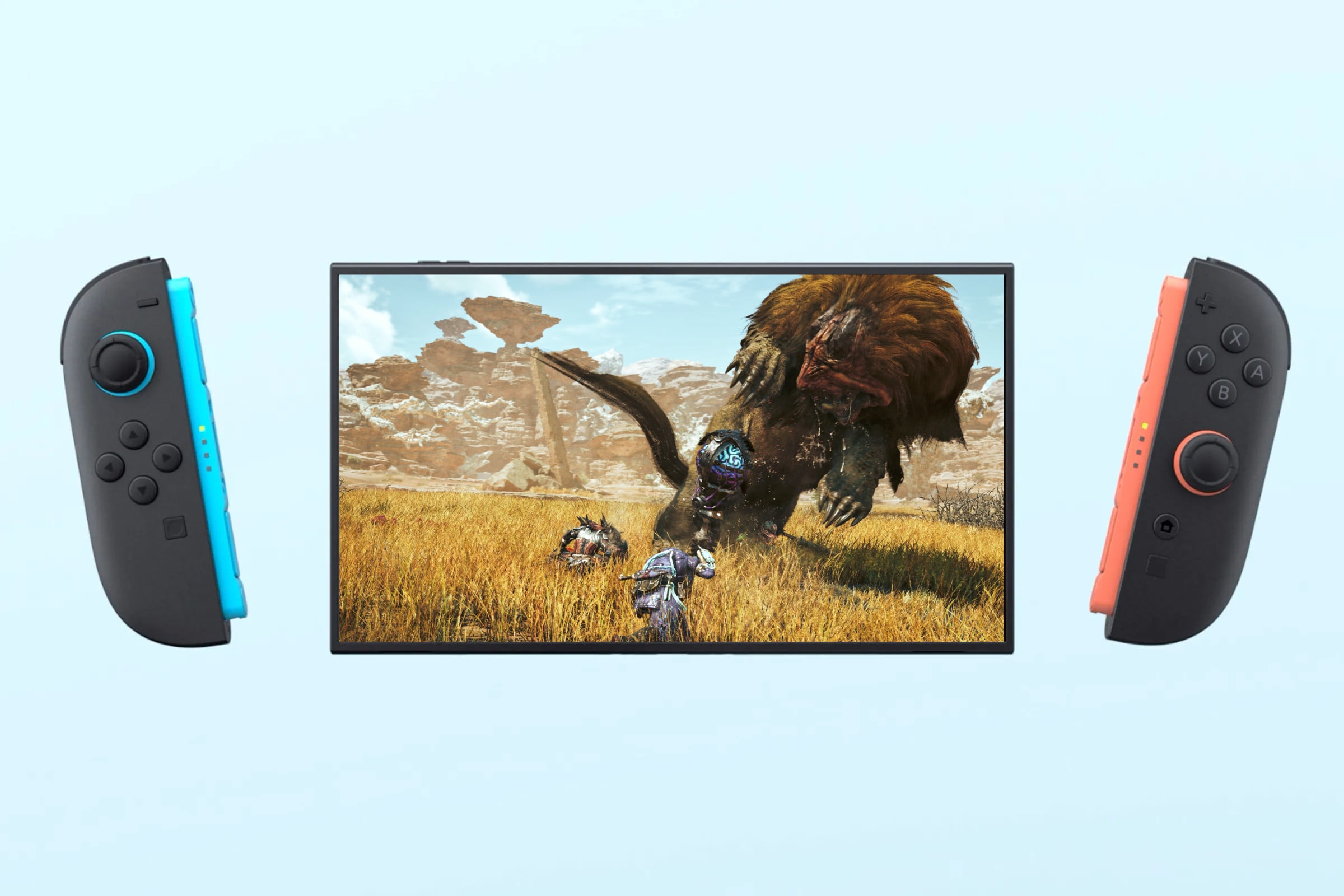
While the activity feed is focused on core patch notes and PC driver intel, the broader ecosystem conversation around Monster Hunter Wilds now includes portable and hybrid hardware. That context makes the current optimization push even more relevant.
Tech takeaways:
- Efficient LOD and spawn pipelines are platform-agnostic wins. What stabilizes a 10★ hunt on a high-end PC also makes scaling to lower‑power hardware more feasible.
- Effect caching and streamlined rendering paths are precisely the sort of work you want in place before attempting more aggressive cross‑platform or cloud strategies.
For studios tracking Monster Hunter Wilds as a case study, the message is clear: optimize early, then keep optimizing as real-world telemetry comes in.
Strategic Outlook: What This Week Signals for Monster Hunter Wilds
From a high-level design and production standpoint, this week’s sector intel points to three strategic truths about Monster Hunter Wilds:
- Live‑ops discipline is maturing. The quick succession of 1.041.01.00 and 1.041.02.00 shows a willingness to ship small, focused patches instead of waiting for monolithic updates.
- Endgame and 10★ content are driving priorities. Optimization language is explicitly tied to 10★ threats and special collaborations. Late‑game design is steering the tech roadmap.
- Hardware variance is a first-class concern. Direct driver guidance and AMD-specific warnings show Capcom is actively managing the PC ecosystem, not just reacting.
For hunters, the takeaway is simple: update now, lock in the recommended drivers, and prep your builds. The game’s infrastructure is being hardened specifically so those 10★ hunts can push harder without collapsing your frametimes.
For developers and #gamedev observers, Monster Hunter Wilds continues to be a live case study in how a AAA ecosystem-driven action title can iterate post-launch: targeted patches, clear communication, and a visible obsession with performance under stress.
Stay tuned—if the current cadence holds, the next wave of intel is likely to combine this new performance headroom with fresh 10★ deployments and more aggressive collaborations.
Sources and corrections
This archive entry does not have a verified article-source list. Images and video embeds alone are not evidence for every claim.
Found an error? Request a correction. Include the passage and a supporting source.
Your games, in one place
Keep up with Monster Hunter Wilds
Follow this game to collect its posts in your personal feed. Come back to see what you missed.
More to read about Monster Hunter Wilds
- Source-checked briefMonster Hunter Wilds Steam sale cuts price by 25%
A Steam announcement dated October 2 advertises Monster Hunter Wilds at 25% off. It also says two Monster Hunter bundles are discounted, including one pairing Wilds with Monster Hunter Stories 3....
- Source-checked briefMonster Hunter Wilds plans free unlimited hunter edits for 2027
The 2027 launch of Monster Hunter Wilds: Ascendance is planned to remove voucher and fee requirements for repeated hunter appearance edits in the base game. A December 3, 2026 update will...