Automated archive / Monster Hunter Stories 3: Twisted Reflection
Monster Hunter Stories 3: Twisted Reflection Trial Breaches Containment
Capcom has quietly deployed a free trial for Monster Hunter Stories 3: Twisted Reflection, turning the opening chapters into a live-fire test of its turn-based systems and onboarding. With carryover saves, hard level caps, and resource limits, this trial functions as both a player on-ramp and a data-rich diagnostic...
AI-generated summary. This archive article does not have a current recorded source check. Check linked sources before relying on details. Editorial policy
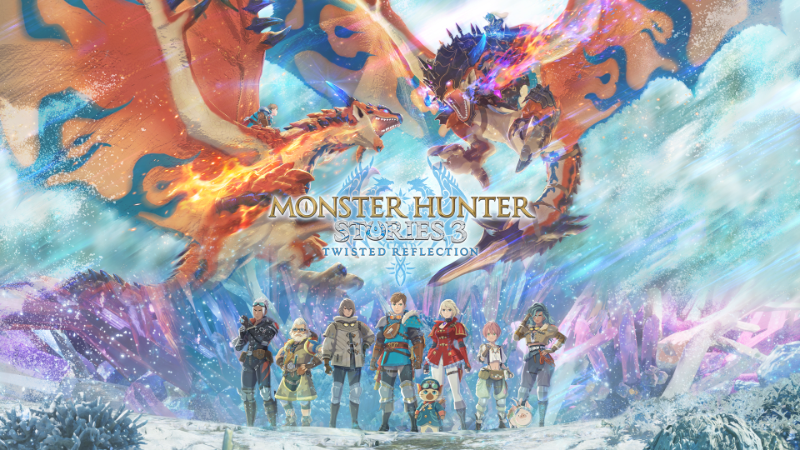

Sector Intelligence Report: Trial Build Breaches the New World
Capcom has quietly cut a hole in the wall: a free trial for Monster Hunter Stories 3: Twisted Reflection is now live, giving players direct access to the opening chapters weeks ahead of launch on March 13, 2026. For designers, systems engineers, and narrative teams tracking this release, this is more than a marketing beat—it's a live-fire test of the game’s onboarding, progression pacing, and combat readability.
This early slice allows players to customize their Rider, test-drive the turn-based battle system, and begin forging gear and bonding with Monsties, with the critical promise that trial progress carries over to the full game. That single design decision reframes the trial from a disposable demo into a soft-launch style on-ramp—an increasingly standard tactic in modern #gamedev pipelines.
Systems Under the Microscope: How the Trial Is Structured
Hard Caps as Soft Telemetry
The trial build imposes several deliberate constraints:
- Single save slot (vs. three in the full release)
- Level cap at 10
- Limits on Trade Points and Monstie storage
- XP lock after hitting the level cap, while still allowing continued play
From a development perspective, these are not just content gates; they’re telemetry funnels. By constraining progression and inventory, the team can more cleanly parse:
- Onboarding efficiency: How quickly players internalize the turn-based combat loops.
- Early-game balance: Whether level 1–10 feels too punishing, too trivial, or just right.
- Engagement at cap: Do players keep exploring after XP is frozen, or bounce off immediately?
Because the trial allows continued play post-cap, the design invites players to stress-test team compositions, gear combinations, and Monstie synergies without further progression inflation. For #gamedev teams, this is a targeted way to collect data on combat feel and encounter pacing without the noise of late-game builds.
Carryover Saves: Commitment as Conversion Tool
The ability to carry your save file into the full version (as long as you use the same account and keep the data on PC) is a subtle but powerful retention mechanic. It reframes the trial as the first chapter of the full experience, not a side-mode.
This has direct design and business implications:
- Reduced friction at launch: Players skip the tutorial replay, hitting the day-one content wall with tuned builds.
- Higher conversion potential: Time invested in Monsties and gear feels meaningful, not disposable.
- Early meta-shaping: Community discussion around optimal early-game builds will be established before launch day, informing both player behavior and potential balance passes.
Turn-Based Hunting as a Design Laboratory
Monster Hunter Stories has always been the franchise’s turn-based, story-driven counterpart, but Monster Hunter Stories 3: Twisted Reflection is positioning itself as a more robust tactical layer on top of the familiar Monstie-bond fantasy.
The trial specifically encourages players to:
- Read enemy patterns and counter with appropriate attack types.
- Craft and tune gear early, highlighting the importance of build identity.
- Curate a Monstie roster within strict storage limits, forcing meaningful choices.
For combat designers, the trial era is where they’ll see if the rock-paper-scissors core of the battle system is communicating clearly enough. Are players losing because they misread telegraphs, or because the UI and feedback loops are under-communicating state and intent?
The New World framing also hints at a dual mandate: serve as an approachable entry for newcomers while providing a systems testbed for veterans. That’s a tough calibration problem—one that this trial is clearly engineered to probe.
Strategic Read: What This Signals for Launch
From a sector perspective, this trial reads as a controlled breach designed to validate both technical and experiential assumptions before full deployment:
- Onboarding & UX: The opening chapters are under the microscope. Expect UI/UX tweaks and tutorial tuning based on completion and drop-off rates.
- Progression Economy: Trade Point and Monstie limits suggest the team is watching for early hoarding, resource bottlenecks, and pacing issues.
- Community Seeding: By letting players bring their builds forward, Capcom is effectively launching the early-game meta and community discourse weeks ahead of release.
For #indiegame developers watching from the sidelines, this is a textbook example of how a trial with carryover saves can operate as a hybrid between demo, soft launch, and live test environment—without formally branding it as early access.
As Monster Hunter Stories 3: Twisted Reflection edges toward its March 13, 2026 release, this trial isn’t just a free sample; it’s a live diagnostic tool. The question now is whether the data harvested from this early breach will feed into meaningful last-mile adjustments—or simply confirm that the current reflection of the hunt is sharp enough to ship.
Tagged signals: #gamedev, #indiegame, monster hunter stories 3: twisted reflection, development update
Sources and corrections
This archive entry does not have a verified article-source list. Images and video embeds alone are not evidence for every claim.
Found an error? Request a correction. Include the passage and a supporting source.