Automated archive / Minecraft
Minecraft Turns Online Safety Into Playable Protocol
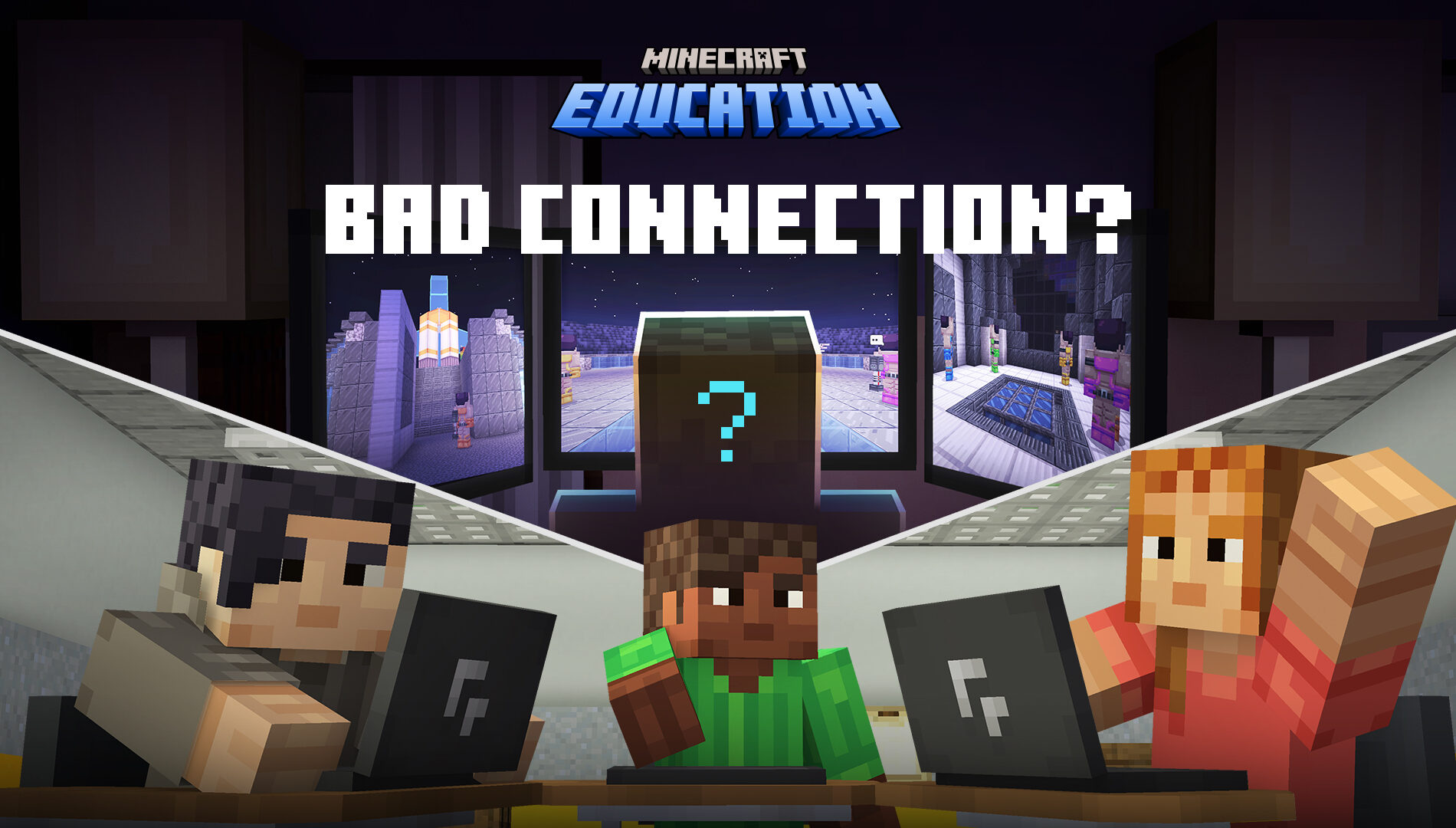
Minecraft Education’s new “Bad Connection” DLC turns online safety into a fully playable mission, reframing digital citizenship as core gameplay instead of background policy. For developers, it’s a live case study in how to design systems, narratives, and loops around safety-first play.
AI-generated summary. This archive article does not have a current recorded source check. Check linked sources before relying on details. Editorial policy
Sector Intelligence Report: Minecraft – Week of Feb 3–10, 2026
Minecraft’s latest transmission isn’t a biome expansion or combat overhaul—it’s a curriculum-level pivot into digital citizenship. Minecraft Education has deployed a new DLC, “Bad Connection”, an online safety adventure that turns cyber awareness into a fully playable mission. For educators, parents, and #gamedev watchers, this is a meaningful signal of how AAA-adjacent platforms can operationalize safety design inside a massive live ecosystem like minecraft.
Strategic Overview: Online Safety as Core Gameplay, Not Menu Text
The new Bad Connection DLC positions online safety not as a static EULA or skippable pop-up, but as a narrative-driven mission space. Players are dropped into scenarios that mirror real-world digital risks—misinformation, phishing-like interactions, unsafe sharing, and social engineering—then asked to reason, choose, and act.
From a design perspective, this is a notable pedagogical loop:
- Familiar verbs, new stakes – Minecraft’s core verbs (explore, craft, trade, communicate) are repurposed to model online behavior. The friction isn’t in learning controls; it’s in evaluating consequences.
- Systems-first teaching – Instead of didactic text, the DLC uses environmental storytelling, NPC dialogue, and branching outcomes to encode best practices for online safety.
- Replayable lessons – Because it’s scenario-driven, the content can be replayed with different choices, allowing students to test boundaries in a safe sandbox.
For #indiegame developers and tools-focused studios, this is a live case study in how to embed safety and ethics into the core loop rather than bolting it on as an afterthought.
Design Intelligence: What This Signals for Game Systems and UX
1. Safety as a Systems Design Pillar
The Bad Connection DLC underscores a shift: safety is now a systems design concern, not just a moderation policy. Minecraft Education is effectively prototyping:
- Choice architecture that nudges players toward healthy digital habits.
- Feedback loops that immediately visualize consequences of unsafe decisions.
- Scaffolded complexity, where early missions introduce simple red-flag recognition and later ones stack social pressure, time limits, or ambiguous information.
This approach can be mirrored in mainstream and #indiegame projects: treat toxicity, privacy, and misinformation as designable systems with state, feedback, and fail states—not just as community guidelines.
2. Narrative Framing of Real-World Risks
The DLC appears to lean on metaphor and allegory instead of literal UI replicas of real social platforms. That’s a smart move for both legal and UX reasons:
- It keeps the experience timeless, avoiding UI obsolescence as real platforms evolve.
- It lets designers exaggerate patterns (suspicious links, manipulative NPCs, echo chambers) without overwhelming younger players.
For game writers and narrative designers, this is a masterclass in translating complex real-world systems into approachable, story-driven missions.
3. Classroom-Ready, but Engine-Portable
While this is framed for Minecraft Education, the underlying design patterns are engine-agnostic:
- Scenario-based quests that encode behavioral learning.
- Role-play conversations that simulate DMs, group chats, or comment threads.
- Reflective debriefs after missions, where players analyze their own choices.
Any studio working in Unity, Unreal, Godot, or custom tech can adapt these structures for their own safety, ethics, or onboarding content.
Market & Community Impact: Why This Matters Beyond the Classroom
For Educators and Institutions
- Minecraft continues to solidify itself as a default platform for interactive learning, not just a game co-opted by teachers.
- The DLC offers ready-to-deploy lesson content that aligns with digital citizenship curricula, reducing prep time.
- It signals that platform holders are willing to invest in long-term, non-monetized trust infrastructure—a key factor in school adoption.
For Developers and Studios
- There’s a clear market validation for games that address safety, media literacy, and digital wellbeing.
- Studios can explore B2B and EdTech partnerships, using their IP or tools to build similar modules.
- Bad Connection provides a reference implementation for grant proposals, public funding, or NGO collaborations around online safety.
For the Broader Minecraft Ecosystem
- The DLC reinforces minecraft as a transmedia learning environment—survival mode, creative mode, and now safety mode.
- It nudges community creators and server operators toward higher expectations of player protection, especially for younger audiences.
Dev-Facing Takeaways: Lessons for #gamedev and #indiegame Teams
- Bake safety into your core loop – Don’t relegate safety to ToS pages. Design mechanics that reward pro-social behavior and surface consequences for harmful actions.
- Leverage familiar mechanics for new themes – Minecraft didn’t change its genre; it reframed its verbs. Indie teams can do the same with their existing mechanics.
- Design for educators as power users – Provide structured scenarios, clear learning outcomes, and replayability. That turns your game into a teaching tool.
- Think in modular DLCs or content packs – Bad Connection shows how a focused, self-contained module can test new themes without fragmenting the main product.
Outlook: The Next Wave of Safety-First Design
The intercepted signal from Minecraft Education is clear: online safety is graduating from policy document to playable content. For the broader industry, this is both an ethical nudge and a competitive challenge. The studios that respond fastest—by integrating safety, literacy, and wellbeing into their design DNA—will be best positioned as schools, parents, and regulators increasingly scrutinize how games shape digital behavior.
As this DLC rolls out and classrooms start feeding back real-world data, expect follow-up iterations, more nuanced scenarios, and potentially cross-over ideas into the mainline Minecraft experience. For now, Bad Connection stands as a high-profile proof-of-concept that teaching players to survive the internet can be as engaging as teaching them to survive the night in minecraft.
Sources and corrections
This archive entry does not have a verified article-source list. Images and video embeds alone are not evidence for every claim.
Found an error? Request a correction. Include the passage and a supporting source.