Automated archive / Minecraft
Sector Intelligence: Minecraft Education Turns Online Safety Into Playable Curriculum
Minecraft Education’s new cyber-safety DLC turns online risk and digital literacy into a fully playable curriculum, signaling a strategic evolution of games-as-education. For developers, it’s a live case study in systems-driven learning, ethical design, and alternative content verticals beyond pure entertainment.
AI-generated summary. This archive article does not have a current recorded source check. Check linked sources before relying on details. Editorial policy
Sector Intelligence Report: Minecraft – Week of Feb 11, 2026
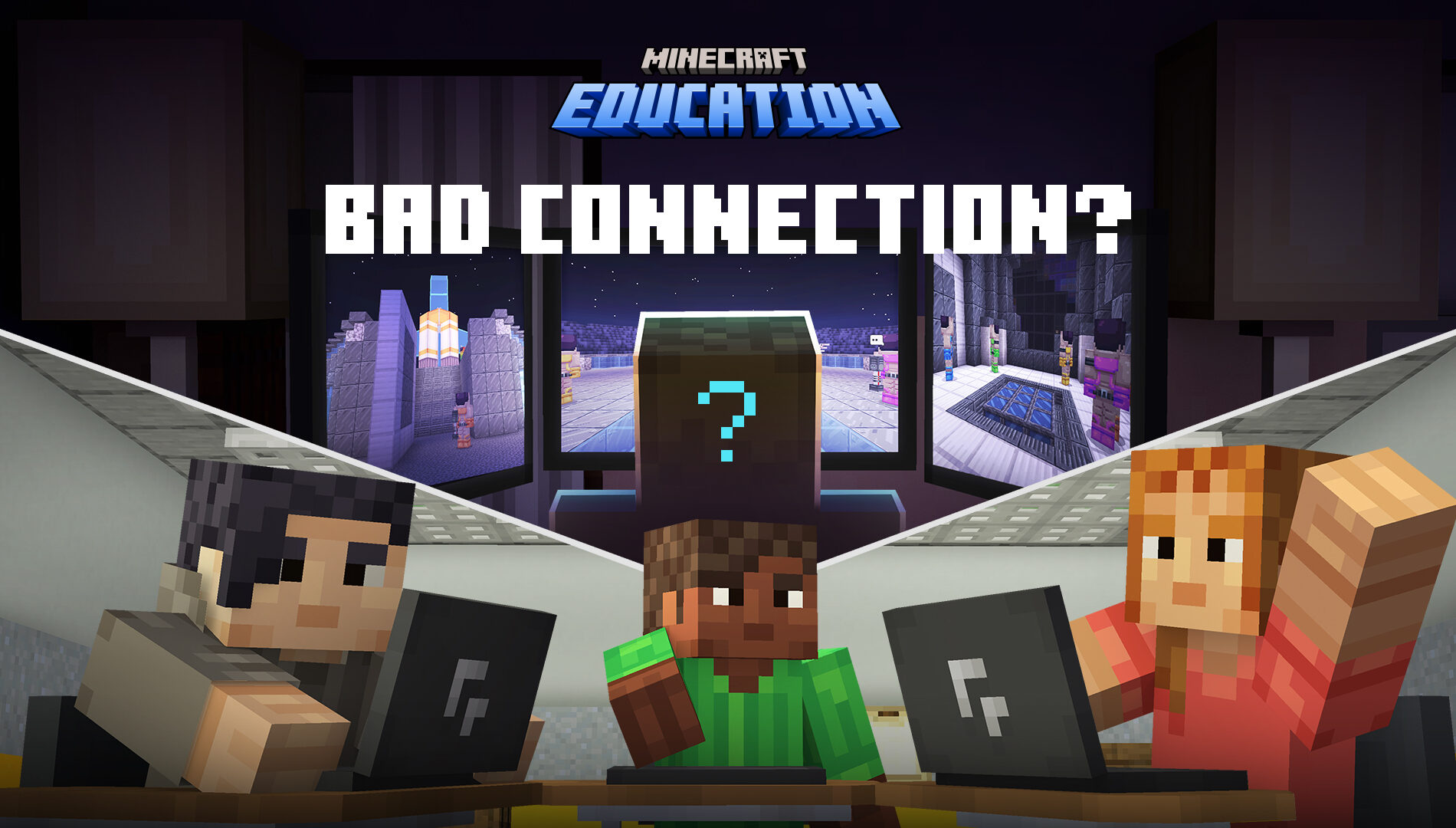
Minecraft’s latest signal doesn’t come from the usual survival, sandbox, or marketplace front. Instead, Minecraft Education has deployed a new DLC focused on online safety skills, effectively turning cyber awareness into a playable lesson plan. For studios watching the intersection of #gamedev, pedagogy, and live-service content, this is a notable shift in how AAA-adjacent platforms are tackling real-world issues through design.
Operation: Online Safety – What This DLC Actually Is
The intercepted activity feed describes a “new cyber adventure” from Minecraft Education, framed as an immersive experience that teaches players to navigate the digital realm securely. While full design docs aren’t public, the framing suggests:
- Scenario-based missions: Likely structured as short, narrative-driven worlds where students encounter common online risks—phishing, misinformation, privacy leaks, and social engineering.
- Embedded learning objectives: Minecraft Education historically aligns DLC with curriculum standards; expect explicit learning goals (e.g., recognizing suspicious links, understanding data sharing, dealing with cyberbullying).
- Teacher-friendly scaffolding: Lesson plans, discussion prompts, and assessment hooks are almost certainly bundled to make this drop plug-and-play in classrooms.
This is less “extra content” and more modular curriculum-as-DLC, delivered via a platform that millions of students already understand intuitively.
Design Intelligence: How Minecraft Turns Safety Into Systems
From a game design standpoint, the interesting move isn’t that Minecraft is “teaching safety,” but how it likely does it through core mechanics:
1. Systems Over Lectures
Instead of static tutorials, Minecraft Education tends to encode lessons into systems:
- NPCs that model both safe and unsafe behaviors.
- Choice-driven dialogue where players must evaluate suspicious requests.
- Resource or progression gates that only unlock when players demonstrate safe decisions.
For other #indiegame and #gamedev teams, this is a live example of stealth learning: the player’s primary verb is still play, but the feedback loop reinforces real-world literacy.
2. Risk Simulation in a Low-Stakes Sandbox
By staging cyber threats inside a familiar voxel world, Minecraft can simulate:
- Fake “friend” requests or dubious trade offers.
- Malicious links reimagined as in-world items or portals.
- Reputation systems that respond to a player’s trust decisions.
The key: consequence without trauma. Players feel the impact of poor choices (lost progress, blocked paths, NPC fallout) without real-world harm.
Strategic Takeaways for Developers
1. Education as a Live-Service Vertical
For Minecraft, this DLC reinforces education as a persistent content lane, not a side experiment. That has several implications:
- Recurring institutional revenue: Schools and districts become long-term content customers.
- Curriculum-driven roadmaps: Content drops can be aligned with global awareness days (e.g., Safer Internet Day) or policy initiatives.
- Cross-sector partnerships: Expect collaborations with cybersecurity orgs, NGOs, or government agencies.
Studios looking to diversify beyond traditional consumer sales should be watching this space closely.
2. Ethical Design as a Feature, Not a Footnote
Online safety isn’t just a PSA topic; it’s now a design pillar inside one of the world’s largest games. For teams building connected experiences:
- Onboarding flows can be rethought as playable safety training.
- Community guidelines can be reinforced through in-game scenarios instead of static text walls.
- Parental and educator trust becomes a measurable asset, not just a legal checkbox.
Minecraft’s move signals that ethics-aware design can be packaged, marketed, and monetized as a core feature set.
3. Lessons for #indiegame and Smaller Teams
Indie developers won’t match Minecraft’s distribution, but they can borrow tactics:
- Use narrative framing to surface digital literacy themes inside existing mechanics.
- Build modular, classroom-friendly builds of your game with clear learning outcomes.
- Treat teacher documentation as UX: clear, concise, and play-first.
In an ecosystem where discoverability is brutal, leaning into education + entertainment can open new channels—classrooms, grants, and institutional partnerships.
Sector Outlook: Why This Drop Matters
This week’s Minecraft Education DLC isn’t just another world file—it’s a signal of where mainstream platforms are steering the medium:
- Games as infrastructure for digital citizenship.
- Live-service pipelines that serve schools and families, not just hardcore players.
- A design culture where online safety, literacy, and ethics are treated as core content, not post-launch disclaimers.
For developers across the spectrum—from blockbuster studios to solo #gamedev creators—Minecraft’s latest move is a reminder: the next frontier of impact isn’t just photorealism or bigger maps; it’s how well our systems prepare players for the worlds beyond the screen.
Sources and corrections
This archive entry does not have a verified article-source list. Images and video embeds alone are not evidence for every claim.
Found an error? Request a correction. Include the passage and a supporting source.