Automated archive / Marathon
Marathon’s Patchwave 1.0.5.2, Med-Drone Barrages, and Ranked Destroyer Meta
Bungie’s latest Marathon patchwave kills an unhealthy movement exploit, sharpens Ranked Destroyer play, and turns med-drones into lethal map control tools. The result is a faster, clearer, and more punishing extraction-PvP sandbox for predators who can keep up.
AI-generated summary. This archive article does not have a current recorded source check. Check linked sources before relying on details. Editorial policy

Watch: Transmitting Gameplay footage from the field: Official Marathon Combat Briefing
Sector Intelligence Report: Marathon – Week of April 7, 2026
Marathon’s combat grid just went through one of its most telling weeks since launch. Bungie pushed a decisive systems correction with Patchwave 1.0.5.2, competitive operators showcased brutal Ranked Destroyer runs, and the community quietly solved new high-efficiency routes that will shape the early meta. This is where Marathon stops being a trailer fantasy and starts becoming a live, tuned extraction-PvP ecosystem.
Patchwave 1.0.5.2: Movement Exploit Neutralized, Grid Re-Stabilized
Bungie’s latest Marathon development update—Patch 1.0.5.2—targets what the studio explicitly labeled an “unhealthy” movement exploit. In competitive terms, that’s a neon-red flag: we’re talking about a mobility tech that warped engagements, broke intended sightlines, and undercut the risk-reward loop extraction shooters rely on.
The patch does two things at once:
1. Competitive Integrity Over ‘Tech for Tech’s Sake’
By removing the exploit, Bungie is making a clear statement about Marathon’s design spine: movement is meant to be expressive, not game-breaking. In a title tuned for rapid time-to-kill, any exploit that lets players desync from readable positions or bypass intended lanes instantly becomes a balance black hole. The fix tightens the skill ceiling back around deliberate mechanics—slides, climbs, and vertical flanks that are authored, not accidental.
2. Cleaner Readability for Squads and Speedrunners
The update also ships over 20 balance tweaks and bug fixes, with a focus on stability and performance. For squads, that means more predictable hit registration, smoother network behavior, and fewer desync moments in high-pressure extractions. For route labbers and speedrunners, tightened collision and movement logic close off degenerate shortcuts while preserving legitimate tech.
The result is a more legible killzone: lanes behave as designed, vertical routes are intentional, and the sandbox becomes easier to read, harder to cheese.
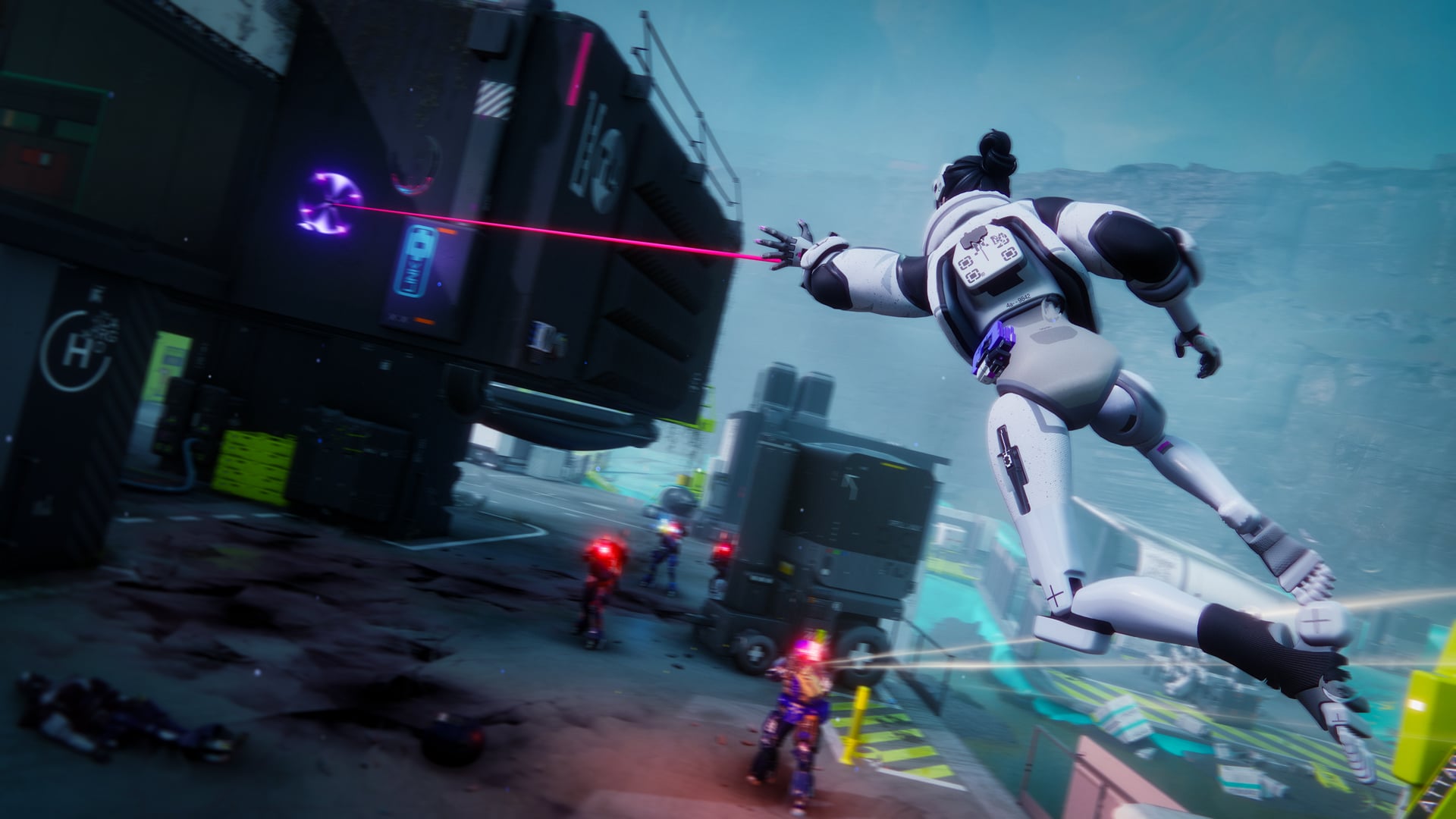
Ranked Destroyer Operations: The Predator Meta Takes Shape
This week’s Precision Combat Analysis: Ranked Destroyer Operations gave us a clear window into what high-level Marathon actually looks like when the gloves are off. Bungie’s curated gameplay is less marketing reel and more design thesis: the game is tuned for predators, not tourists.
Lethal Movement and Vertical Flanks
Ranked Destroyer play highlights how movement and map verticality are non-negotiable skills. Operators chain slides, mantles, and vertical cuts to break lines of fire, force awkward crosshair adjustments, and collapse on isolated targets. The recent exploit removal doesn’t nerf this expression—it sharpens it. Now, when someone out-positions you, it’s because they read the map and executed cleanly, not because they glitched the geometry.
Punishing Mispositioning in an Extraction-PvP Frame
With rapid TTK, every exposed second is a liability. We see squads using tight arena control: one player locking a lane, another probing a high flank, a third floating between cover nodes to secure crossfires. Misposition once and you’re off the board, your loot fuelling the enemy’s next push.
For #gamedev observers, this is a clear example of Bungie leaning into intentional lethality. There’s no illusion of safety—only information, positioning, and execution.
Watch: Transmitting Gameplay footage from the field: High-intensity Marathon combat operations
Med-Drone Barrage: PvE Pressure as PvP Force Multiplier
The Autonomous Med-Drone Suppression Protocol field log confirms a key pillar of Marathon’s encounter design: PvE elements are not background noise, they’re force multipliers that reshape PvP engagements in real time.
Hostile med-drones act like mobile turret nodes, saturating vertical space with precision barrages and overlapping fire lanes. The tactical implications are huge:
- Vertical threat vectors mean players can’t just clear horizontal lanes and feel safe; the sky is a live danger zone.
- Spawn funnels become high-priority objectives. If your squad doesn’t identify and shut down drone spawn points, you’re fighting a war of attrition you can’t win.
- Tempo pressure forces teams to maintain momentum through neon-soaked corridors rather than turtling. The longer you stall, the more likely drones are to box you in and expose your flanks to enemy players.
This is PvE tuned as positional pressure, not loot piñatas—closer to a dynamic map hazard system than traditional enemy waves.
Procedural Sprint Systems: Triple-Clip Capture and Route Weaponization
A notable community datapoint this week: an operator successfully secured all three clip objectives in a single Run Clips sequence, validating that Marathon’s procedural sprint systems can be mastered, not just survived.
Key takeaways:
- Movement vectors and jump timing are now proven to support repeatable, high-efficiency routes.
- Environmental reads—angles, ledges, and traversal shortcuts—are becoming a second language for top players.
- These routes will be weaponized for speedrun ops and leaderboard disruption, creating a new layer of competition beyond raw gunskill.
From a #indiegame and #gamedev perspective, this is a case study in how systemic level design and procedural logic can still support deterministic mastery. The routes are not scripted, but they are learnable, rewarding players who treat the environment as a puzzle, not just a backdrop.
Retro Echo: Marathon (1994) Still Haunts the Design
The forensic debrief of Marathon (1994) underlines how much of the original DNA still pulses through the new build. The classic’s nonlinear map logic, oppressive corridor combat, and narrative terminals formed a structurally sound loop that many modern shooters still chase.
In the current Marathon, you can feel that heritage in:
- Layered map topology that rewards spatial memory.
- Deliberate choke points that create inevitable friction between squads.
- A focus on atmosphere and information delivery over constant fireworks.
The difference now is the live-service context: Bungie can tune, patch, and iterate week over week, using telemetry and community feedback to refine that legacy into a modern extraction-PvP framework.

Sector Outlook: A Sharpening Sandbox
With Patchwave 1.0.5.2 live, Ranked Destroyer footage circulating, and community sprint routes emerging, Marathon’s early meta is crystallizing around three pillars: readable movement, brutal positional punishment, and environment-driven pressure.
For players, the directive is clear: update your client, lab your routes, and start treating med-drones and vertical lanes as primary threats, not background noise. For designers and #gamedev watchers, Marathon is rapidly becoming a live case study in how to steer a high-lethality extraction shooter toward competitive health without sanding off its teeth.
Sources and corrections
This archive entry does not have a verified article-source list. Images and video embeds alone are not evidence for every claim.
Found an error? Request a correction. Include the passage and a supporting source.
Your games, in one place
Keep up with Marathon
Follow this game to collect its posts in your personal feed. Come back to see what you missed.