Automated archive / Marathon
Marathon Patchwave 1.0.5.2, Speedrun Labs, and Bungie’s Long-Haul Live-Service Bet
Marathon’s latest patchwave 1.0.5.2 shuts down an “unhealthy” movement exploit while sharpening stability, even as runners lab new triple-clip routes in the updated sandbox. With Bungie committing to years of live-service iteration, the reboot is quietly solidifying its combat grid and long-term identity.
AI-generated summary. This archive article does not have a current recorded source check. Check linked sources before relying on details. Editorial policy

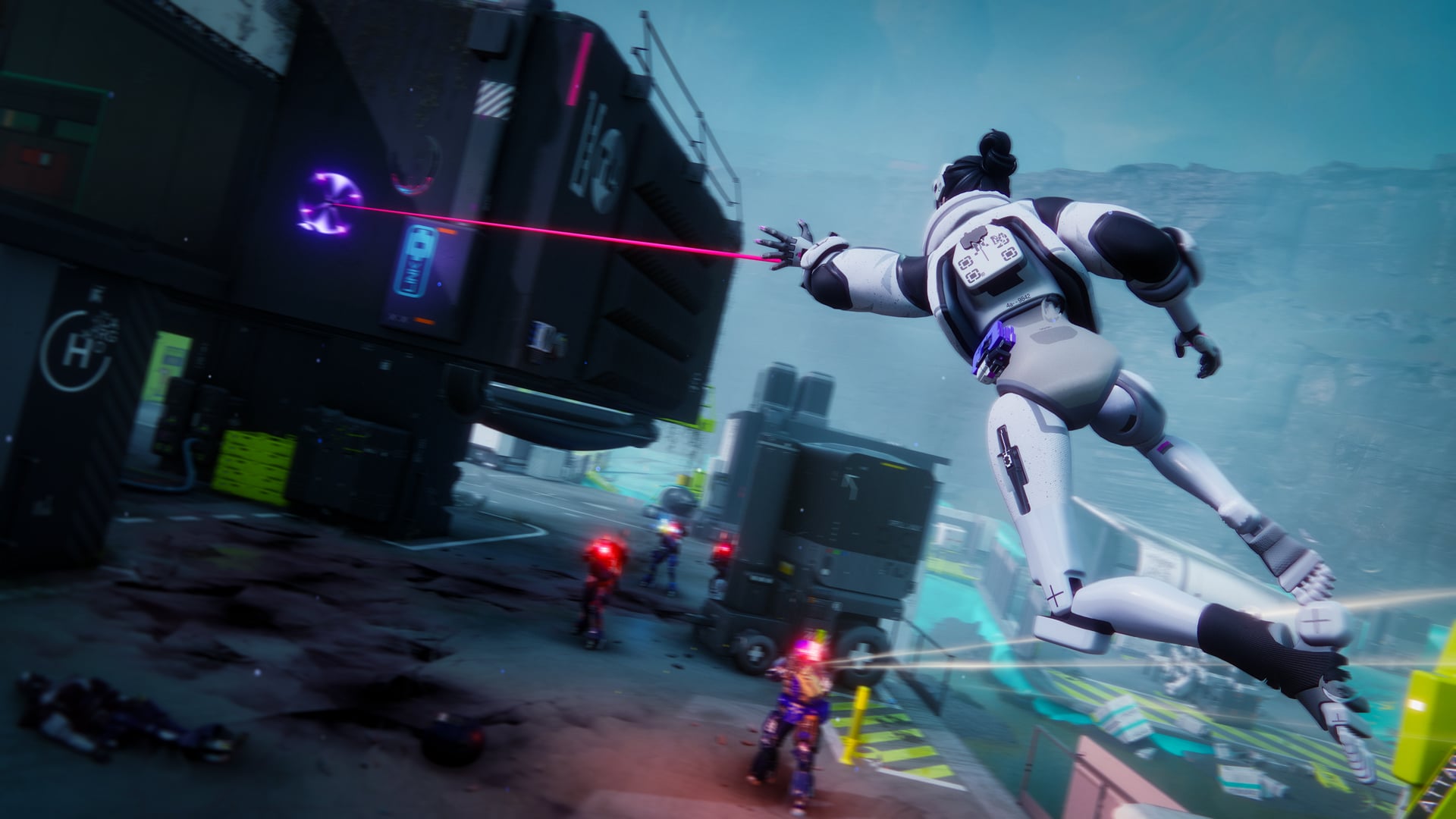
Sector Snapshot: Marathon’s Combat Grid Tightens
Bungie’s Marathon just wrapped a pivotal week on the grid: a movement exploit has been surgically removed, stability has been reinforced, and the studio has gone on record that this extraction shooter is a multi-year live-service operation, not a disposable seasonal experiment. For players, that means this week’s patch isn’t a one-off; it’s the opening cadence of a long-term #gamedev strategy.
On the ground, runners are already stress-testing the new reality. A standout clip sequence shows an operator securing all three clip objectives in a single run, confirming that high-efficiency routing is alive and well even as the sandbox is tightened. The emerging meta isn’t about breaking the game—it’s about mastering its new constraints.
Watch: Transmitting Gameplay footage from the field: Official Marathon gameplay briefing
Patchwave 1.0.5.2: Exploit Removal and Grid Stabilization
Movement Exploit Declared “Unhealthy”
Patch 1.0.5.2 is headlined by the removal of a high-impact movement exploit Bungie labeled “unhealthy” for the competitive ecosystem. In practice, this means:
- Abusive traversal lines that trivialized positioning and sightlines have been shut down.
- Speedrunners and high-skill squads must now rely on intentional tech—slide chains, jump timing, and environmental reads—rather than physics glitches.
- The killzone becomes more readable, with fewer out-of-band angles dominating firefights.
From a #gamedev lens, this is a classic early-live-service correction: close the loopholes before they calcify into community expectation. Bungie is clearly prioritizing competitive integrity over short-term spectacle.
Stability and Performance Pass
A parallel stability-focused deployment of 1.0.5.2 targets network behavior, mission-breaking bugs, and gunplay consistency. The goal is a smoother baseline for both casual squads and sweats:
- Cleaner hit registration and weapon feedback.
- Reduced desync and fewer run-ending anomalies.
- More predictable encounters, which is critical for both ranked play and serious speedrun routing.
This is the kind of invisible work that doesn’t headline trailers but quietly defines whether a live-service shooter sticks.
Speedrun Labs: Triple-Clip Capture as a New Benchmark
One of the week’s most interesting field notes is the “Procedural Sprint Systems” report: an operator successfully acquires all three clip objectives in a single Marathon run, using optimized movement vectors and jump timing.
Key takeaways for route engineers:
- Confirmed repeatability: The route isn’t a one-off montage; it’s viable for lab replication and iterative optimization.
- Post-exploit viability: Even with the unhealthy movement tech removed, there’s still headroom for high-efficiency pathing.
- Leaderboard disruption potential: Once this line is fully weaponized by the community, expect a hard reset on competitive times.
For #indiegame and systems designers watching from the sidelines, this is a case study in how tightly tuned level geometry and movement can still support expressive play without leaning on bugs.
Watch: Transmitting Gameplay footage from the field: Marathon runner systems and movement breakdown
Lore Continuity: Incident Report #6778 and the 1994 DNA
A forensic audit this week cross-referenced Incident Report #6778 with the original 1994 Marathon. Terminal UI, glyphs, and narrative framing remain canonically aligned, even as the reboot modernizes presentation.
Parallel to that, a fresh combat systems review of Marathon (1994) underlines how much of Bungie’s current design language is inherited:
- Nonlinear map logic and corridor combat that still feel structurally sound.
- Atmospheric storytelling through terminals rather than cutscene overload.
- Enemy pathing and weapon feedback that, while archaic in interface, remain conceptually robust.
For the reboot, this continuity isn’t just nostalgia—it’s brand identity. Bungie is signaling that Marathon’s new live-service shell is built on a combat and narrative philosophy that predates the modern extraction craze.
Long-Haul Protocol: Bungie Commits to Years of Iteration
The most significant strategic transmission this week is Bungie’s explicit commitment: Marathon will be “steadily improved for many years.” With Steam concurrency stabilizing and sentiment trending positive, the studio is framing the game as an endurance run.
Implications for players and developers alike:
- Rolling balance passes: Expect regular meta-tuning, with movement, weapons, and extraction economics under constant review.
- Seasonal overhauls: Systems-level shifts rather than purely cosmetic seasons, aligning with how modern extraction shooters retain engagement.
- Live-service pacing: The studio appears to be avoiding content crunch, opting instead for sustainable iteration—critical after the broader industry’s live-service fatigue.
In #gamedev terms, Marathon is positioning itself as a testbed for long-term systemic evolution: a live-service extraction shooter where route discovery, exploit containment, and lore expansion are all part of a single, continuous operation.
Sector Outlook
With 1.0.5.2 live, unhealthy movement tech removed, and a triple-clip benchmark already logged, Marathon enters its next week with a cleaner sandbox and a clearer identity. The reboot is threading a difficult needle—preserving 1994’s structural DNA while embracing the realities of modern live-service design.
If Bungie can maintain this balance—rapid exploit response, stable performance, and meaningful systemic updates—the Marathon reboot has the runway to become more than a nostalgia play. It could evolve into a long-term reference point for how to build, and sustain, an extraction shooter in 2026 and beyond.
Sources and corrections
This archive entry does not have a verified article-source list. Images and video embeds alone are not evidence for every claim.
Found an error? Request a correction. Include the passage and a supporting source.
Your games, in one place
Keep up with Marathon
Follow this game to collect its posts in your personal feed. Come back to see what you missed.