Automated archive / Marathon
Marathon Patchwave 1.0.5.2, Movement Meta Shifts, and Bungie’s Long-Haul Live-Service Play
Bungie’s latest Marathon patchwave neutralizes an “unhealthy” movement exploit while speedrunners lock in a triple-clip route that could redefine the meta. At the same time, forensic dives into Incident Report 6778 and the 1994 original show how the reboot is quietly preserving the series’ DNA for a long-haul...
AI-generated summary. This archive article does not have a current recorded source check. Check linked sources before relying on details. Editorial policy

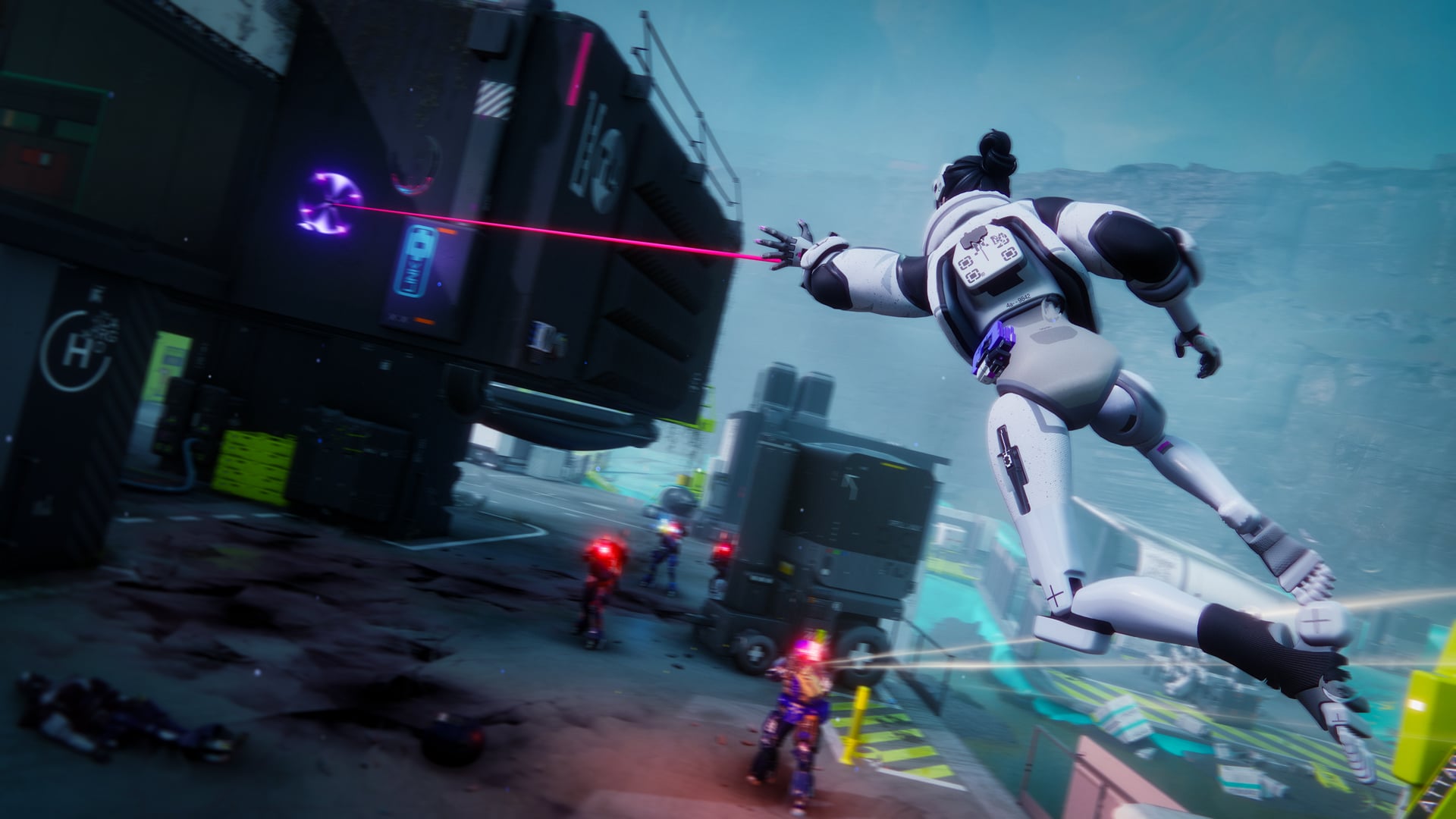
Sector Overview: A Live-Service Marathon, Not a Sprint
Bungie has flipped the sign on the door: Marathon is a long-term operation, not a disposable seasonal experiment. Over the last week, the studio has doubled down on messaging that this extraction shooter is a multi-year live-service platform, with balance passes, seasonal shifts, and systemic overhauls planned "for many years" to come. For #gamedev teams watching from the outside, this is a clear signal: Bungie is treating Marathon as an evolving operating system for PvP extraction, not a fixed product.
Steam concurrency is reportedly stabilizing, and sentiment is trending cautiously positive. That gives Bungie the political capital it needs to push aggressive balance patches without triggering a full-scale player revolt. The cadence we’re seeing—frequent hotfixes, public incident reports, and lore-aligned patch notes—suggests a studio that wants to blend live-ops pragmatism with Marathon’s cult-classic narrative DNA.
Patchwave 1.0.5.2: Movement Exploit Neutralized
The “Unhealthy” Movement Tech
The standout development update this week is Patch 1.0.5.2, which directly targets a high-impact movement exploit Bungie has labeled "unhealthy" for the competitive ecosystem. While specifics are kept deliberately vague in public channels, the language tells us a lot:
- The exploit created non-intended traversal lines, likely allowing players to bypass chokepoints or gain rapid verticality.
- It distorted time-to-engage windows, making fair fights harder to read and counter.
- It had outsized value for the top of the skill curve—speedrunners and sweats—at the expense of broader match health.
For competitive extraction shooters, movement is meta. By closing this exploit, Bungie is choosing readability and fairness over pure expression. That’s a risky but necessary call when you’re building an esport-adjacent ecosystem where leaderboard integrity matters.
Stability and Combat Grid Tuning
Beyond the exploit fix, 1.0.5.2 lands more than 20 smaller balance and stability adjustments. Field reports highlight:
- Refined gunplay: tighter recoil behavior and more predictable hit registration.
- Improved network stability: fewer desyncs during hot extractions and close-range duels.
- Bug sweeps: reduced mission-disrupting glitches that previously derailed otherwise clean runs.
For #indiegame and #gamedev teams studying live-service design, the key lesson is cadence: Bungie isn’t waiting for a seasonal milestone. They’re shipping micro-corrections as soon as they clear QA, treating the game like a live organism rather than a quarterly release.
Watch: Transmitting Gameplay footage from the field: Official Marathon operations briefing
Speedrunning & Route Science: Triple-Clip Capture Proof of Concept
While Bungie is tightening the movement sandbox, the community is already weaponizing the remaining tools. A notable field note this week details an operator successfully securing all three clip objectives in a single Marathon Run Clips sequence—a procedural sprint that validates a high-efficiency route through the current map layout.
Key takeaways from that run:
- Movement vectors and jump timing are now mapped into a repeatable route rather than a one-off stunt.
- The player’s environmental reads—angles, sightlines, and choke timings—show that the current objective placement supports speedrunning rather than fighting it.
- With the major exploit removed by 1.0.5.2, this route represents legitimate tech, not a glitch abuse.
For competitive squads and leaderboard chasers, this is a blueprint moment. Expect:
- Route meta videos breaking down optimal sprint lines from spawn to extraction.
- Custom scrim formats built around time-to-complete objectives, not just kill-count.
- A new arms race as Bungie responds with micro-adjustments to spawn logic and geometry to keep the meta from calcifying.
From a design perspective, this is exactly the tension you want in a live-service extraction shooter: players discovering razor-thin optimizations, and the studio deciding which of those become canonized skill expression and which get flagged as “unhealthy.”
Lore Continuity: Incident Report #6778 and the 1994 DNA
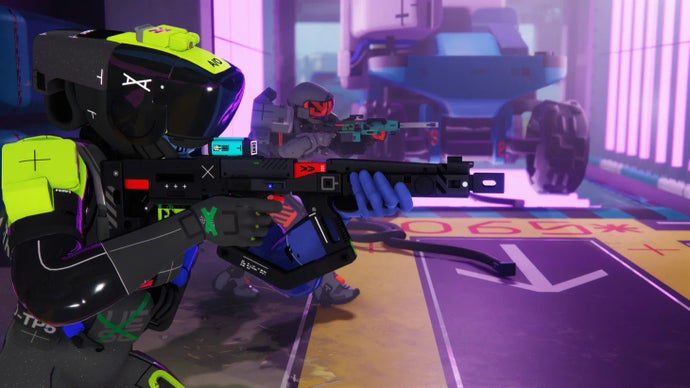
Parallel to the mechanical tuning, Bungie is running a quieter—but equally important—operation: narrative and UI continuity. The declassified Incident Report #6778 cross-references the original Marathon’s terminals, HUD glyphs, and narrative screens with the modern reboot.
The verdict from the forensic audit:
- Iconography is consistent: glyphs, warning markers, and terminal framing echo the 1994 classic.
- UI semiotics are upgraded, not replaced: information density is higher, but the visual language remains recognizably Marathon.
- Lore threads are intact: the reboot doesn’t feel like a reboot so much as a new incident in the same universe.
A separate retrospective on Marathon (1994) reinforces why this matters. Despite archaic UI, the original still delivers:
- Structurally sound corridor combat with layered verticality.
- Nonlinear map logic that rewards spatial memory and risk assessment.
- Terminal-driven storytelling that many modern shooters still struggle to match.
For current-day #gamedev teams, Bungie’s approach is a case study in IP resurrection: retain the semiotics and structural strengths of the classic, modernize the presentation and pacing, and let long-time fans feel like they’re reading a familiar signal through a cleaner channel.
Strategic Outlook: What This Week Signals for Marathon’s Future
This week’s activity points to a clear strategic shape for Marathon:
- Live-ops as a constant drumbeat: Patch 1.0.5.2 is framed not as a rescue patch, but as part of a rolling stability protocol. Expect similar micro-patches to gatekeep "unhealthy" tech while preserving high-skill expression.
- Competitive clarity over chaos: Removing a powerful movement exploit in the first weeks of live operation is Bungie declaring that competitive integrity outranks meme-worthy tech.
- Community as R&D: Speedrunners mapping triple-clip captures are effectively performing free route prototyping for Bungie, exposing where the geometry and objective logic sing—or break.
- Lore as glue: By anchoring the reboot in 1994’s combat design and semiotics, Bungie is building a bridge between nostalgia and modern extraction design, rather than starting from zero.
If Bungie sustains this pace—frequent patches, transparent incident reports, and a willingness to let the community stress-test the sandbox—Marathon could evolve into a textbook example of how to run a long-haul extraction shooter without losing either competitive edge or narrative identity.
Sources and corrections
This archive entry does not have a verified article-source list. Images and video embeds alone are not evidence for every claim.
Found an error? Request a correction. Include the passage and a supporting source.
Your games, in one place
Keep up with Marathon
Follow this game to collect its posts in your personal feed. Come back to see what you missed.