Automated archive / Marathon
Marathon Locks In Long-Haul Live Service As Lore Deepens And Platforms Shift
Marathon has locked in as a long-haul live-service operation, crossing 1.2M sales while quietly rewriting expectations around platform loyalty and legacy IP. This week’s intel shows Bungie tightening the loop between lore, systems, and cross-platform strategy in ways other studios should be studying closely.
AI-generated summary. This archive article does not have a current recorded source check. Check linked sources before relying on details. Editorial policy

Watch: Transmitting Gameplay footage from the field: Official Marathon Operations Briefing
Sector Snapshot: Marathon’s Signal Strength This Week
Bungie’s Marathon enters this week with a clear message to players and developers alike: this extraction shooter isn’t a one-and-done experiment, it’s an infrastructure play. Between confirmed long‑term live‑service support, fresh lore clarifications, and hard sales data that scrambles traditional platform expectations, the project is quietly solidifying its footing.
From a #gamedev perspective, Marathon is now a case study in how to modernize a legacy IP while threading the needle between canonical respect and live‑service pragmatism. Let’s break down the key intelligence packets from the last seven days.
Commercial Telemetry: 1.2M Sales And A Platform Surprise
Analytics this week confirm Marathon has crossed 1.2 million units sold across Steam, PS5, and Xbox. That’s more than just a headline number—it’s an early validation of the extraction shooter niche at scale.
The more disruptive data point: only 19% of those sales are on PS5, despite Sony’s first‑party backing. The majority of the player base is routing in through rival platforms and PC. For platform strategists, that’s a red flag on the old “exclusive advantage” model and a green light for cross‑play ecosystems where presence and performance beat hardware loyalty.
For developers tracking market fit, Marathon’s early traction suggests:
- There’s still room for high‑intensity PvP extraction experiences in a crowded shooter landscape.
- Launching as a multi‑platform node, rather than a walled‑garden exclusive, can materially expand concurrency and retention potential.
- Cross‑network design—from anti‑cheat to matchmaking—must be treated as a first‑class system, not a post‑launch patch.
Live-Service Doctrine: Bungie Commits To The Long Haul
Bungie has formally framed Marathon as a “many years” operation, not a seasonal fling. Internally, that translates into:
- Steady balance passes and meta‑tuning: Expect a rolling cadence of weapon and perk adjustments tuned around extraction risk, not just K/D.
- Seasonal overhauls and systemic upgrades: Instead of content trickle, Marathon is being positioned as a platform where core systems—movement, extraction rules, economy—can be re‑authored over time.
- Fair but lethal extractions: The stated goal is maintaining a razor’s edge between punishing failure and readable fairness, which is critical for an extraction shooter’s long‑term viability.
For #gamedev teams, this is a blueprint in live‑service expectation management: declare the long‑haul intent early, back it with visible iteration, and keep communication loops tight. Bungie is effectively telling players, "this isn’t a sprint, it’s an endurance test"—and then structuring their roadmap to match.
Lore And Systems: Cryogenic Continuity And Canonical Alignment
On the narrative side, this week’s most interesting development is the “Cryogenic Continuity Protocol” becoming canon. Instead of hand‑waving respawns, Bungie now frames player persistence as low‑temperature storage: runners are frozen, thawed, and redeployed by the system.
This has several design implications:
- Diegetic respawns: Failure isn’t a lore break; it’s part of the operational loop.
- Memory and identity hooks: Expect storylines around fragmented memories, corrupted data, and the psychological cost of repeated thaw cycles.
- Logistics as narrative: Cold‑sleep infrastructure, storage capacity, and who controls the thaw queue can all become plot levers.
In parallel, a forensic systems audit compared the new reboot’s terminals, HUD glyphs, and narrative screens to the original Marathon incident reports. The verdict: the reboot maintains canonical signal—iconography, UI semiotics, and lore motifs survive—but with upgraded presentation layers.
For anyone building on legacy IP, this is a sharp reminder: respect the semiotics. Fonts, glyphs, terminal framing, even color palettes carry narrative weight. Marathon is leveraging that visual continuity to anchor old fans while modernizing UX for new ones.
Combat Telemetry: 360° Kill Boxes And Movement As Geometry
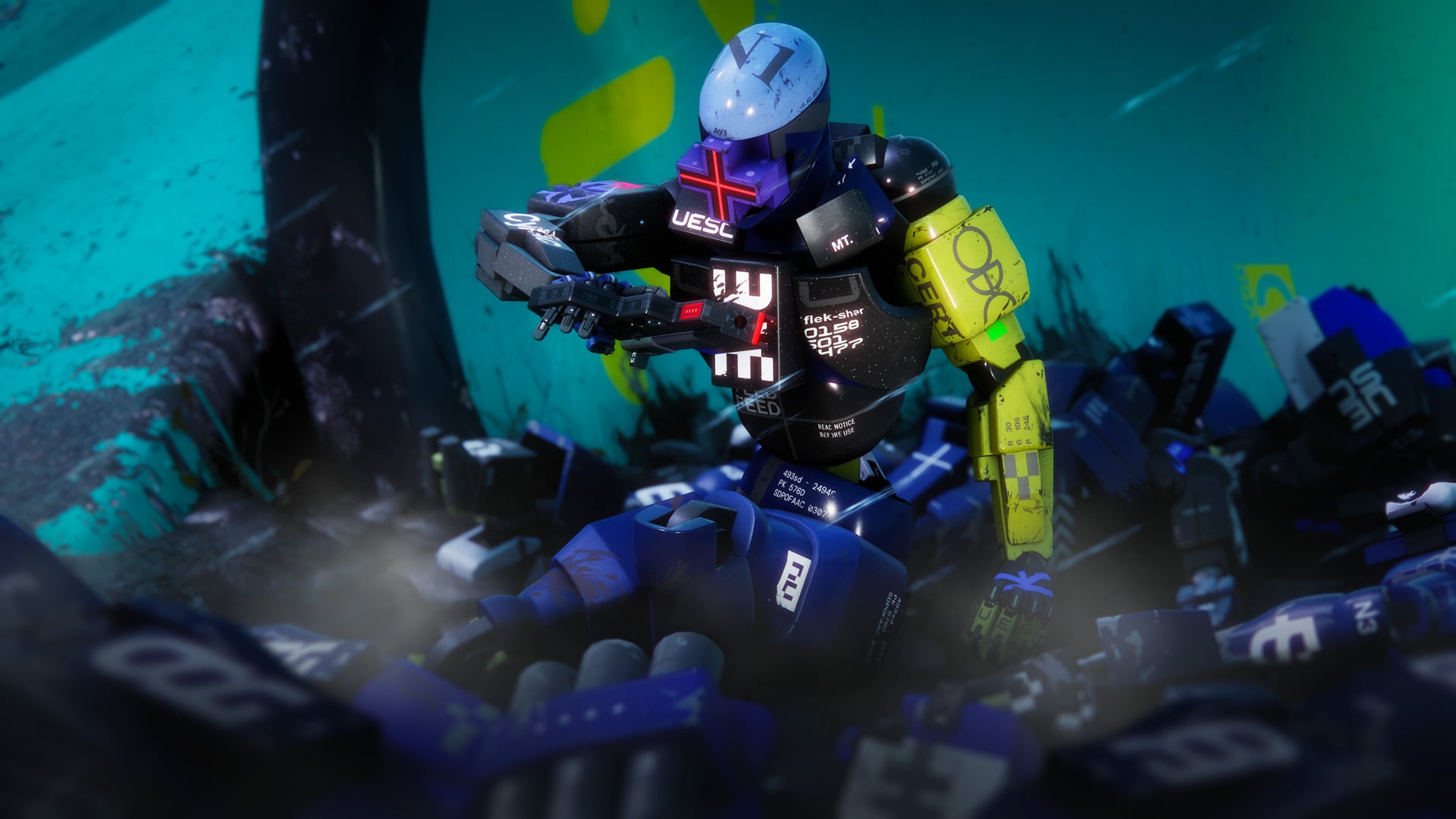
A surfaced run clip this week shows a runner caught in a full 360° kill box, with hostiles collapsing from every angle. The takeaway isn’t just “Marathon is hard”; it’s that movement is being treated as a geometry exam.
Key design reads from the footage:
- Constant lateral recalculation: Players aren’t just strafing; they’re solving spatial puzzles under fire, with micro‑optimizations in angle, cover, and verticality.
- No parkour fluff: Movement isn’t ornamental—it’s survival math. Every step is a risk/reward calculation within the extraction economy.
- Information density in the HUD: The UI has to communicate threat vectors, extraction objectives, and squad state without overwhelming the player.
For #indiegame teams exploring extraction or high‑tension PvP, Marathon’s clips highlight the importance of readable chaos: let the player feel surrounded, but ensure the telegraphing and spatial logic are fair enough that deaths feel earned, not arbitrary.
Community Signal: Retro Influences And Aesthetic Crossovers
A notable community beat this week is a Thief‑style fanart scene rendered through Marathon’s retro‑sci‑fi lens. No direct gameplay intel, but the aesthetic crossover is telling:
- There’s active community interest in classic immersive sim DNA—stealth, systemic spaces, and player‑driven problem solving—inside Marathon’s world.
- Bungie’s old‑school shooter roots still resonate; fans are remixing the visual language into other genres.
For developers, this kind of fan output is soft telemetry: players are hungry for systems‑rich encounters that borrow from immersive sims as much as from arena shooters.
Strategic Outlook: What To Watch Next
Looking ahead, three vectors will define Marathon’s trajectory:
1. Live-Service Credibility
Can Bungie sustain the promised multi‑year cadence of balance passes, seasonal overhauls, and systemic upgrades without content fatigue or meta stagnation?
2. Cross-Platform Ecosystem Health
With only 19% of sales on PS5, PC and rival consoles are now critical arteries. Watch concurrency, cross‑play stability, and how quickly balance patches propagate across platforms.
3. Lore-Systems Fusion
The cryogenic continuity hook and canonical UI alignment are strong foundations. The test will be whether Marathon can surface that lore through mechanics—not just terminals—so every extraction run feels like a chapter in an ongoing incident report.
Marathon isn’t just another extraction shooter; it’s a live‑service lab where Bungie is stress‑testing how far a legacy IP can be stretched across platforms, years, and player expectations without snapping its core identity.
Sources and corrections
This archive entry does not have a verified article-source list. Images and video embeds alone are not evidence for every claim.
Found an error? Request a correction. Include the passage and a supporting source.
Your games, in one place
Keep up with Marathon
Follow this game to collect its posts in your personal feed. Come back to see what you missed.