Automated archive / Marathon
Sector Intelligence Report – Marathon’s Server Slam, ROOK Uplink, and Bungie’s Zero‑Tolerance Era
Bungie just put Marathon through a brutal Server Slam, dropped a new ROOK cinematic, and announced a zero‑tolerance anti‑cheat policy that permanently bans cheaters. Here’s how the studio is quietly building a live‑service extraction shooter around infrastructure, lore, and uncompromising competitive integrity.
AI-generated summary. This archive article does not have a current recorded source check. Check linked sources before relying on details. Editorial policy

Weekly Sector Overview
Marathon’s last seven days have been less a marketing beat and more a full-spectrum systems test. Bungie has stress‑tested its live‑service backbone with a multi‑day Server Slam, pushed a new ROOK cinematic to the frontlines, tightened its anti‑cheat doctrine to a permanent lockout policy, and continued layering in lore via the MIDA‑zine and tactical guides. For #gamedev watchers, this is a clear snapshot of how a big studio is building an extraction shooter as a service from the ground up—netcode, narrative, and player behavior all wired into the same loop.
Network War Games: Inside the Marathon Server Slam
Bungie’s Server Slam operation framed the entire weekend as a controlled failure exercise. The goal wasn’t to impress; it was to break Marathon’s infrastructure in as many ways as possible before launch. Across several days of testing, the studio hammered:
- Backend scalability & concurrency – Matching high player counts to extraction-style runs to see where match creation, lobby flow, and persistence start to degrade.
- Netcode resilience – Every disconnect, desync, and latency spike was treated as actionable telemetry, not an embarrassment. Bungie explicitly positioned this as a stress ordinance test, not a traditional beta.
- Cross‑platform live‑service behavior – Coordinated with Sony’s broader PS5 and PC live‑service trial weekend, Marathon shared the spotlight with Horizon Hunters Gathering, giving Bungie a rare look at how its extraction loop performs when PSN traffic is spiking across multiple titles.
The messaging around the Slam made one thing clear: this is a live‑service shooter being engineered as infrastructure first, content second. For #gamedev teams, it’s a case study in how to socialize instability with players while still rewarding them—Server Slam participants are already being promised exclusive in‑game cosmetics when full service goes live.
ROOK Operative Uplink: Cinematic Positioning of the Marathon Fantasy
Watch: Transmitting Gameplay footage from the field: Official ROOK cinematic trailer from Bungie
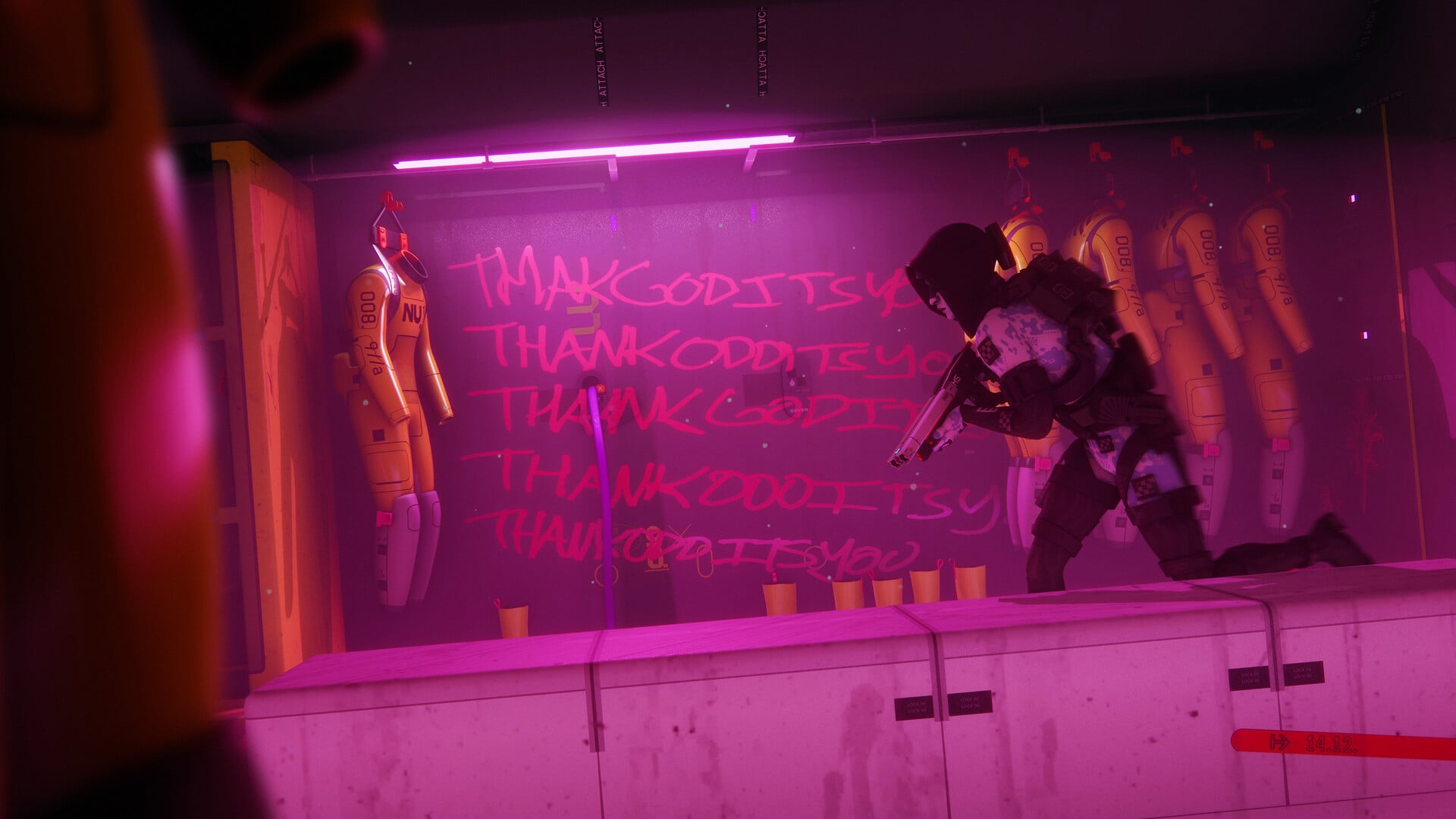
The new ROOK cinematic doubles as both lore drop and positioning statement. Bungie frames extraction runs as high‑risk data heists inside an AI‑haunted, corporate‑scarred conflict zone. Key takeaways from the transmission:
- Verticality and mobility – The cinematic leans hard into multi‑level engagements and rapid repositioning, reinforcing earlier guidance about controlling vertical sightlines in high‑risk zones.
- Squad synchronization – ROOK isn’t sold as a lone‑wolf power fantasy; it’s a high‑value asset whose full potential depends on tight fireteam coordination, spacing, and timed extractions.
- Atmospherics as UX – The visual language—dense neon, hostile bioforms, industrial decay—supports the extraction loop by constantly signaling danger and opportunity. For #indiegame teams studying Marathon, it’s a reminder that strong environmental storytelling can carry a lot of onboarding weight before any tutorial text appears.
This cinematic also quietly reinforces Bungie’s broader narrative cadence: big anchor trailers like ROOK, supported by more granular textual intel like the MIDA‑zine.
Lore Ops and Player Education: MIDA‑zine, Runner’s Guide, and Survival Protocols
Beyond the splashy video beats, Bungie has kept up a steady drip of written and audio intel:
- MIDA‑zine – A focused lore‑zine format that fleshes out factions, tech, and in‑universe culture. This is less about plot dumps and more about giving players a mental model of the world before they ever load into a match.
- Runner’s Guide #754: Exfil to Escape – A tactical primer on extraction: escape vectors, fireteam spacing, and how to secure exfil under pressure. The framing is doctrinal, not tutorial‑y, which helps maintain immersion.
- “6 Tips To Keep You Alive” survival protocols – Motion tracker discipline, ammo economy, flanking vectors, and vertical sightline control are highlighted as core survival skills. Bungie is effectively teaching players how to read the game’s combat language before the stakes are real.
For developers, this is a smart convergence of onboarding and worldbuilding. Instead of siloed “How to play” menus, Marathon’s tactical advice is delivered in‑universe, which supports both retention and immersion.
Security Doctrine: PermaLock Anti‑Cheat and Competitive Integrity
One of the most aggressive moves this week is Bungie’s zero‑tolerance anti‑cheat policy for Marathon. Anyone caught cheating faces a permanent, irrevocable ban across the shard—no second accounts, no soft resets.
In a genre where trust in the competitive environment is existential, this is a strong signal. Bungie is pre‑committing to:
- Hardline enforcement to protect high‑stakes extraction runs.
- Long‑term ecosystem health over short‑term player count optics.
The trade‑off is obvious: stricter policies can generate friction at launch, but they also reassure legitimate squads that their time—and their loot—isn’t being devalued by exploiters.
Sonic Architecture: Code Race Remix and Focused Play Loops

The release of “Code Race (Brendan Angelides Remix)” from the Marathon OST is more than a music drop. The track is tuned for escalating tension curves and high‑focus loops—ideal for coding sprints, VOD review, or late‑night extraction runs.
From a design perspective, this points to a soundtrack strategy where audio is not just mood, but a pacing tool. The layered synths and rising tempo can subtly cue players into the rhythm of a match: looting, rotating, collapsing on extraction.
Physical Artifacts and Live‑Service Futures
Finally, the reveal of a Marathon Collector’s Edition signals Bungie’s intent to straddle both digital persistence and physical fandom. Hardware‑grade packaging, lore inserts, and display‑ready components are clearly aimed at players who want a tangible anchor in an otherwise cloud‑native experience.
Combined with the Server Slam rewards, this paints a picture of a live‑service ecosystem that respects both time investment and collection culture. For #gamedev teams planning their own service titles, Marathon’s current playbook is instructive: ship infrastructure early, educate your players in‑universe, lock down competitive integrity, and give your community something they can literally put on a shelf.
Sources and corrections
This archive entry does not have a verified article-source list. Images and video embeds alone are not evidence for every claim.
Found an error? Request a correction. Include the passage and a supporting source.
Your games, in one place
Keep up with Marathon
Follow this game to collect its posts in your personal feed. Come back to see what you missed.