Automated archive / Madden NFL 26
Madden NFL 26 Rewrites the Playbook on Story, Esports, and Predictive Sims
Madden NFL 26 just used predictive sims, dynamic storytelling, and esports telemetry to quietly reposition itself as a systems-first sports platform. This week’s sector signals reveal how EA is turning its gridiron giant into a live laboratory for narrative design, competitive balance, and data-driven marketing.
AI-generated summary. This archive article does not have a current recorded source check. Check linked sources before relying on details. Editorial policy

Sector Overview: Madden NFL 26’s Live Ops Week
Madden NFL 26 just pushed through a deceptively dense week of signals: a bold Super Bowl LX prediction, a structural rethink of American football storytelling, a high-stakes esports showcase, and adjacent exposure via Xbox Free Play Days. For developers tracking sports sims and systems-driven narratives, this week reads less like routine marketing and more like a coordinated systems test on how far the franchise can stretch its engine, broadcast layer, and live-service hooks.
The throughline: Madden NFL 26 is positioning itself as a simulation platform rather than a mere annualized product. From predictive analytics to competitive pacing to narrative recomposition, the game is quietly iterating on how modern sports titles can operate as always-on laboratories for #gamedev experimentation.
Predictive Simulation as Live Marketing & Design Lab
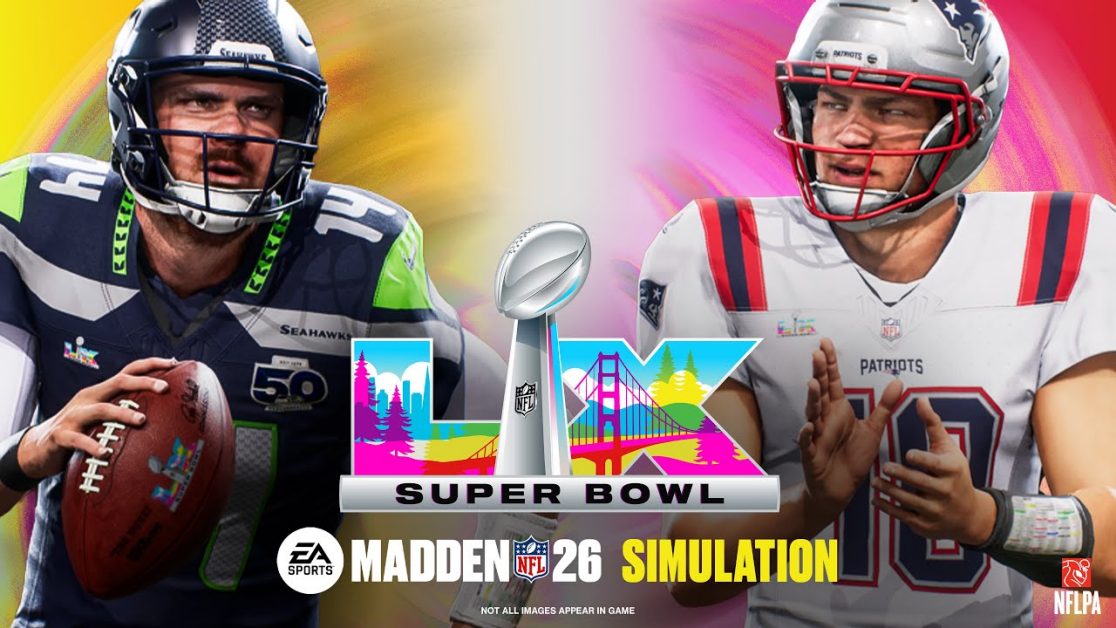
EA’s latest predictive run through Madden NFL 26 crowned the Seattle Seahawks as Super Bowl LX champions. On the surface, this is classic PR—annual simulation, headline-friendly outcome. Under the hood, it’s a design statement: the studio is confident enough in its AI, playbook logic, and statistical modeling to let the sim function as a public-facing forecast.
For developers, there are three key takeaways:
1. Simulation as Content Engine
Madden NFL 26 is leveraging its core systems—AI decision-making, team ratings, play-calling heuristics—as content generators. The Super Bowl LX prediction isn’t just a press beat; it’s a proof-of-concept for how a sports sim can continuously spin up narratives from raw data. This is fertile ground for #indiegame teams experimenting with emergent storytelling in management or tactics titles.
2. Feedback Loop Between Real-World Meta and In-Game Tuning
By publicly locking in a prediction, EA creates a feedback loop: reality will either validate or contradict the sim. Post-game, the discrepancy data can be fed back into Madden NFL 26’s tuning pipeline—adjusting player ratings, AI aggression, situational play-calling, and even broadcast commentary logic. For #gamedev teams, this is a strong example of telemetry-informed iteration in a live sports product.
3. Framing Systems as Story
The messaging around the Seahawks’ simulated win leans into destiny, challenge, and rewriting the code on game day. That framing matters: it positions the simulation layer as a storytelling surface, not just a math engine. The more the community buys into the sim as an oracle, the more design space EA has to build seasonal events, challenges, and meta-games around it.
Storytelling Reboot: From Canned Cutscenes to Live-Authored Careers
EA is openly reimagining American football storytelling inside Madden NFL 26, signaling a shift away from tightly scripted, cutscene-heavy modes toward dynamic, player-driven narratives. This is one of the most significant design pivots the series has attempted in years.
Branching, Systemic Arcs
The reported direction emphasizes:
- Branching career paths driven by on-field performance and off-field decisions.
- Emotional stakes that respond to player behavior over time rather than pre-baked story beats.
- Evolving character arcs that reflect injuries, trades, locker-room chemistry, and fan perception.
From a #gamedev standpoint, this is a move from linear narrative design to systems narrative—closer to a sports-themed immersive sim than a sports movie.
Design Implications for Sports Sims
For Madden NFL 26’s internal architecture, this implies:
- A more robust state-tracking framework (relationships, morale, media narratives, contract tension).
- Narrative logic that can query game states and trigger context-sensitive storylets.
- Tooling for writers and designers to author modular narrative fragments instead of monolithic story modes.
For smaller #indiegame studios, this is a blueprint: you don’t need AAA cinematics to tell compelling sports stories—you need reactive systems and smart narrative scaffolding.
Esports Signal: Drini’s Madden Bowl Run as a Design Case Study
The 2026 Madden Bowl in San Francisco, won by Drini, doubles as a live design telemetry capture session. The recap highlights precision reads, glitch-free execution, and ice-cold decision-making—all indicators of a meta that currently rewards high-skill, low-exploit play.
Competitive Integrity and the Meta
For Madden NFL 26’s systems designers, the Madden Bowl is a stress test of:
- Playbook balance: Which formations and concepts dominate at the highest level?
- Animation fidelity vs. responsiveness: Do tackle and catch animations ever feel like they override player intent?
- Latency tolerance: Are input windows and timing-based mechanics robust enough for tournament play?
Drini’s dominance suggests a meta where knowledge depth and execution consistency trump gimmicks. That’s a positive signal for long-term esports viability, but it also spotlights the need for ongoing balance patches to prevent the meta from ossifying around a narrow band of optimal strategies.
Broadcast-Ready Design
The event also underlines how Madden NFL 26 is tuned for spectatorship:
- Clear visual language for big plays (X-Factors, momentum swings, key matchups).
- Camera work and replay systems that mirror NFL broadcasts.
- UI overlays that surface advanced stats without overwhelming viewers.
For #gamedev teams building competitive titles, Madden’s approach is a reminder: broadcast UX is part of core design, not a post-process layer.
Platform Exposure: Xbox Free Play Days as Discovery Funnel
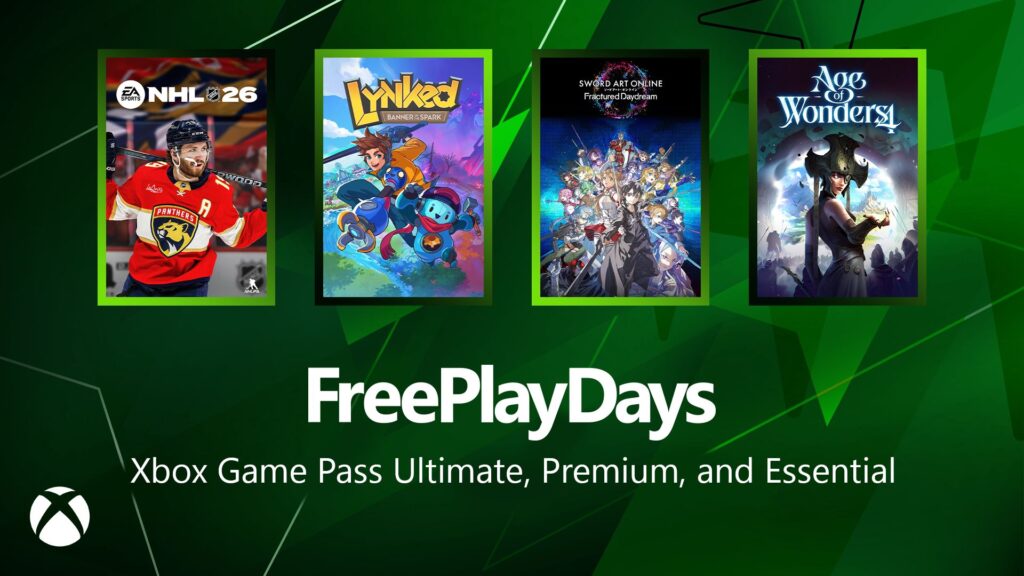
While the current Free Play Days lineup spotlights Madden NFL 26’s “icy cousin” NHL 26, the cross-promotion still matters for Madden’s ecosystem. Xbox is bundling sports sims, JRPG chaos, and 4X strategy in a single try-before-you-buy window, training players to sample across genres and then commit to what sticks.
For Madden NFL 26, this ecosystem has two implications:
- It normalizes short-session trials as a discovery mechanic, which sports games can exploit via quickplay, training camps, and curated scenarios.
- It places Madden alongside genre-diverse peers, pushing the franchise to compete on systems depth and replayability, not just license power.
For #indiegame developers, this is a blueprint for how platform-level events can be used to surface deep, systems-driven titles to players who might otherwise never seek them out.
Strategic Outlook: Madden NFL 26 as a Systems-First Sports Platform
Across predictive sims, narrative rewiring, esports refinement, and platform cross-promotion, Madden NFL 26 is quietly rebranding itself as a systems-first sports platform. The key strategic vectors to watch in upcoming development updates:
- Narrative Systems: How aggressively EA leans into dynamic storytelling will determine whether Madden NFL 26 can truly differentiate its career and franchise modes.
- Esports Balancing Cadence: Post–Madden Bowl patches will reveal how quickly the team responds to high-level meta data.
- Simulation Transparency: Publishing more detail about how Super Bowl predictions are generated could deepen community trust and engagement.
For the wider #gamedev sector, Madden NFL 26 is a live case study in how a long-running AAA sports franchise can still evolve: not by bolting on spectacle, but by refactoring its underlying systems to generate richer stories, fairer competition, and more meaningful player agency.
Sources and corrections
This archive entry does not have a verified article-source list. Images and video embeds alone are not evidence for every claim.
Found an error? Request a correction. Include the passage and a supporting source.
Your games, in one place
Keep up with Madden NFL 26
Follow this game to collect its posts in your personal feed. Come back to see what you missed.