Automated archive / Madden NFL 26
Madden NFL 26 Rewrites the Playbook on Story, Esports, and Prediction Sims
Madden NFL 26 just fired off a dense cluster of signals across narrative systems, prediction sims, esports, and platform strategy. This Sector Intelligence Report breaks down how EA is quietly rewriting the sports-sim playbook for designers, data teams, and competitive scene architects.
AI-generated summary. This archive article does not have a current recorded source check. Check linked sources before relying on details. Editorial policy
Sector Snapshot: Madden NFL 26’s Live Ops Week
Madden NFL 26 just pushed a dense cluster of signals across prediction tech, narrative design, esports pacing, and platform exposure. For #gamedev teams tracking how a flagship sports sim iterates in public, this week reads like a live GDD: AI-powered forecasting, dynamic storytelling experiments, and broadcast-first competitive tuning all surfaced within a few days.
This Sector Intelligence Report dissects four core vectors: EA’s reimagined American football storytelling, the Super Bowl LX prediction sim, the 2026 Madden Bowl outcome, and a strategic appearance in Xbox Free Play Days. Each move has implications not just for Madden NFL 26, but for any studio—AAA or #indiegame—trying to fuse systems design with mainstream sports culture.
Narrative Systems: EA Recodes American Football Storytelling
EA’s latest transmission is explicit: Madden NFL 26 is shifting from canned, linear cutscenes to dynamic, player-driven narratives. Under the hood, this suggests a move toward:
Branching, State-Aware Story Design
Instead of a single authored career arc, Madden NFL 26 is leaning into branching paths that respond to on-field performance and off-field choices. For designers, the key pattern is:
- State tracking over scripting – Player attributes, team chemistry, injuries, and contract decisions become narrative variables, not just simulation stats.
- Event-driven storytelling – Milestones (record-breaking games, playoff collapses, surprise trades) likely trigger bespoke narrative beats, giving the illusion of a bespoke sports documentary per save file.
This is a textbook example of how #gamedev teams can repurpose existing simulation data as narrative fuel, rather than building a separate story pipeline.
Emotional Stakes as a Systems Layer
EA is clearly targeting emotional continuity—making every down feel like it feeds a longer story arc. Expect:
- Reputation and legacy systems that persist across seasons.
- Relationship modifiers with coaches, GMs, and teammates.
- Narrative consequences for play style (high-risk gunslinger vs. conservative game manager).
For #indiegame developers working on management or sports-adjacent titles, Madden NFL 26 is effectively validating a design thesis: systemic narrative can scale better than fully voiced linear campaigns, especially when annual releases demand repeatable pipelines.
Predictive Simulation: Seahawks Crowned Super Bowl LX Champions
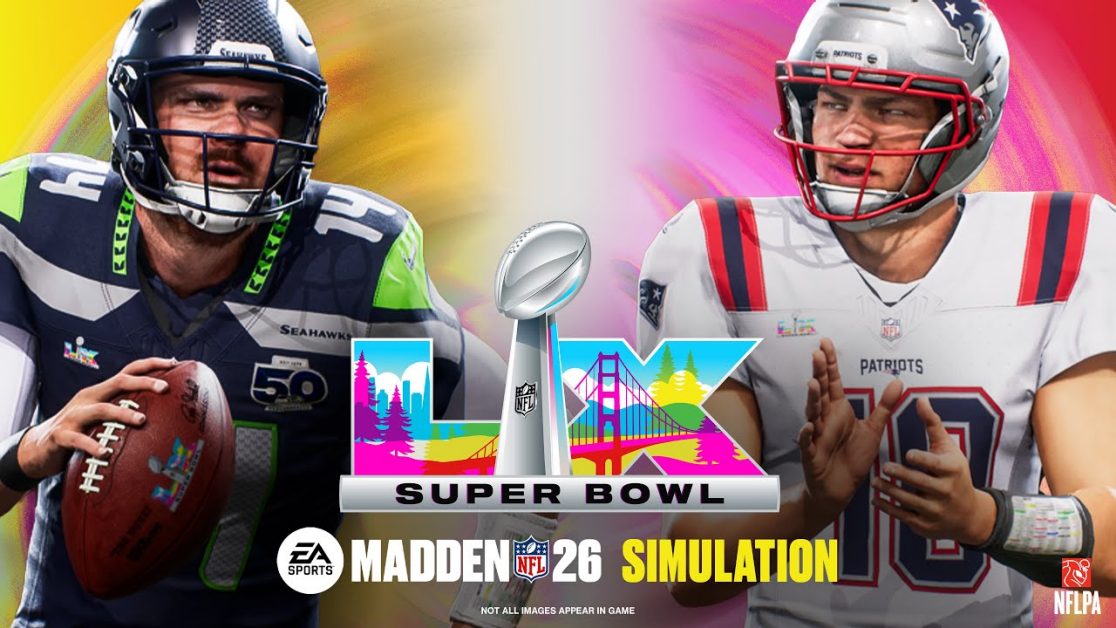
EA’s annual Super Bowl sim is now a ritualized live-service beat, and Madden NFL 26’s latest run projects the Seattle Seahawks as Super Bowl LX champions. From a development update perspective, this is more than marketing theater.
AI and Data as Content Generators
The prediction sim is a public stress test of Madden NFL 26’s underlying models:
- Roster and rating fidelity: How accurately the game encodes current NFL power structures.
- Play-calling AI: Whether CPU decision-making mirrors contemporary coaching meta.
- Outcome variance: How much chaos the system allows while still feeling plausible.
For designers, the sim doubles as telemetry theater: EA can watch community reaction to the Seahawks pick and cross-reference that sentiment with internal balance data. If the fanbase screams “overpowered,” that’s soft validation that certain team builds or play styles might need tuning.
Forecast vs. Challenge: Player Agency in the Loop
Framing the prediction as “forecast or challenge” is a subtle but important narrative device. It invites players to:
- Use the same settings and sliders as the official sim and try to rewrite the outcome.
- Treat the prediction as a scenario mode—a design pattern that any sports title can adopt to turn real-world events into playable content beats.
This blurs the line between broadcast and game mode, a direction that future sports sims—and even non-sports #indiegame projects—can emulate with seasonal scenarios tied to real-world events.
Esports Telemetry: Drini’s 2026 Madden Bowl Win as Design Case Study
The 2026 Madden Bowl in San Francisco ended with Drini seizing the crown, but the real signal for developers is how he won: precision reads, glitch-free execution, and ice-cold decision-making. From a systems lens, this outcome says a lot about the current Madden NFL 26 meta.
Competitive Integrity and Exploit Surface
The recap emphasizes “glitch-free execution,” which is quietly crucial. It implies:
- The current competitive build has a reduced exploit surface—fewer money plays, nano blitzes, or broken coverages dominating the ladder.
- The meta rewards high-skill fundamentals (progression reads, pocket presence, coverage recognition) over engine quirks.
For the Madden NFL 26 team, the Madden Bowl is effectively a live QA lab at the highest skill tier. Every top-8 game is a dataset revealing:
- Which formations and route combos define the meta.
- How defensive AI holds up under perfect user control.
- Whether game pace supports broadcast clarity (viewers understanding what’s happening and why).
Broadcast-Ready Pacing as a Design Constraint
Esports viability now feeds back into the core design loop. Madden NFL 26’s competitive pacing shows:
- Drive-level drama – Enough time per possession for narrative buildup, but not so slow that broadcasts drag.
- Clarity of information – UI, camera work, and commentary must surface key decisions in real time.
For #gamedev teams, the Madden Bowl is a reminder: if you want esports, you design for watchability as much as playability. That means telemetry-informed tuning of game speed, scoring frequency, and visual language.
Platform Strategy: Xbox Free Play Days as a Funnel

Madden NFL 26 surfaces in this week’s intel via Xbox Free Play Days, positioned alongside NHL 26, Lynked: Banner of the Spark, Sword Art Online Fractured Daydream, and Age of Wonders 4. For EA, this is a classic funnel move; for developers, it’s a case study in ecosystem thinking.
Sampling as Onboarding Design
Free Play Days effectively turns a premium sports sim into a limited-time live demo:
- New players can test Madden NFL 26’s onboarding, difficulty curves, and UX under real conditions.
- Telemetry from this window can highlight friction points—where trial players bounce before converting.
Studios, especially #indiegame teams, can learn from this by treating every promo beat (Steam Next Fest, console trials, subscription spotlights) as a design testbed, not just a marketing blast.
Cross-Genre Cross-Pollination
Being bundled with a JRPG-like experience and a 4X strategy title matters. It exposes Madden NFL 26 to:
- Strategy-first players who might be drawn to playbook depth and roster management.
- Anime and narrative-focused audiences who may respond to the new dynamic storytelling systems.
The subtle lesson: sports sims can—and arguably should—market themselves as systems-driven strategy and narrative experiences, not just reflex tests.
Strategic Takeaways for Developers
Madden NFL 26’s week of signals coalesces into a coherent design direction:
- Narrative as a system, not a script – Branching, state-aware storytelling can sit on top of existing sim data.
- Prediction sims as content – AI-driven forecasts double as marketing, telemetry, and scenario design.
- Esports as QA and pacing lab – High-level competitive play surfaces balance issues and informs broadcast-friendly design.
- Platform promos as UX audits – Events like Xbox Free Play Days are live usability tests for onboarding and retention.
For anyone building a sports title—or any systemic game that wants to live in culture rather than just on a store page—Madden NFL 26 currently operates as a high-signal reference build. Its latest development update beats show how tightly integrated design, data, and distribution now are in the modern sports-sim stack.
Sources and corrections
This archive entry does not have a verified article-source list. Images and video embeds alone are not evidence for every claim.
Found an error? Request a correction. Include the passage and a supporting source.