Automated archive / Life Is Strange: Reunion
Life Is Strange: Reunion Rewrites the Final Choice Playbook
Life Is Strange: Reunion is positioning itself as the definitive closure op for Max and Chloe, rebuilding its choice systems so the final decision hits harder than anything before it. Dual-timeline narrative design, upgraded emotional physics, and legacy save logic converge to make your last call in Arcadia Bay the...
AI-generated summary. This archive article does not have a current recorded source check. Check linked sources before relying on details. Editorial policy

Sector Briefing: Reunion as the Definitive Closure Op
Life Is Strange: Reunion is being architected not as a simple remaster, but as a full-spectrum narrative closure operation for the Max and Chloe timeline. Field intel from recent hands-on reports confirms that this is a deliberate endcap to the Arcadia Bay arc, with systems tuned around emotional-state modeling, continuity payloads, and a re-engineered choice-impact matrix. For #gamedev and #indiegame teams watching from the sidelines, Reunion is shaping up to be a case study in how to modernize legacy narrative infrastructure without breaking canon.
Where earlier entries spread consequence across an entire season, Life Is Strange: Reunion is explicitly recalibrating its decision trees so that the final choice chain becomes the most tactically consequential in the series. That design mandate—making your last decision the sharpest blade in the narrative arsenal—signals a shift toward end-loaded emotional payoff and high-stakes replay analysis.
Dual-Protagonist Architecture and Timeline Synchronization
Recent recon confirms a dual-protagonist, branching-choice architecture at the heart of Life Is Strange: Reunion. Players will operate across intersecting timelines, with decisions echoing between perspectives in ways that demand careful narrative systems design.
High-Density Narrative Nodes
The core loop still orbits familiar pillars—dialogue forks, environmental investigation, and emotional-state tracking—but the density of narrative nodes is increasing. Each interaction becomes a data point in a larger consequence-tracking lattice, where Max and Chloe’s perspectives cross, diverge, and re-converge.
For designers, the interesting #gamedev takeaway is how Reunion appears to treat each protagonist as both character and system variable. Their emotional states, prior choices, and shared memories become inputs into branching logic, rather than just flavor text.
Synchronizing Two Lenses on the Same Mystery
Reunion’s dual-timeline structure leans into a surveillance-style design philosophy: the player is constantly reconciling two incomplete intel feeds. The act of play becomes an exercise in synchronizing Max and Chloe’s viewpoints to decode the central mystery and, ultimately, to justify a final decision with maximum emotional and narrative weight.
Watch: Transmitting Gameplay footage from the field: Official Reunion reveal trailer
Choice Cascade Protocol: Making the Final Decision Hurt (In a Good Way)
The most striking design directive in the current intel dump is the so-called “Choice Cascade Protocol.” Instead of dispersing consequence evenly, Life Is Strange: Reunion is re-weighting its branching outcomes so that late-game decisions carry disproportionate systemic and emotional mass.
Legacy Save Logic and Continuity Payloads
Reunion is expected to leverage legacy save logic to import or simulate prior choices, then route them into a newly tuned consequence engine. This is less about fan-service callbacks and more about constructing a multi-game decision matrix where the final node—your last big call with Max and Chloe—becomes the definitive canonical statement of your Arcadia Bay run.
From a #gamedev perspective, this is a bold stance on authorship. The studio is effectively saying: your version of Max and Chloe only becomes fully defined at the moment of final choice, not at the start of the story. Every prior decision is recontextualized retroactively by how you close out their arc.
Emotional Physics and Replay Incentives
Field reports mention “upgraded emotional physics” and “maximal narrative volatility” as we approach launch. In practice, that likely means tighter integration between performance capture, camera work, and branching dialogue to ensure that each outcome feels like a distinct emotional state, not just a spreadsheet variant.
Replay value, then, isn’t just about seeing alternate endings—it’s about stress-testing the choice cascade itself. Players will be incentivized to run multiple operations through the same story space, comparing how subtle alterations in early decisions echo into vastly different late-game emotional payloads.
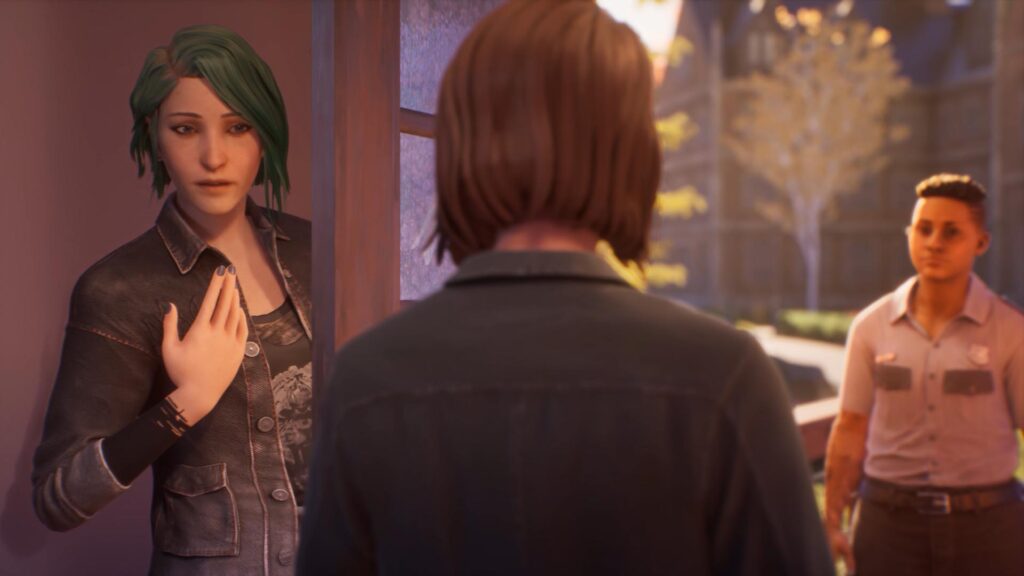
Modernizing the Arcadia Bay Engine
Beneath the narrative framing, Life Is Strange: Reunion is also a technical and aesthetic modernization pass on the Arcadia Bay timeline. Visuals are being refreshed to meet contemporary expectations, but the more important story for developers is how the team is refitting older content to co-exist with new systems.
Re-Engineered Scenes, Same Canon
Re-engineering legacy scenes while preserving their canonical emotional beats demands a surgical approach: animation timing, lighting, and pacing can all be updated, but the underlying emotional vectors must remain intact. That’s a non-trivial design problem, especially once you lace in new branching logic and dual-timeline synchronization.
Design Lessons for Narrative-Heavy #indiegame Teams
For smaller studios working in the narrative adventure space, Life Is Strange: Reunion offers several actionable patterns:
- End-Weighted Consequence: Concentrate systemic payoff around the finale to give your story a sharper point of view.
- Dual-Protagonist as System Design: Treat each character as both narrative agent and mechanical variable in your branching logic.
- Continuity as Feature, Not Burden: Use legacy saves and simulated histories to deepen player attachment, rather than as a purely technical compatibility checkbox.
Countdown to Maximum Volatility
With launch locked for March 26, all signs point to Life Is Strange: Reunion operating as the canonical closure op for Max and Chloe. Between its dual-timeline narrative systems, recalibrated final-choice cascade, and modernized emotional physics, this isn’t just a return to Arcadia Bay—it’s a controlled detonation of what finality means in a branching narrative series.
For players, that means one more chance to define who Max and Chloe really are. For #gamedev teams, it’s an incoming field manual on how to rewrite your own past without losing the soul that made it worth revisiting.
Sources and corrections
This archive entry does not have a verified article-source list. Images and video embeds alone are not evidence for every claim.
Found an error? Request a correction. Include the passage and a supporting source.
Your games, in one place
Keep up with Life Is Strange: Reunion
Follow this game to collect its posts in your personal feed. Come back to see what you missed.