Automated archive / Life Is Strange: Reunion
Life Is Strange: Reunion Locks In the Final Max & Chloe Endgame
Life Is Strange: Reunion is positioning itself as a full-scale closure op for Max and Chloe, with a dual-protagonist structure and a re-weighted final decision matrix. This week’s intel points to a bold narrative-systems experiment that could redefine how choice-driven games handle series finales.
AI-generated summary. This archive article does not have a current recorded source check. Check linked sources before relying on details. Editorial policy

Sector Intelligence Report // Life Is Strange: Reunion
Arcadia Bay is spinning back up. Over the last week, field intel around life is strange: reunion has hardened into a clear picture: this is not just a remaster pass, it’s a closure operation for Max and Chloe’s entire narrative arc. From a #gamedev and systems-design perspective, Reunion is quietly one of the most interesting narrative-architecture experiments in the AA/#indiegame space right now.
Dual-Protagonist Architecture: Two Timelines, One System
Recent briefings confirm a dual-protagonist, branching-choice architecture that runs parallel but intersecting narrative timelines. Instead of a simple A/B perspective swap, Reunion is modeling:
- Echo decisions: choices made in one character’s timeline subtly reframe dialogue, environmental states, and investigation routes in the other.
- Synchronized perspective puzzles: narrative beats that only fully resolve when the player mentally overlays both characters’ viewpoints.
- High-density narrative nodes: more frequent but smaller decision points, designed for granular consequence-tracking across episodes.
From a design lens, this pushes beyond the original Life Is Strange structure. Emotional-state modeling and dialogue forks remain core, but they’re now threaded through a cross-timeline dependency graph, which should significantly increase replay analytic value for both players and designers.
Choice Cascade Protocol: The Final Decision Matrix
The most important intel this week: Reunion is architected so that your final decision chain becomes the single most consequential choice cascade in the entire series.
Key structural shifts:
- Legacy save logic: prior choices from earlier titles (where available) are expected to feed into Reunion’s starting state, giving returning players a bespoke emotional payload.
- Re-weighted endgame decisions: instead of front-loading impact into early or mid-season twists, the design pivots to a terminal spike in consequence density near the finale.
- Replay-aware tuning: the branching matrix is being tuned for players who deliberately re-run episodes, surfacing more visible state changes on subsequent passes.
This is a notable move in narrative #gamedev. Many choice-driven titles struggle with the illusion of agency; Reunion appears to be explicitly back-loading consequence so that the final Max & Chloe decisions cannot be hand-waved away as cosmetic.
Emotional Physics & Visual Modernization
Field analysis describes “upgraded emotional physics”—shorthand for tighter alignment between:
- Facial capture and micro-expression timing
- VO direction and branching line reads
- Environmental storytelling that reacts more dynamically to your moral vector
On the production side, modernized visuals and scene re-engineering aim to lock Reunion in as the definitive Arcadia Bay timeline package. Expect improved lighting, camera work that better sells intimacy and tension, and cleaner transitions between interactive and cinematic states—critical for a dialogue-heavy #indiegame experience where immersion lives or dies on subtlety.
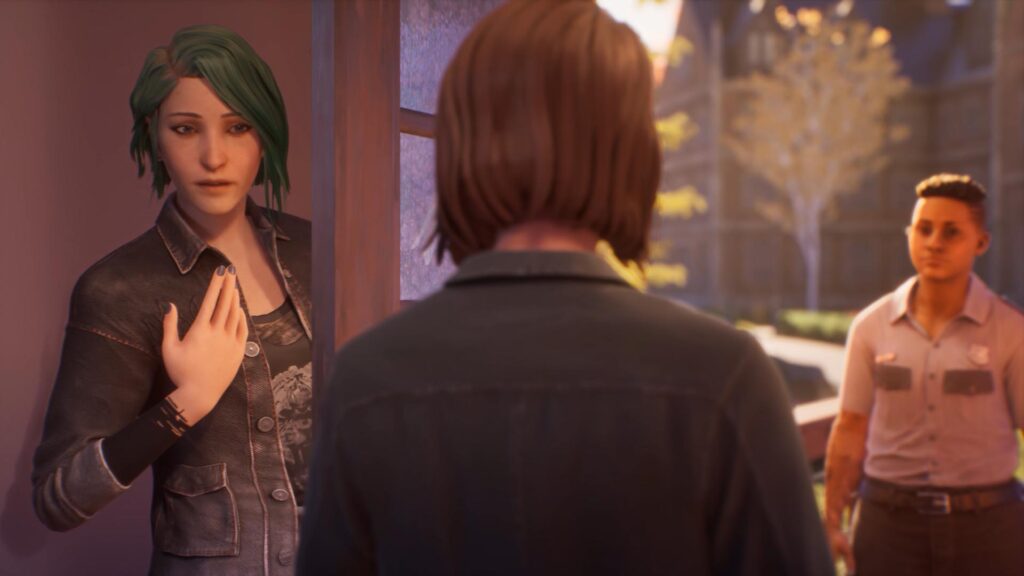
March 26: Narrative Volatility Window
With systems going live on March 26, expect a short but intense volatility window:
- Continuity payloads will finalize the Arcadia Bay canon for players who’ve carried saves and emotional investment for a decade.
- Community meta-analysis will likely focus on mapping the new decision trees, testing the integrity of the “final choice is the most meaningful” claim.
- Developer telemetry (where enabled) should provide invaluable data on how players actually navigate dual-timeline structures and high-stakes endgames.
For narrative designers and #gamedev teams, life is strange: reunion is shaping up as a live case study in late-franchise closure design: how you return to beloved characters, respect legacy choices, and still push the systemic envelope.
Arcadia Bay is coming back online—one last time, with every switch in the decision matrix wired to blow.
Sources and corrections
This archive entry does not have a verified article-source list. Images and video embeds alone are not evidence for every claim.
Found an error? Request a correction. Include the passage and a supporting source.
Your games, in one place
Keep up with Life Is Strange: Reunion
Follow this game to collect its posts in your personal feed. Come back to see what you missed.