Automated archive / LEGO Batman: Legacy of the Dark Knight
LEGO Batman’s Neon Gotham Survives Its First Security Breach
LEGO Batman: Legacy of the Dark Knight’s first week blends a clean, co-op-centric launch with a brief, unsanctioned early unlock on Xbox that tested platform security. We break down what the breach reveals about deployment pipelines and how TT Games’ modular Gotham design sets the stage for long-term stability.
AI-generated summary. This archive article does not have a current recorded source check. Check linked sources before relying on details. Editorial policy
Sector Overview: Gotham Comes Online
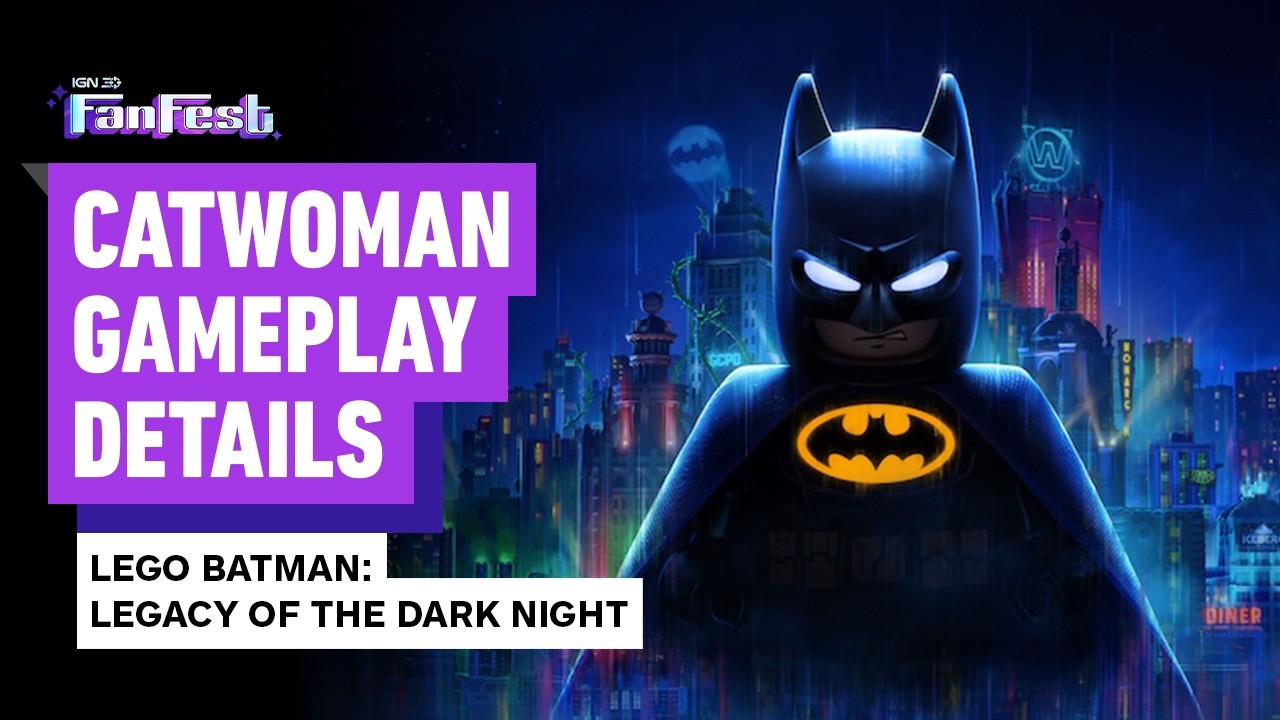
lego batman: legacy of the dark knight has officially entered the grid, reconstructing Gotham as a modular, brick-built playground tuned for co-op patrols and replay-heavy routing. Over the last seven days, the title’s deployment has been defined by two converging storylines: a clean, high-visibility launch marketing push, and a quieter—but more technically interesting—early-access breach on Xbox that momentarily slipped past platform security.
From a #gamedev and platform-ops perspective, this first week is less about sales fireworks and more about how TT Games and platform holders respond to a security anomaly while maintaining confidence in a family-focused, system-heavy release.
Launch Signal: Gotham in Modular Motion
Two official launch transmissions hit within minutes of each other, framing the experience around three pillars: modular Gotham, flexible suits, and co-op-centric combat.
- Brick-for-brick Gotham: Activity feed language emphasizes “modular districts” and a “reconstructed” Gotham. That suggests a hub-and-spoke city design built from reusable LEGO geometry, likely enabling live-ops friendly content drops and seasonal villain incursions without full environment rebuilds.
- Suit-swapping systems: Calling out “swap iconic suits” points to a progression framework where abilities are gear-bound rather than character-locked, a long-running TT Games design pattern now positioned as a primary fantasy lever rather than a side mechanic.
- Replay-optimized patrols: References to “collectible-heavy patrol routes” and “tag-team combos” indicate stage layouts designed for multiple passes—solo, local/online co-op, and high-completion runs. This is legacy TT design, but the framing suggests more explicit support for completionist routing and possibly better in-mission signposting.
From a production standpoint, the messaging leans into reliability: familiar LEGO combat loops, a full rogues’ gallery, and stylized, low-friction action. In the current market—where many #indiegame and AA projects chase experimental systems—Legacy of the Dark Knight is positioning itself as a stable, family-safe anchor in the release calendar.
The Early Access Breach: Xbox Build Slips the Firewall
The most technically significant event this week is the unsanctioned early unlock on Xbox, with some operators gaining access to the full build roughly 10 days ahead of schedule.
Key implications:
- Configuration, not code failure: The description suggests a scheduling or entitlement misconfiguration on the platform backend rather than a client-side exploit. That’s important for player trust: the game itself isn’t compromised; the issue lives in deployment metadata.
- Limited blast radius: The breach affected a “small cluster of users,” implying that either the entitlement flag was live only in specific regions or briefly toggled before being revoked. This reduces data-leak risk (late-game content, narrative beats) and keeps spoiler damage relatively contained.
- Rapid containment protocols: Expect “tightened protocols, revoked access, and a rapid patch.” In practice, that likely means:
- Forcing a title update that invalidates the early build’s license state.
- Syncing new launch-date flags across all Xbox storefront tiers.
- Running an audit pass on other scheduled releases sharing similar configuration templates.
For developers watching from the sidelines, this incident is a textbook reminder: release management is part of game design. If your systems depend on synchronized global events, preloads, and staggered unlocks, your deployment metadata is as critical as your combat code.
Systems Intelligence: Co-op, Suits, and Rogues’ Gallery
The launch trailer copy highlights a few systems worth tracking over the coming weeks:
1. Co-op as Default, Not Add-on
The intel calls out “co-op sorties” and “tag-team combos,” framing co-op not as a bolt-on mode but as the expected way to experience Gotham. That has several design ramifications:
- Encounter design likely tuned for two players, with enemy groupings and environmental hazards encouraging separation and recombination of the duo.
- Combo systems that reward coordinated play—e.g., one player controlling space while the other executes high-damage finishers.
- Camera and UX constraints that must remain readable for younger players while still offering enough depth for older Batman fans.
If TT Games executes, this could be a case study in how to keep a mass-market license approachable without flattening co-op depth.
2. Suit-Based Progression and Legacy Systems
The term “Legacy” in the subtitle is doing dual work: lore and systems. The mention of “legacy systems go live” in the activity feed aligns with TT’s long-standing approach to LEGO progression:
- Abilities unlocked via suits, gadgets, or character variants.
- Levels designed with gated paths that incentivize re-entry once new suits are earned.
- A meta-economy of studs and collectibles that drives experimentation rather than grind.
For #gamedev teams, this is an instructive example of evergreen design—a ruleset that can be re-skinned across IPs but still feel fresh through theming and incremental mechanical tweaks.
3. Rogues’ Gallery and Modular Districts
“Full rogues’ gallery” plus “modular districts” suggests each villain anchors a themed sub-biome of Gotham. That modularity is not just aesthetic—it’s a production strategy:
- Reusable tile sets reduce environment build time.
- Villain-specific mechanics can be layered onto shared geometry.
- Post-launch content drops can reconfigure existing districts with new enemy compositions and objectives.
This is a practical pattern #indiegame teams can emulate at smaller scale: build strong, reusable spatial modules; swap narrative and mechanical overlays to stretch production value.
Risk Assessment: Player Trust vs. Platform Ops
The Xbox breach is unlikely to materially damage LEGO Batman’s commercial trajectory, but it does surface key operational risks:
- Perception management: Families and younger players may never hear about the breach, but core audiences will. Transparent, concise messaging from both TT Games and Xbox will help frame the incident as a resolved configuration slip, not a systemic security issue.
- Spoiler containment: Even a small early-access cohort can leak late-game footage. Expect a short-term wave of clips; the question is whether the game’s value leans more on narrative twists or systemic play. For LEGO titles, the latter often dominates, softening spoiler impact.
- Launch-week stability: The mention of a “rapid patch” means early adopters should anticipate at least one mandatory update in the opening window. The real metric to watch is whether that patch targets only entitlement logic or also rolls in day-one bug fixes.
Outlook: Short-Term Turbulence, Long-Term Stability
In its first week, lego batman: legacy of the dark knight presents as a conservative but confident entry: a polished, family-oriented Gotham with replayable patrol routes, co-op-first design, and a proven progression template. The early Xbox unlock is a notable blip for platform operations, not a red flag on the game’s underlying tech.
For developers, the key takeaways this week are clear:
- Treat deployment metadata as a first-class production concern.
- Use modular environments and legacy systems to stabilize scope.
- Communicate early and precisely when platform-side anomalies occur.
As Gotham’s brick-built skyline settles into place, the next phase of intelligence gathering will focus on retention curves, completion rates for modular districts, and how effectively TT Games leverages its legacy systems to keep patrol routes feeling fresh beyond the honeymoon period.
Sources and corrections
This archive entry does not have a verified article-source list. Images and video embeds alone are not evidence for every claim.
Found an error? Request a correction. Include the passage and a supporting source.
Your games, in one place
Keep up with LEGO Batman: Legacy of the Dark Knight
Follow this game to collect its posts in your personal feed. Come back to see what you missed.
More to read about LEGO Batman: Legacy of the Dark Knight
- Source-checked briefLEGO Batman Mayhem Collection DLC arrives September 18
The Mayhem Collection DLC for LEGO Batman: Legacy of the Dark Knight is scheduled for September 18 on Xbox Series X|S. It adds Joker and Harley Quinn as playable villains, alongside a repeatable...