Automated archive / LEGO Batman: Legacy of the Dark Knight
LEGO Batman – Legacy of the Dark Knight Goes Fully Modular in Neon Gotham
LEGO Batman: Legacy of the Dark Knight has rebuilt Gotham as a modular, co-op-first playground where parody, detective work, and brick-brawling collide. This week’s Sector Intelligence Report breaks down how its suit systems, tonal recalibration, and district design quietly future-proof the Dark Knight’s latest...
AI-generated summary. This archive article does not have a current recorded source check. Check linked sources before relying on details. Editorial policy
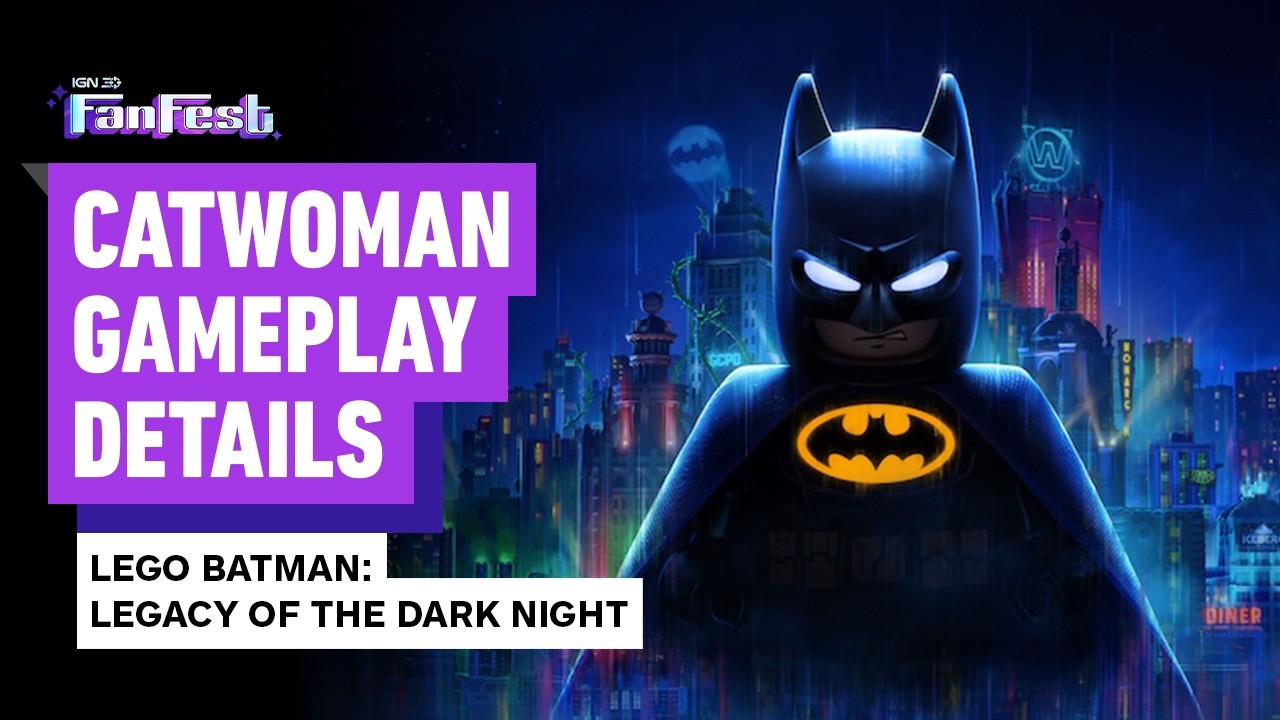
Sector Intelligence: Gotham Recompiled in ABS
LEGO Batman: Legacy of the Dark Knight has officially deployed, and Gotham has been rebuilt as a fully modular, brick-for-brick playground. Over the last week, field intel has painted a clear picture: this isn’t just another licensed tie-in, it’s a deliberate re‑engineering of Batman’s mythology into a co-op-first, replay-driven #gamedev sandbox.
The core loop is simple but sharp: patrol neon-drenched LEGO districts, swap iconic Batsuits on the fly, and chain tag‑team combos with classic allies. Underneath the slapstick veneer sits a methodical systems design that’s clearly tuned for families, couch co‑op, and long-tail collectible hunting.
Watch: Transmitting Gameplay footage from the field: Official Launch Trailer – systems go live
Gotham as a Modular Systems Testbed
Brick-for-Brick City Design
Activity feed data confirms Gotham is sliced into modular districts, each operating like a discrete scenario in a larger systems grid. This design gives the team flexibility to:
- Rotate objectives and enemy compositions for replay value.
- Layer environmental puzzles where "every stud counts" as both currency and soft gating.
- Run co-op sorties with clean drop‑in/drop‑out logic across contained arenas.
From a #gamedev perspective, this modularity is smart: it supports iterative content updates and event-style missions without destabilizing the overall campaign structure. For players, it means each patrol feels like a self-contained LEGO diorama with its own rhythm and punchlines.
Co-op, Combos, and Combat Readability
Reports highlight "combo-based brick brawls" and "tag-team combos" as central pillars. The combat system appears to favor:
- Highly readable animations over frame‑tight precision.
- Context-sensitive team moves that reward positioning and timing.
- Environmental knock‑abouts (smashable props, chain reactions, hazard triggers).
This is where Legacy of the Dark Knight leans into its family-friendly DNA. Depth is there for those who want to optimize, but the emphasis is on spectacle and shared chaos rather than punishing difficulty. For #indiegame teams studying co-op readability, this is a case study in how to keep the screen loud but legible.
Tone Recalibration: From Trauma to Slapstick
Canon Without the Psychological Scars
One of the most interesting data points is how LEGO Batman: Legacy of the Dark Knight handles origin stories. The Haly’s Circus incident is still present, but it’s reframed as "a slapstick failure‑turned‑origin pivot," preserving Dick Grayson’s path to Robin while "neutralizing trauma vectors."
This is a subtle but significant design choice. The team is effectively:
- Preserving key canon beats so fans recognize the lineage.
- Stripping out the graphic and emotional weight that would clash with the game’s comedic tone.
- Turning what would be a traumatic flashpoint into a catalytic comedy-of-errors sequence.
It’s a reminder that adaptation isn’t just about lore accuracy; it’s about tonal compatibility. For developers, this is a blueprint for re‑authoring dark source material for broader audiences without losing the structural integrity of the narrative.
The 60/40 Tone Matrix
Intel pegs the tone matrix at "60% parody, 40% detective work, 100% licensed chaos." That balance matters. The parody keeps the pacing light—visual gags, prop humor, and self-aware jabs at Batman’s brooding legacy—while the 40% detective work anchors the experience in actual problem-solving:
- Environmental puzzles demand observation and experimentation.
- Suit-swapping doubles as both mechanical and narrative expression (e.g., detective-focused suits for clue hunting, heavy armor for brawls).
- Co-op dynamics encourage players to divide roles: one scans and solves, the other smashes and protects.
It’s a tonal equation that lets younger players bounce off the jokes while older fans enjoy the meta-commentary and recognizable canon scaffolding.
Systems, Suits, and Replayability
Suit Swapping as a Design Spine
The ability to "swap iconic suits" isn’t just fan service; it’s a structural backbone. Each Batsuit effectively functions as a class archetype with:
- Distinct traversal or puzzle affordances (gliding, hacking, heavy lifting).
- Visual clarity that telegraphs capabilities instantly to co-op partners.
- Synergies that make certain pairings optimal for specific districts or bosses.
From a systems design angle, this is how you inject buildcraft into a broadly accessible action game without resorting to complex skill trees. It’s tactile, visual, and instantly legible.
Collectible-Heavy Patrol Routes
The activity feed calls out "collectible-heavy patrol routes optimized for replay." Expect:
- Layered stud routes that reward mastery of traversal and combat chaining.
- Hidden bricks and side objectives that unlock cosmetic tweaks and suit variants.
- Modular set-pieces that remix objectives on repeat runs.
This structure quietly supports long-term engagement: families can revisit the same districts with new suits, new allies, and a sharper understanding of each environment’s puzzle language.
Strategic Outlook: Where Legacy of the Dark Knight Sits in the Grid
LEGO Batman: Legacy of the Dark Knight is positioning itself as a high-uptime, co-op-first Gotham simulator wrapped in calibrated comedy. The last week’s intel suggests a project that understands its constraints and leans into them: modular level design, tone-conscious narrative reframing, and systems tuned to make replay feel like iteration, not repetition.
For #gamedev teams and #indiegame creators, the takeaways are clear:
- Modular environments are a force multiplier for content pipelines.
- Tone is a system—treat it with the same rigor as combat or progression.
- Iconic IP can be re‑authored for new audiences without discarding its structural DNA.
As more players assemble, adapt, and patrol this ABS-grade Gotham, the real test will be how well these systems scale over time. For now, the Dark Knight’s legacy looks firmly—and playfully—reconstructed in brick.
Sources and corrections
This archive entry does not have a verified article-source list. Images and video embeds alone are not evidence for every claim.
Found an error? Request a correction. Include the passage and a supporting source.
Your games, in one place
Keep up with LEGO Batman: Legacy of the Dark Knight
Follow this game to collect its posts in your personal feed. Come back to see what you missed.
More to read about LEGO Batman: Legacy of the Dark Knight
- Source-checked briefLEGO Batman Mayhem Collection DLC arrives September 18
The Mayhem Collection DLC for LEGO Batman: Legacy of the Dark Knight is scheduled for September 18 on Xbox Series X|S. It adds Joker and Harley Quinn as playable villains, alongside a repeatable...