Automated archive / Kiln
Kiln’s Pottery Combat Enters Live Fire: Launch Telemetry, Roadmap Signals, and a Procedural Clay Arms Race
Kiln’s first week out in the wild confirms it’s more than a cozy craft sim—it’s a physics-powered pottery lab feeding directly into a full-contact arena brawler. With a live-service roadmap already declassified, the race is on to weaponize clay, crack the creative meta, and turn handcrafted ceramics into...
AI-generated summary. This archive article does not have a current recorded source check. Check linked sources before relying on details. Editorial policy
Watch: Transmitting Gameplay footage from the field: Official Kiln launch showcase
Sector Intelligence Report: Kiln – Week of April 29, 2026
Kiln has formally exited the prototype bunker and gone live on Xbox, and the first week of telemetry paints a clear picture: this isn’t just another cozy craft sim. It’s a physics-forward pottery lab weaponized into a party brawler, with a procedural clay pipeline that feels more like a #gamedev toolset than a traditional character creator.
Launch Status: Ceramic Systems Online
The launch sequence for Kiln hit this week with a tone that’s perfectly on-brand: serious simulation undercut by gleefully unserious output. The network’s first notable artifact was a “butt-iful” pottery set—an early reminder that when you hand players a fully deformable clay stack, they’re going to push every boundary.
Under the jokes, the tech is doing heavy lifting. Kiln’s core loop fuses three layers:
- Clay sculpting: Player gestures are translated into precise, physics-driven deformation, giving each ceramic fighter a unique mass profile and silhouette.
- Glazing and firing: Surface treatments and firing states don’t just look different—they contribute to how pieces read in the arena and, in some cases, how they visually communicate weight and impact.
- Arena deployment: Those bespoke builds are then stress-tested in local and online brawls, where collisions, knockback, and momentum are all shaped by the underlying simulation.
This launch week confirms that Kiln is targeting a hybrid audience: creative players who’d normally live in a digital pottery studio and competitive players who want a sandboxy, high-variance party fighter.
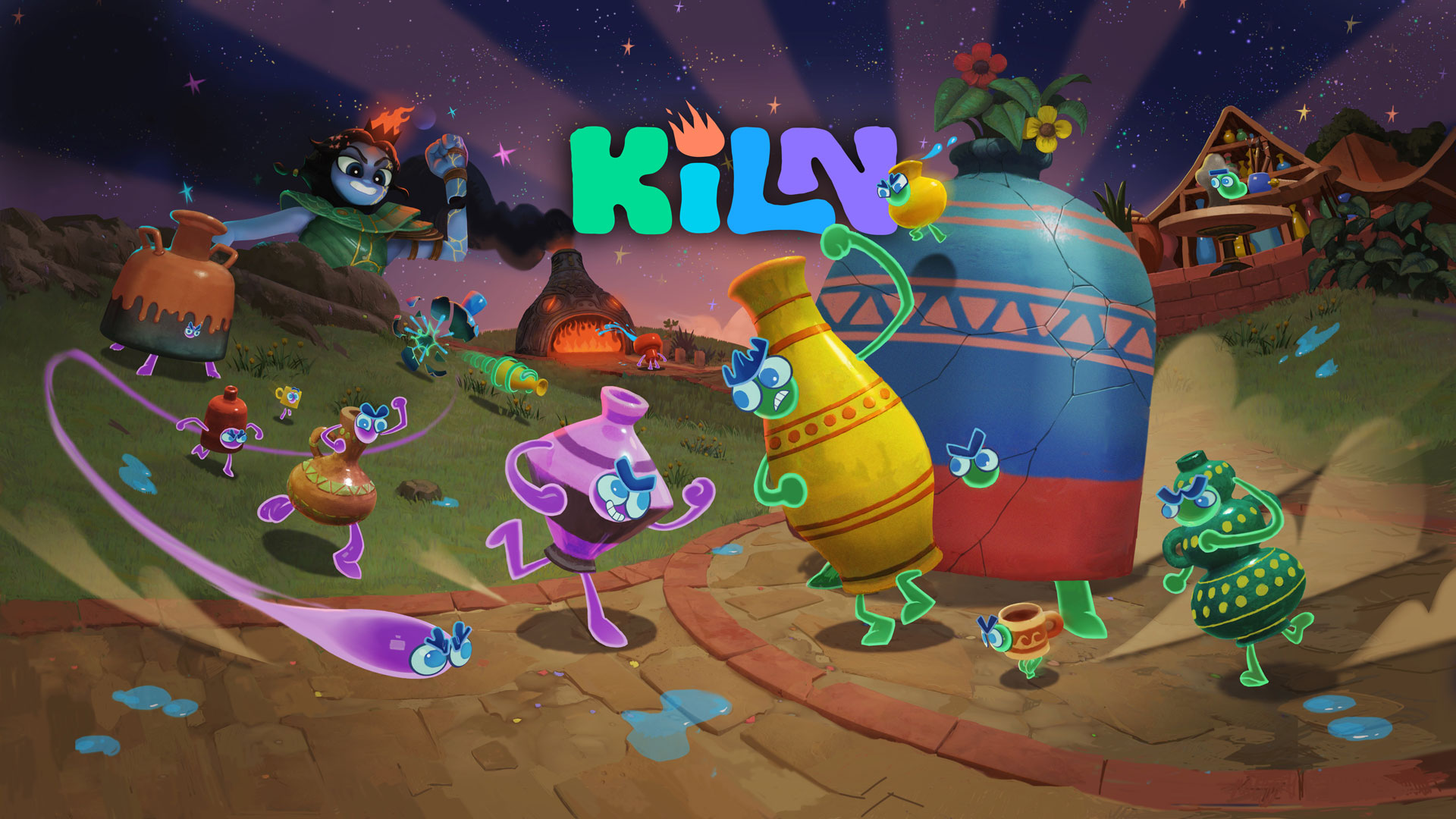
Procedural Pottery Engine: A Creative Pipeline, Not a Menu
The standout signal from this week’s intel drop is Kiln’s procedural pottery engine, described as a “physics-driven pottery and painting stack” that converts player gestures into simulated clay behavior. Instead of snapping parts together from a prefab catalog, players push, pull, and carve their way to a fighter.
For #indiegame and #gamedev watchers, this matters for two reasons:
- Tooling-first design: Kiln behaves like a specialized DCC (digital content creation) tool, wrapped in a game shell. Iteration on form, glaze, and firing is treated like a live production line, not a one-off character creator.
- Emergent balance surface: Because mass, shape, and profile are authored by the player, balance isn’t just about stats—it’s about how your sculpted geometry interacts with the physics field.
Players are encouraged to run tight creative loops: sculpt, test, iterate, then export their most successful fighters into curated digital showrooms. That last piece is key. Kiln isn’t only about winning matches; it’s about building a portfolio of “hero ceramics” that can be displayed, shared, and studied. Expect meta-discussions around optimal silhouettes, center-of-mass tricks, and how to read an opponent’s build at a glance.
Pottery Combat Tactics: Reading the Early Meta
This week’s operational brief on “Initial Engagement Protocols” frames Kiln’s combat as something closer to a physics lab than a traditional fighting game.
Early strategic takeaways:
- Mass as a weapon: Heavier, denser sculpts appear to excel in close-quarters brawling, trading agility for brutal impact. Think squat, wide bases and reinforced limbs.
- Silhouette and reach: Tall, extended forms can threaten space but risk structural vulnerability—expect meta experiments around long arms, flared rims, and unconventional balance points.
- Team synergy: With both local and online skirmishes, coordinated team compositions will matter. One player may specialize in heavy, anchor-style fighters while another brings lighter, disruptive builds.
- Arena literacy: The intel strongly emphasizes learning layouts like a technical manual. Environmental geometry will amplify or mitigate your build’s strengths; a narrow arena favors tanks, while open spaces reward mobility.
For competitive-minded players, Kiln’s first week is the time to document builds, record outcomes, and treat each match as data. The most successful fighters will likely be those iterated like prototypes, not accidents.
Watch: Transmitting Gameplay footage from the field: Kiln’s clay-forged chaos in motion
Spring 2026 Roadmap: Live-Service Clay Pipeline
Xbox’s declassified Spring 2026 roadmap confirms that Kiln is being run as a live, evolving clay lab rather than a static launch product. Key expectations based on the briefing language:
- Iterative balance passes: As the community discovers degenerate shapes and dominant mass distributions, expect targeted tuning. This may include subtle adjustments to how certain geometries handle impact, friction, or recovery.
- Tooling refinements: The sculpting and painting stack will likely get UX and control improvements as the team watches where players struggle. Look for more precise tools, better gesture interpretation, and possibly advanced options for expert builders.
- Fresh build objectives: Seasonal or event-based challenges could push players toward new design spaces—e.g., constraints on height, weight, or symmetry that force fresh experimentation.
For #gamedev observers, Kiln’s roadmap is a case study in live-ops for systemic creativity: instead of just dropping new maps or skins, the focus seems to be on refining the underlying creative machinery.
Strategic Forecast: Why Kiln Matters
From a sector perspective, Kiln is an important signal in the #indiegame landscape:
- It demonstrates how specialized simulation (pottery, glazing, firing) can be successfully fused with approachable, party-first combat.
- It reframes customization as hands-on craft, not menu-driven min-maxing.
- It positions creative tooling as the core of the live-service strategy, with balance and meta emerging from player-authored geometry.
As Kiln’s first season unfolds, watch three metrics: depth of the creative meta (what players discover is “optimal clay”), durability of the competitive scene, and how quickly the roadmap adapts to community behavior. If the team can keep that feedback loop tight, Kiln won’t just hold its niche—it will redefine what a craft-driven brawler can be.
Sources and corrections
This archive entry does not have a verified article-source list. Images and video embeds alone are not evidence for every claim.
Found an error? Request a correction. Include the passage and a supporting source.
Your games, in one place
Keep up with Kiln
Follow this game to collect its posts in your personal feed. Come back to see what you missed.