Automated archive / Indiana Jones and the Great Circle
Indiana Jones and the Great Circle Becomes Switch 2’s First Big Relic Test
Indiana Jones and the Great Circle is quietly becoming Nintendo Switch 2’s first real stress test, blending cinematic set-pieces with systemic stealth and disguise-driven infiltration. This week’s intel shows how Indy’s latest outing could reshape expectations for hybrid hardware and cross-platform game design.
AI-generated summary. This archive article does not have a current recorded source check. Check linked sources before relying on details. Editorial policy

Sector Overview
indiana jones and the great circle is quietly shifting from nostalgia play to strategic hardware showcase. Over the last week, the signal has been clear: MachineGames’ pulp adventure is now a frontline case study for cinematic #gamedev on Nintendo’s next hybrid system, while stealth-focused systems like disguises are emerging as the design glue that holds its set-pieces together.
For developers tracking tech pipelines and systemic design, this week’s intel paints a picture of a game built to pressure-test both traversal and performance across platforms, with Switch 2 now positioned as a critical proving ground.
Switch 2: Indy as Flagship Artifact
A Launch-Window Stress Test
The activity feed confirms Indiana Jones and the Great Circle as a "showcase artifact" for Nintendo Switch 2’s launch campaign. That framing matters: this isn’t just a port, it’s a benchmark. Trailer intel highlights three pillars that are particularly relevant to #gamedev teams watching from the sidelines:
- Cinematic set-pieces – High-density scripted moments, quick camera transitions, and physics-driven chaos will test I/O and streaming on a portable chipset.
- Traversal puzzles – Rope swings, climbing, and whip-assisted navigation create frequent state changes that can expose stutters or frame pacing issues on weaker hardware.
- Whip-centric combat – Input latency and animation timing are under the microscope, especially in handheld mode where wireless interference and reduced clocks can compound issues.
The report hints that Nintendo and Bethesda are treating this as a hardware thesis statement: if Switch 2 can handle one of 2024’s heaviest cinematic hitters, it repositions the platform in the eyes of both AAA and #indiegame developers who’ve historically had to downscope.
Performance Intel: Docked vs Handheld
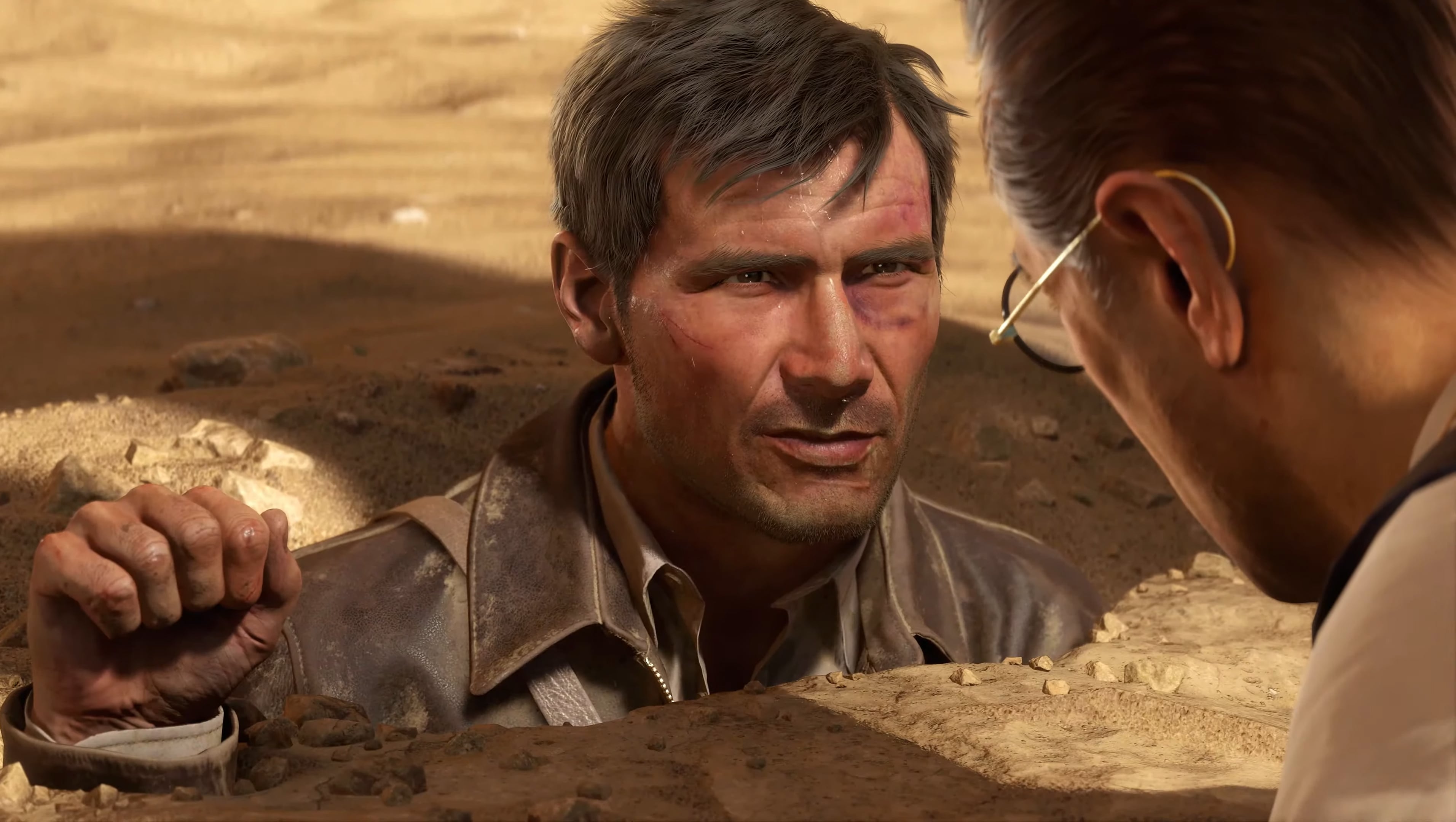
Fresh field footage shows Indiana Jones and the Great Circle running on unannounced Switch 2 hardware in both docked and handheld configurations. The language around "visual stability" and "controller input flow" is telling: this isn’t just about raw resolution, it’s about consistency.
Docked Mode
- Higher-fidelity assets: Expect more aggressive texture budgets and post-processing, especially in interior Nazi facilities and temple environments where lighting sells mood.
- Cinematic camera work: Docked mode is the best-case scenario for motion blur, depth-of-field, and filmic grading that reinforce the 1930s pulp aesthetic.
Handheld Mode
- Frame pacing discipline: The report stresses that the hybrid successor "doesn’t buckle" under one of the year’s biggest action titles. For devs, that implies a locked or near-locked target frame rate with careful dynamic resolution scaling.
- Input responsiveness: Whip attacks, parries, and contextual traversal prompts need tight timing windows. Any latency spike is instantly visible in a game built on rhythm and momentum.
The big takeaway: Switch 2 is being framed as capable of handling modern cinematic design without forcing a total systems rewrite. That’s a green flag for multi-platform pipelines that want to keep feature parity instead of maintaining a bespoke "low-spec" fork.
Systems Spotlight: Disguises as a Stealth-First Spine
The "Encrypted Wardrobe Grid" transmission shifts focus from hardware to systems design, and it’s one of the more interesting signals this week. Every disguise location in Indiana Jones and the Great Circle has been indexed, from guard uniforms to covert outfits, and the language around them suggests they’re not throwaway collectibles.
Disguises as Progression, Not Decoration
The intel explicitly frames disguises as:
- Combat bypass tools – Slotting a disguise early lets players sidestep firefights, which implies encounter setups support multiple solutions rather than funneling into mandatory combat.
- Access keys – Outfits appear to gate entry into restricted sectors, effectively turning clothing into a systemic keycard that interacts with patrol routes and suspicion meters.
- Heat management – "Keep the heat off your trail" suggests a dynamic alert system where disguise quality, proximity, and behavior feed into detection logic.
For #gamedev teams, this points to a layered stealth architecture more in line with immersive sims than a straight action-adventure. Disguise placement becomes level design pacing: putting a uniform slightly off the golden path encourages exploration and rewards players who read the environment instead of sprinting objective-to-objective.
Cinematic Delivery: Official Switch 2 Launch Transmission
The official Switch 2 launch trailer for indiana jones and the great circle doubles as a vertical slice of the game’s design priorities:
- Traversal-first framing – Repeated shots of Indy using the whip as both weapon and mobility tool reinforce that traversal puzzles aren’t side content; they’re structural.
- Pacing mix – The cut alternates between quiet archaeological beats and explosive set-pieces, suggesting a pacing curve designed to keep systemic stealth, exploration, and cinematic spectacle in rotation.
- Hybrid fit – Sequences shown are short, discrete chunks—ideal for handheld play sessions—without losing the sense of big-screen spectacle when docked.
For the broader ecosystem, the trailer positions the game as a bridge title: cinematic enough to satisfy blockbuster expectations, but built on systems (disguises, traversal, stealth routing) that #indiegame designers can study and adapt at smaller scale.
Strategic Outlook
Indiana Jones and the Great Circle is evolving into more than a licensed nostalgia vehicle. On the hardware front, it’s a litmus test for what Switch 2 can really do with modern cinematic pipelines. On the design front, its disguise systems and traversal-centric combat loop hint at a flexible stealth-action grammar that could influence both AAA and indie productions.
For developers and technically minded players, this week’s intel suggests one clear directive: watch how this game lands on Switch 2. Its success or struggle will ripple outward into porting strategies, cross-platform toolchains, and the appetite for systemic stealth in big-budget adventures over the next cycle.
Sources and corrections
This archive entry does not have a verified article-source list. Images and video embeds alone are not evidence for every claim.
Found an error? Request a correction. Include the passage and a supporting source.
Your games, in one place
Keep up with Indiana Jones and the Great Circle
Follow this game to collect its posts in your personal feed. Come back to see what you missed.