Automated archive / High on Life 2
High on Life 2 Turns Comedy Into a Core Combat System
High on Life 2 isn’t just screaming louder—it’s quietly rewriting how comedy, traversal, and gunplay can share the same design skeleton. This week’s intel traces how talking guns, skateboarding combat, and detective mechanics fuse into a single, aggressively weird FPS loop.
AI-generated summary. This archive article does not have a current recorded source check. Check linked sources before relying on details. Editorial policy
Sector Overview: Weaponized Absurdity Goes Sequel-Scale
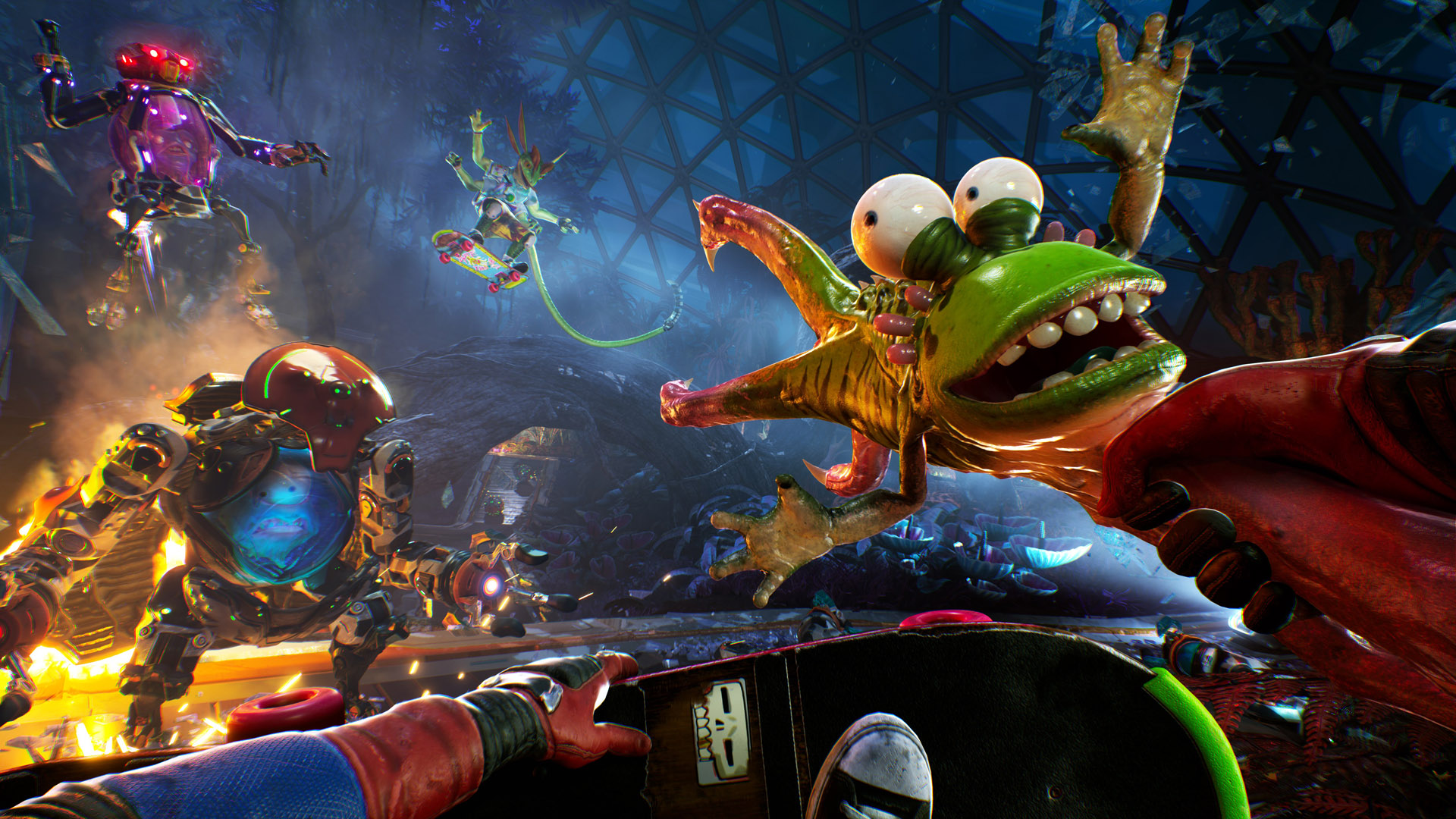
High on Life 2 has officially breached the grid, and this week’s intel confirms what the launch materials only hinted at: this isn’t just more of the same loud, profane shooter. It’s a deliberate iteration on the original’s chaotic formula, with #gamedev decisions that hard‑wire comedy, traversal, and gunfeel into a single feedback loop. From launch trailers to early hands-on reports, the sequel doubles down on talking guns, alien cartel warfare, and psychedelic biomes—while quietly tightening systems that were loose in the first game.
The headline: High on Life 2 is louder, weirder, and more mechanically confident. The jokes fire faster, the environments are denser, and the combat loop is tuned for flow rather than pure shock value.
Combat Systems: Tighter Gunfeel, Denser Encounters
Field reports point to a clear upgrade in core FPS fundamentals. Gunplay has been tuned for punchier impact and more readable feedback, with enemy encounters designed around mobility and verticality instead of static shootouts. Early 33‑minute recon footage flags an increased emphasis on traversal vectors—wall‑runs, jumps, and environmental shortcuts that let players reposition while their sentient arsenal never shuts up.
The weapons themselves are the primary design statement. Each talking gun carries a distinct personality, combat niche, and alt‑fire, turning loadout choice into both a tactical and narrative decision. Firefights now feel like a live commentary track on your performance, with reactive banter surfacing when you miss shots, overkill enemies, or chain abilities in style.
Watch: Transmitting Gameplay footage from the field: Weapons Developer Overview trailer breakdown
From a #gamedev perspective, this is systemic writing: dialogue is no longer passive flavor but a reactive layer that responds to player behavior and encounter state, pushing High on Life 2 closer to a character-driven combat sandbox.
Traversal & Skateboarding: Momentum as a Design Pillar
The biggest structural shift in the sequel is traversal. High on Life 2 doesn’t just let you move through levels; it expects you to surf them. The skateboard system effectively turns arenas into trick parks, where rails, ramps, and alien architecture double as combat tools.
Reports describe a loop where you grind through hostile zones, kickflip over enemies, and chain tricks directly into gunplay. Momentum matters: maintaining speed and flow can give positional advantage, set up flanks, or simply keep you out of the densest fire. Enemies become props in your combo string, encouraging players to treat combat like a kinetic puzzle rather than a linear corridor.
For #indiegame and mid‑scale teams watching from the sidelines, this is a notable design swing: traversal is no longer a connective tissue between fights—it is the fight.
Comedy as Core Gameplay Circuitry
The most interesting evolution is how High on Life 2 treats humor as a system, not a garnish. Current intel describes a “denser joke cadence” and an intentional wiring of punchlines into mechanics: timing, positioning, and weapon choices can all trigger bespoke comedy beats.
Encounters are effectively tuned like timing puzzles where comedic payoff can align with mechanical advantage. Land a tricky traversal combo or execute an over‑the‑top kill, and the game rewards you with bespoke lines, contextual reactions, or even altered enemy behaviors. The risk is pacing—early reviews note that narrative rhythm still wobbles under constant gag-fire—but the intent is clear: make “funny” and “fun to play” the same design problem.
This approach has implications beyond High on Life 2. It suggests a roadmap for narrative‑heavy shooters: treat dialogue as a responsive system tied to state machines and combat metrics, not as a static script.
Murder Mysteries, Secret Endings, and Structural Experiments
Underneath the noise, the sequel is quietly experimenting with structure. Tutorial intel confirms a broadened detective layer: players interrogate suspects, parse environmental clues, and chain deductions to unlock narrative progression. This murder‑mystery spine reframes parts of the game from pure FPS chaos into logic-driven puzzle spaces, with “branching suspicion trees” and evidence sequencing acting as soft locks.
Equally telling is the early secret ending route. By treating the opening zone as a puzzle box—sequencing dialogue, exploring optional detours, and activating specific objects—players can short‑circuit the standard campaign and trigger an alternate resolution while others are still internalizing controls. That’s a strong signal that the team is comfortable letting players break the intended flow if they’re observant (or obsessive) enough.
For designers, these choices show a willingness to trade clean funnels for playful edge cases—a philosophy that often pays off in community engagement and replayability.
World-Building & Presentation: Denser, Weirder, More Vertical
Environmental intel points to thicker alien biomes and more vertical cityscapes. Levels aren’t just prettier; they’re structurally busier, with layered traversal paths and combat pockets stacked above and below the main critical path. This supports both the skateboard system and the constant banter—more geometry means more opportunities for reactive commentary and emergent encounters.

The sequel’s art direction leans hard into hyper-saturated, toxic-neon palettes, but the underlying goal is readability. Hostiles, rails, and interactive elements pop against the chaos, ensuring that even at peak absurdity, players can parse what matters.
Strategic Takeaways for Developers
For studios tracking High on Life 2 as a case study, several patterns emerge:
1. Integrate Voice and Systems
Talking guns here aren’t a gimmick; they’re a systemic layer. Tying VO triggers to combat metrics, traversal events, and player choice can turn dialogue into gameplay instead of background noise.
2. Treat Traversal as Combat
By building arenas around movement tech (skateboarding, vertical routes, grind rails), the sequel makes locomotion a core verb. This is a replicable design pillar for teams looking to differentiate their shooters or action titles.
3. Embrace Structural Oddities
Early secret endings and detective sub‑systems show that structural weirdness can coexist with mainstream FPS pacing. Letting players “break” the game—in controlled ways—can become a feature, not a bug.
High on Life 2 may present as pure chaos, but the signal coming through this week’s data is clear: beneath the screaming colors and weaponized sarcasm is a carefully iterated design pass that treats comedy, traversal, and combat as a single, interlocking system.
Sources and corrections
This archive entry does not have a verified article-source list. Images and video embeds alone are not evidence for every claim.
Found an error? Request a correction. Include the passage and a supporting source.
Your games, in one place
Keep up with High on Life 2
Follow this game to collect its posts in your personal feed. Come back to see what you missed.