Automated archive / High on Life 2
High on Life 2 Turns Skateboarding, Murder Mysteries, and Talking Guns into a Weaponized Comedy Loop
High on Life 2 is quietly running one of the boldest design experiments in the FPS space: turning comedy, traversal, and talking guns into tightly integrated systems instead of disconnected gimmicks. This week’s intel shows a sequel that doubles down on chaos while quietly pushing structural and systemic innovation...
AI-generated summary. This archive article does not have a current recorded source check. Check linked sources before relying on details. Editorial policy
Sector Overview: Comedy as Core Combat Code
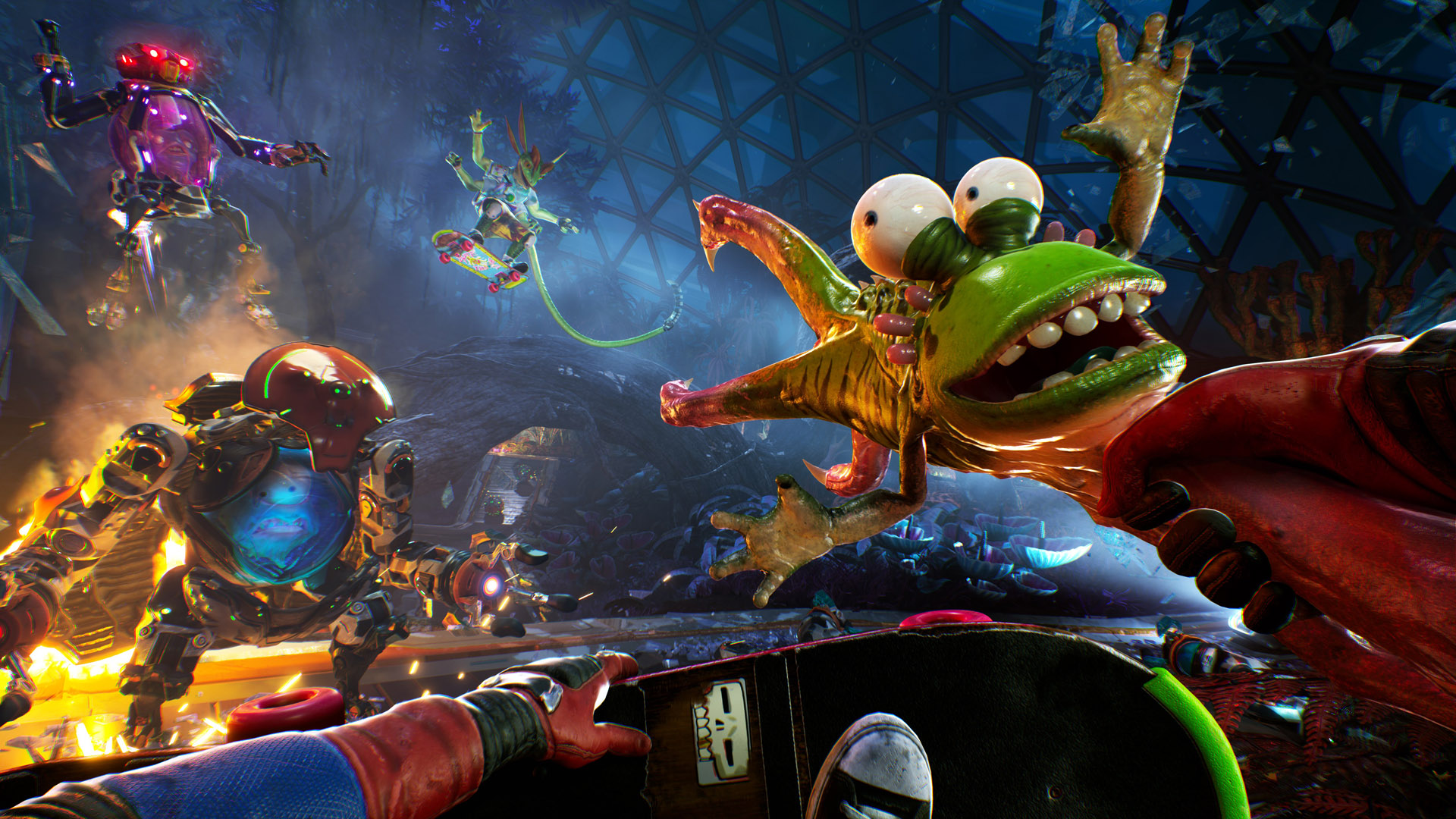
High on Life 2 is no longer just a loud sci‑fi shooter with jokes stapled on top—it’s a full systems rewrite where comedy is wired directly into the gameplay loop. Over the last week, every major intel drop has pointed to one clear directive: this sequel is escalating everything the original toyed with, from traversal and encounter design to narrative structure and weapon behavior. The result, if Squanch Games sticks the landing, is a kinetic, joke‑driven FPS that behaves more like a #gamedev sandbox experiment than a traditional corridor shooter.
The launch trailer transmission confirms a hyper‑saturated alien sprawl, cartel mutants, and dimension‑hopping tech all returning, but framed around tighter combat loops and more reactive environments. High on Life 2 isn’t chasing subtlety; it’s optimizing chaos—louder punchlines, denser encounters, and systems that treat humor as a resource you actively spend and earn.
Systems Report: Skateboarding as a Combat Platform
Watch: Transmitting Gameplay footage from the field: Weapons Developer Overview trailer
The biggest design swing flagged in this week’s feeds is the skateboard. This isn’t a throwaway traversal gadget; it’s a core system that rewires how players think about space, momentum, and crowd control.
From the skateboarding feature breakdown, High on Life 2 positions its levels as vertical, grind‑friendly playgrounds rather than flat combat arenas. You’re kickflipping over hostile lifeforms, chaining rails through alien megacities, and turning enemies into combo props. Mechanically, that implies:
- Momentum‑driven encounters: Speed and style become soft stats—enter a fight with velocity and you’re rewarded with positional advantage and trick‑based crowd manipulation.
- Traversal‑combat fusion: Lines through a level double as combat routes, encouraging players to think like a Tony Hawk speedrunner while juggling enemy spawns.
- Personality‑driven feedback: Talking guns critique your tricks in real time, folding performance evaluation into character banter and reinforcing the game’s feedback loop through comedy.
For #indiegame and mid‑scale studios watching from the sidelines, this is a notable design case study: traversal isn’t a loading screen between fights; it is the fight.
Arsenal Intelligence: Talking Guns as Systems, Not Gimmicks
Watch: Transmitting Gameplay footage from the field: Official launch trailer breach
The Weapons Developer Overview reinforces a key shift in high on life 2’s design philosophy: sentient firearms are now treated like overlapping systems rather than one‑note jokes. Each gun carries:
- A distinct combat specialty (crowd control, precision, area denial).
- A bizarre alt‑fire that changes encounter geometry or enemy behavior.
- A neurotic personality layer that reacts to your aim, movement, and tactical choices.
In practice, firefights become a three‑way conversation between player, enemy AI, and weapon AI. The field reports mention “nonstop stand‑up comedy” threaded through combat, but the critical detail is reactivity: guns don’t just talk, they contextually respond to your success, failure, and even your traversal style.
From a #gamedev perspective, this is an aggressive attempt to merge narrative systems with combat telemetry—banter as both flavor and dynamic tutorial, nudging players toward optimal behaviors without explicit UI prompts.
Murder Mysteries and Secret Endings: Structural Experiments
Beneath the neon slapstick, this week’s intel highlights two structural bets that push High on Life 2 beyond straight FPS territory.
Detective Framework in a Shooter Shell
Early tutorial data confirms expanded detective mechanics: suspect interrogation, environmental clue parsing, and evidence sequencing. Instead of pausing the game for a cutscene whodunnit, Squanch is folding murder‑mystery logic into mission flow:
- Branching suspicion trees suggest multiple valid investigative paths, with narrative locks that only open under correct evidence chains.
- Layered puzzle states turn spaces into logic boards—rooms are no longer just arenas, but stateful systems that remember your choices.
This hybridization of shooter pacing with adventure‑game logic is risky; too much deduction can stall momentum, but done right it gives players cognitive downtime between high‑velocity firefights.
Early‑Game Secret Ending as Meta‑Design
The ability to trigger a secret ending during the opening phase is a strong signal of the team’s confidence in systemic design. Treating the tutorial as a puzzle box—where dialogue choices, optional detours, and precise object activations can short‑circuit the campaign—does two things:
- Rewards systemic literacy: Players who read environments and experiment with edge‑case interactions get an immediate, tangible payoff.
- Telegraphs design values: From the first 30 minutes, High on Life 2 tells you this world is hackable, and that the “correct” path is just one of many possible routes.
For designers, this is a clear example of onboarding that teaches not just controls, but studio philosophy.
Field Performance: Pacing, Density, and Player Load
Early 33‑minute recon reports paint a picture of a sequel leaning hard into density. There’s more chatter, more verticality, and more mechanical concurrency—skateboarding, banter, detective work, and combat all firing at once.
The review intel flags one critical fault line: narrative pacing still wobbles under the constant gag barrage. High on Life 2 optimizes chaos over restraint, which may exhaust players who prefer clearer peaks and valleys in tone. However, mission structure and traversal appear measurably improved over the original, suggesting the team prioritized feel and flow, even if the script never stops talking.
From a production standpoint, this is a conscious tradeoff: sacrifice some narrative subtlety to maintain a relentless, high‑energy play rhythm that matches the game’s visual and mechanical noise floor.
Sector Forecast: What This Means for Developers Watching the Grid
For studios tracking high on life 2 as a live design experiment, several trends emerge:
- Traversal as combat multiplier: Don’t just add movement options—tie them directly into enemy behaviors, scoring, and encounter scripting.
- Personality as feedback UI: Let characters, not HUD elements, communicate performance, objectives, and soft guidance.
- Structural play in tutorials: Use early‑game spaces to signal systemic depth—secret endings, alternate routes, and breakable funnels all teach players how your world really works.
- Comedy as system, not garnish: Jokes that affect timing, positioning, or resource management will always outlast one‑off punchlines.
High on Life 2 may not convert players who bounced off the original’s tone, but from a #gamedev and #indiegame design lens, it’s one of the more aggressive attempts this cycle to fuse humor, traversal, and FPS gunplay into a single, coherent gameplay language.
Sources and corrections
This archive entry does not have a verified article-source list. Images and video embeds alone are not evidence for every claim.
Found an error? Request a correction. Include the passage and a supporting source.