Automated archive / High on Life 2
High on Life 2 Turns Comedy Into Core Combat Logic
High on Life 2 isn’t just louder than its predecessor—it’s rewiring the FPS around traversal, talking guns, and systemic comedy. This week’s intel breaks down how Squanch Games turns skateboarding chaos, murder-mystery logic, and weaponized banter into a cohesive combat loop.
AI-generated summary. This archive article does not have a current recorded source check. Check linked sources before relying on details. Editorial policy
Sector Intelligence Report // High on Life 2
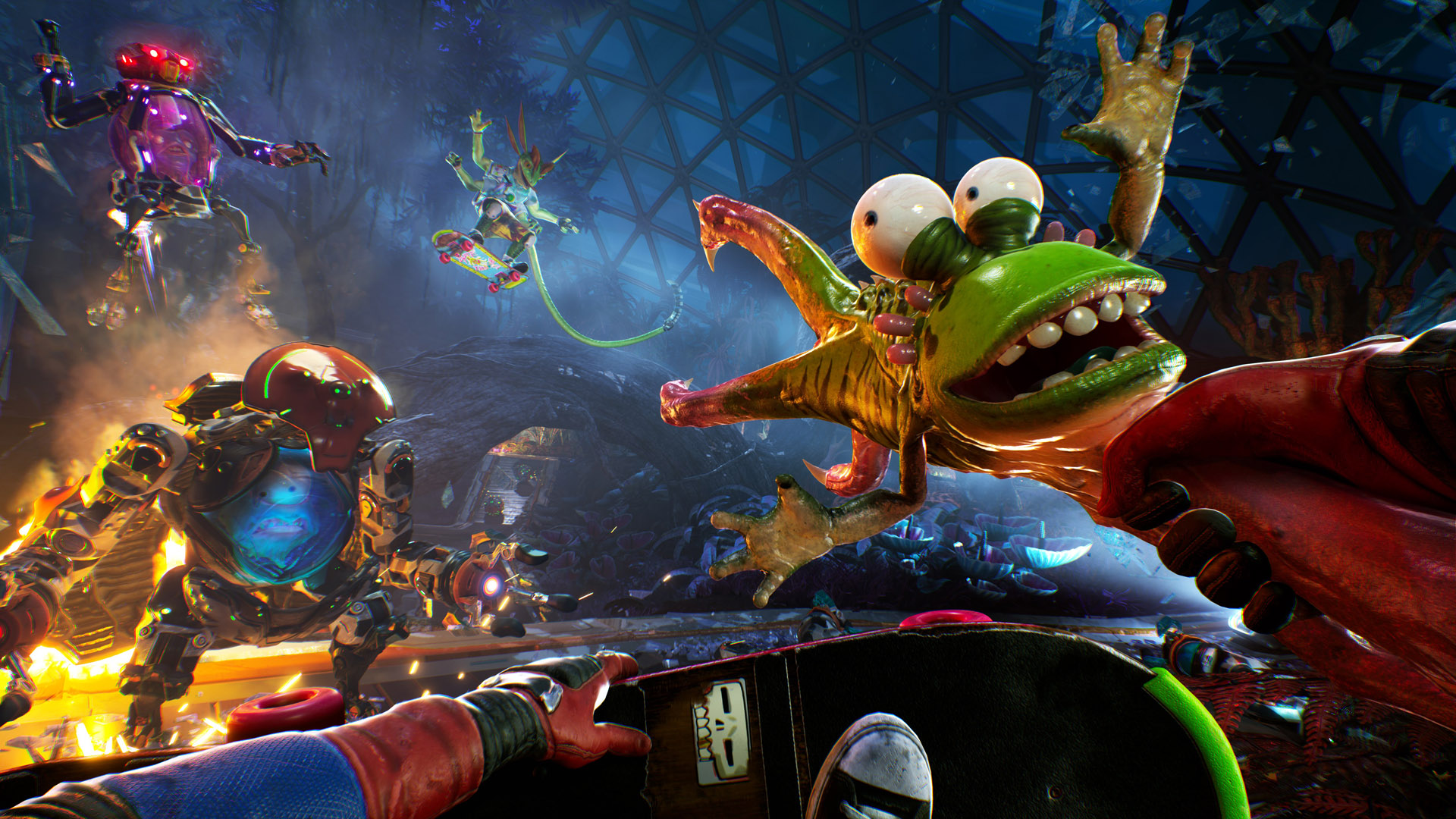
High on Life 2 has officially breached the grid, and this week’s intel paints a clear picture: Squanch Games isn’t just making a louder sequel, it’s rebuilding the FPS around traversal, talking guns, and systemic comedy. The result is a kinetic, joke-dense combat sandbox that’s aggressively allergic to subtlety—and surprisingly disciplined in its design.
From launch trailers to early reviews and tutorial breakdowns, the signal is consistent: this isn’t a simple follow-up, it’s a systems-level rethink of what a comedy shooter can be in modern #gamedev.
Combat Loop: Weaponized Absurdity, Tighter Gunfeel
Recent field reports highlight a major refinement pass on the core gunplay. High on Life 2 doubles down on sentient firearms, but this time the "talking guns" aren’t just flavor—they’re tactical instruments.
- Tighter gunfeel & feedback: Early hands-on impressions describe more responsive aiming, sharper hit reactions, and clearer combat readability, even as the screen fills with neon chaos and alien gore.
- Sentient arsenal as UI: Each weapon’s personality now doubles as a feedback channel—guns comment on your aim, your positioning, and even your combo choices, turning banter into a soft tutorial layer.
- Chaos over subtlety: Reviews flag that the sequel consciously prioritizes volume—of jokes, of particles, of enemies—over restraint, but note that beneath the noise is a more confident, better structured shooter.
This aligns with the studio’s stated design intent: humor is no longer a passive overlay; it’s wired directly into the combat loop. For #indiegame and AA studios watching from the sidelines, High on Life 2 is a case study in how VO, mechanics, and UX can be fused into a single, reactive feedback system.
Traversal & Skateboarding: Momentum as a Core Mechanic
The biggest structural upgrade over the original is traversal. High on Life 2 doesn’t just let you move through levels; it expects you to style through them.
- Skateboarding as combat glue: The skateboard isn’t a gimmick—it’s the connective tissue between encounters. Grinding rails through alien cities, kickflipping over hostiles, and chaining tricks into gunplay turns arenas into score-attack playgrounds.
- Verticality & routing: Reports from the first 33 minutes confirm increased verticality and multiple traversal vectors. Levels are built less like corridors and more like skateparks with embedded firefight pockets.
- Combo-oriented encounter design: Enemies are described as props in your next combo string, suggesting encounter design that rewards momentum and spatial awareness as much as raw accuracy.
From a #gamedev perspective, this is a notable pivot: traversal is being treated as a primary verb equal to shooting. The design echoes character-action and extreme sports DNA more than traditional shooters, with flow-state and rhythm taking priority.
Murder Mystery Systems: Comedy Meets Deductive Structure
One of the more surprising intel packets this week is the confirmation of expanded detective mechanics in the tutorial phase.
- Interrogations & branching suspicion trees: Players interrogate suspects, parse environmental clues, and navigate branching suspicion paths that can lock or unlock narrative routes.
- Evidence sequencing as puzzle design: Progression hinges on presenting the right evidence in the right order, effectively turning dialogue and environment scanning into a logic puzzle.
- Tone vs. structure: The world is still aggressively absurd, but underneath the jokes is a surprisingly rigid logic framework. Think: a murder mystery procedural accidentally swallowed by a psychedelic cartoon.
This hybridization is important. It shows Squanch is willing to slow the pace and introduce structured problem-solving to offset the constant combat-comedy barrage, giving the campaign some much-needed rhythmic contrast.
Secret Ending Speedrun: Tutorial as Puzzle Box
Another key discovery from the field: High on Life 2 allows players to trigger a secret ending during the opening phase.
- Tightly controlled interaction routing: Unlocking the early ending requires a precise sequence of dialogue choices, detours, and object interactions in the tutorial zone.
- Narrative lockout as a feature: Triggering it effectively fast-tracks you to an alternate resolution while most players are still in onboarding.
- Design implication: The tutorial isn’t just a teaching tool; it’s a systemic playground. Squanch is signaling early that rules can be bent, broken, and exploited.
From a design lens, this is a strong statement of intent: the game respects player curiosity and sequence-breaking instincts, rewarding experimentation instead of punishing it.
Comedy as System, Not Decoration
The most interesting throughline across all intel is how High on Life 2 treats comedy as a mechanical system.
- Joke cadence vs. pacing: Reviews note that narrative pacing still wobbles under constant gag-fire, but also acknowledge that the sequel is more deliberate about where and how jokes land.
- Interactive punchlines: Many jokes are now tied to player actions—specific traversal routes, weapon choices, or optional interactions—turning punchlines into unlockable states rather than passive cutscene rewards.
- Mechanical advantage via humor: Some encounters are tuned like timing puzzles where hitting certain comedic beats (or exploiting a gagged-up mechanic) yields combat benefits.
This is where High on Life 2 quietly innovates: it treats humor like any other system—cooldowns, triggers, states—and wires it into traversal, combat, and mission scripting.
Visual & World-Building: Denser, Weirder, More Confident

Environmental intel points to:
- Denser alien biomes with layered vertical paths and hidden routes.
- Hyper-saturated sci-fi sprawl that leans into visual overload without fully sacrificing legibility.
- More reactive environments, where traversal objects, props, and NPCs respond to player behavior and weapon choice.
Combined with the skateboard and talking guns, the world feels less like a backdrop and more like a co-conspirator in the joke.
Sector Outlook: High on Life 2 as a Design Signal
For developers tracking the space, High on Life 2 is a notable data point in the evolving FPS landscape:
- It treats comedy as core design, not just VO dressing.
- It elevates traversal to combat parity, echoing trends in movement shooters and action-platformers.
- It experiments with detective and puzzle structures inside a traditionally linear, joke-heavy format.
The sequel may not convert players allergic to its brand of humor, but from a systems perspective, it’s a sharper, more confident iteration that pushes the boundaries of what a comedy-forward shooter can do.
As more telemetry comes in post-launch, we’ll be watching how players engage with the skateboard-combat loop, the early secret ending, and the murder-mystery scaffolding—and whether other #gamedev teams start wiring their jokes as deeply into the codebase as Squanch just did.
Sources and corrections
This archive entry does not have a verified article-source list. Images and video embeds alone are not evidence for every claim.
Found an error? Request a correction. Include the passage and a supporting source.