Automated archive / Hades II
Hades II Breaks Containment, Locks Day-One Xbox Game Pass and Full Console Offensive
Hades II is shifting from controlled early-access anomaly to full-scale console offensive, hitting PS5, Xbox Series X|S, and Xbox Game Pass day one on April 14. Supergiant’s upgraded procedural myth engine will stress-test how a top-tier indie roguelike performs when wired into subscription-scale telemetry and...
AI-generated summary. This archive article does not have a current recorded source check. Check linked sources before relying on details. Editorial policy
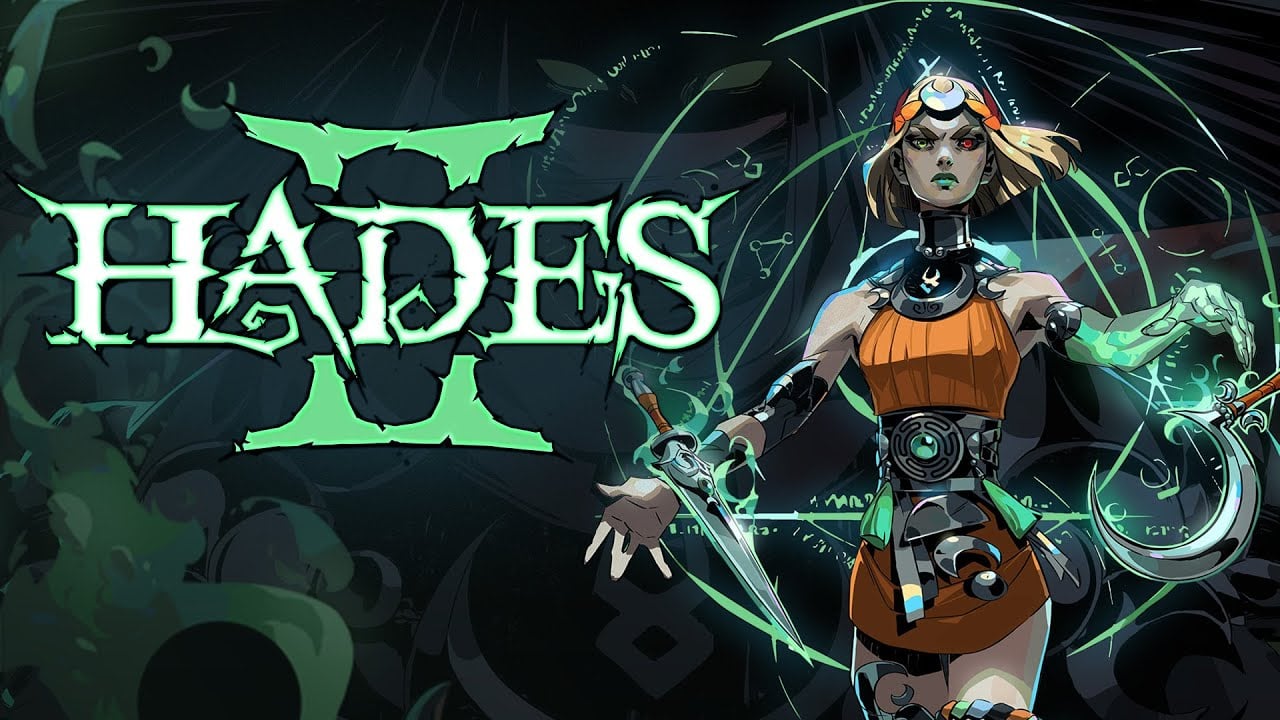
Watch: Transmitting Gameplay footage from the field: Official Hades II Underworld Operations Trailer
Strategic Overview: Hades II Expands Its Warfront
Supergiant’s hades ii is no longer a contained early-access anomaly on PC. Over the last week, the studio has confirmed a full-scale console deployment: PS5, Xbox Series X|S, and a synchronized breach into the Xbox Game Pass grid on April 14. For both players and #gamedev observers, this isn’t just a platform expansion—it’s a live case study in how a top-tier #indiegame evolves its systems, pacing, and reach between entries.
The original Hades rewired expectations for roguelike storytelling and run-based design. Hades II is now positioned as a second-generation procedural myth engine, tuned with years of telemetry from millions of prior escape attempts. The latest intel suggests this sequel is less a simple content expansion and more a systemic escalation of Supergiant’s design language.
Platform Offensive: From Switch-Locked to Full Console Grid
From Timed Containment to Multi-Platform Spread
Initial messaging framed Hades II as effectively tethered to PC and Nintendo Switch 2, echoing Supergiant’s historically conservative rollout patterns. This week’s data burst confirms a strategic pivot: the game is now locked for PS5 and Xbox Series X|S, with a near-simultaneous deployment window.
For the studio, this is a significant infrastructure challenge. Supporting multiple console architectures at launch means:
- Unified run parity: Maintaining identical run pacing, RNG behavior, and combat feel across platforms.
- Save and progression integrity: Ensuring meta-progression systems remain stable under different storage, suspend/resume, and OS-level constraints.
- Performance tuning: Adapting dense particle work, rapid-hit VFX, and AI scripting to hit consistent frame targets on both Xbox and PlayStation silicon.
From a market perspective, dissolving the prior “Switch-first” perception broadens the Hades II funnel dramatically. The underworld is no longer a niche pilgrimage; it’s a day-one mass deployment.
Xbox Game Pass Day One: Telemetry at Scale
The most consequential line in this week’s feed is clear: Hades II hits Xbox Game Pass day one on April 14. For a systems-heavy roguelike, this is an analytics multiplier.
Game Pass injects:
- High-volume early data: Millions of low-friction trial runs provide immediate feedback loops on weapon viability, boon balance, and run completion curves.
- Edge-case exposure: Unusual playstyles and hardware configurations surface bugs and exploits faster than a traditional boxed or single-platform launch.
- Retention pressure: Run structures, narrative cadence, and reward timing must hook within the first 30–60 minutes to compete with the entire subscription catalog.
For #gamedev teams watching, Hades II on Game Pass is a live A/B test of whether deep, repeat-run design can maintain stickiness in a subscription ecosystem where churn is one button away.
Procedural Myth Engine 2.0: What’s Actually Upgraded
The activity feed frames Hades II as a “procedural myth engine upgrade,” and that language tracks with what we know about Supergiant’s design priorities.
Denser Run-Based Loops
The sequel leans into denser, more intentional run structures:
- Tighter combat loops: Encounters are tuned around higher action clarity and more granular risk–reward decisions, particularly with spellcraft and resource management.
- Improved failure cycles: Death is still data. Each failed run is designed to feed back into meta-progress in more visible, satisfying ways, reducing the sense of “dead runs.”
- Smarter pacing: Expect more aggressive tuning of room variety, miniboss frequency, and narrative injections to combat mid-run fatigue.
Expanded Olympian and Mythic Roster
Hades II extends the Olympian interference layer:
- More gods, more friction: Additional Olympian personalities and boons mean exponentially more build permutations—and more balance headaches.
- Synergy-driven design: Boons and upgrades appear to be tuned less as isolated power spikes and more as combo-enabling systems, encouraging deeper buildcraft per run.
This is where prior Hades telemetry becomes critical. Supergiant can map which boons were overpicked, underused, or overpowered, and adjust the sequel’s economy and drop tables accordingly.
Refined Narrative Cadence
The original Hades proved that roguelike repetition can coexist with long-form narrative if dialogue, character arcs, and micro-stories are carefully paced. Hades II doubles down:
- Higher line density: More unique lines per run reduces repetition fatigue.
- Chrono-chaos framing: Time manipulation and “chrono-chaos” theming give the team license to revisit, remix, and recontextualize events without breaking continuity.
- Meta-structure as story: As with the first game, progression systems are not just mechanical—they’re narrative delivery mechanisms.
Combat Telemetry and Design Implications
The feed explicitly mentions “refined combat telemetry tuned for high-repeat incursions.” That’s the quiet centerpiece of this sequel.
Supergiant isn’t just making combat feel good; it’s designing for observability:
- Hitbox readability and input latency are paramount in a game built around hundreds of micro-failures.
- Damage curves, enemy patterns, and room compositions are tuned to generate analyzable patterns of success and failure.
- Boons and weapons are balanced less by gut feel and more by aggregated performance: clear times, death causes, and build popularity.
On Game Pass, this telemetry scales faster. Expect faster post-launch balance passes than the original Hades, potentially mirroring live-service tuning cycles without adopting full live-service monetization.
Sector Forecast: Underworld Conditions Next 90 Days
- Playerbase Surge: Game Pass plus PS5/Xbox Series X|S parity will likely make Hades II the most-played Supergiant title within weeks of launch.
- Design Discourse: Expect Hades II to re-enter core #gamedev conversations around run-based storytelling, death as design, and subscription-era retention.
- Indie Optics: As a flagship #indiegame operating with near-AAA expectations, Hades II will be a reference point for scope, polish, and platform strategy in the mid-tier space.
The underworld isn’t just opening again—it’s scaling. Hades II is about to test how far a systems-driven roguelike can go when its procedural myth engine is wired directly into the biggest console networks on day one.
Sources and corrections
This archive entry does not have a verified article-source list. Images and video embeds alone are not evidence for every claim.
Found an error? Request a correction. Include the passage and a supporting source.
Your games, in one place
Keep up with Hades II
Follow this game to collect its posts in your personal feed. Come back to see what you missed.