Automated archive / Grand Theft Auto VI
How Grand Theft Auto VI Is Rewriting the Open-World Playbook Before Launch
Grand Theft Auto VI’s delay isn’t dead air—it’s rewriting expectations for open-world design, platform strategy, and player spending before a single new frame ships. Here’s how GTA 6’s gravitational pull is already reshaping PS5, Nintendo’s roadmap, and the way gamedev teams scope their next move.
AI-generated summary. This archive article does not have a current recorded source check. Check linked sources before relying on details. Editorial policy

Sector Intelligence: GTA 6’s Delay, Design Pressure, and Platform Power Plays
Grand Theft Auto VI isn’t just another tentpole release—it’s the gravitational center of the entire open-world market. Every extra month Rockstar spends on grand theft auto vi raises the bar for what players expect from living cities, systemic crime sandboxes, and long-tail online economies. For developers, that delay is less a setback and more a moving target that’s actively reshaping roadmaps, tech stacks, and launch windows.
This week’s signals circle around two questions:
- Is GTA 6’s extended development cycle a gift or a threat to the open-world genre?
- Can GTA 6 still be the killer app that supercharges PS5 the way GTA 5 did for PS4—and what does that mean for everyone else shipping on console?
Design Pressure: When a Delay Becomes a Genre-Wide Benchmark
The latest intel frames GTA 6’s delay as a potential best-case scenario for open-world design. With every year added to the schedule, expectations harden:
- Denser, not just bigger, worlds – The market is done with empty map bloat. GTA 6 is now expected to deliver neighborhoods that feel authored yet reactive, with emergent encounters that don’t obviously repeat. If Rockstar nails this, it becomes the new baseline for #gamedev teams pitching any city-scale project.
- Smarter, systemic NPCs – The conversation has shifted from “more pedestrians” to behavioral credibility. The buzz around GTA 6’s NPCs—routine-driven, context-aware, reactive to crime and chaos—puts pressure on studios to rethink how much AI simulation they can afford in both budget and CPU time.
- Meaningful choices over checklist content – The genre is under fire for formulaic side missions. GTA 6 is now carrying the expectation that choices should ripple through the city’s economy, law enforcement, and social spaces. If Rockstar only iterates on GTA 5’s mission structure, the community will call it out.
For #indiegame teams, this sounds terrifying—but it’s also an opportunity. As GTA 6 pulls expectations upward, it implicitly defines the ceiling, freeing smaller projects to target focused, stylized slices of the open-world fantasy instead of competing on raw scale.
Platform Economics: Can GTA 6 Push PS5 Past PS4’s Legacy?
Two separate transmissions this week locked onto the same thesis: will GTA 6 be the software shock that finally pushes PS5 beyond PS4’s lifetime numbers? The VGC podcast debate, echoed in Breach.gg’s own analysis feed, highlights a few strategic takeaways for developers:
1. Killer App vs. Mature Cycle
PS4 rode a long, relatively stable cycle where GTA 5, The Last of Us, and big cross-gen releases had ample time to compound hardware sales. PS5, by contrast, is:
- Deeper into its cycle when GTA 6 lands.
- Competing with PC, cloud, and subscription ecosystems that didn’t have the same weight in the PS4 era.
GTA 6 will move hardware, but the question is whether it moves it enough to justify PS5-exclusive bets for late-cycle projects—or whether multi-platform and PC-first strategies remain safer for studios without Rockstar-scale marketing.
2. Attach Rates and Long-Tail Revenue
GTA 5 proved that a single IP can anchor an entire generation’s revenue through online updates and microtransactions. If GTA 6 repeats that feat, it may:
- Concentrate spending inside a few mega-live-service ecosystems.
- Siphon time and wallet share away from mid-budget AA experiments.
For studios in the #gamedev trenches, that means planning:
- Complementary, not competing, release windows – Avoid launching live-service titles head-to-head with GTA 6’s major content beats.
- Distinct value propositions – Lean into niches GTA 6 can’t or won’t touch: tighter co-op loops, genre hybrids, or stylized worlds that don’t need photoreal budgets.
Nintendo, Engine Choices, and Cross-Platform Strategy
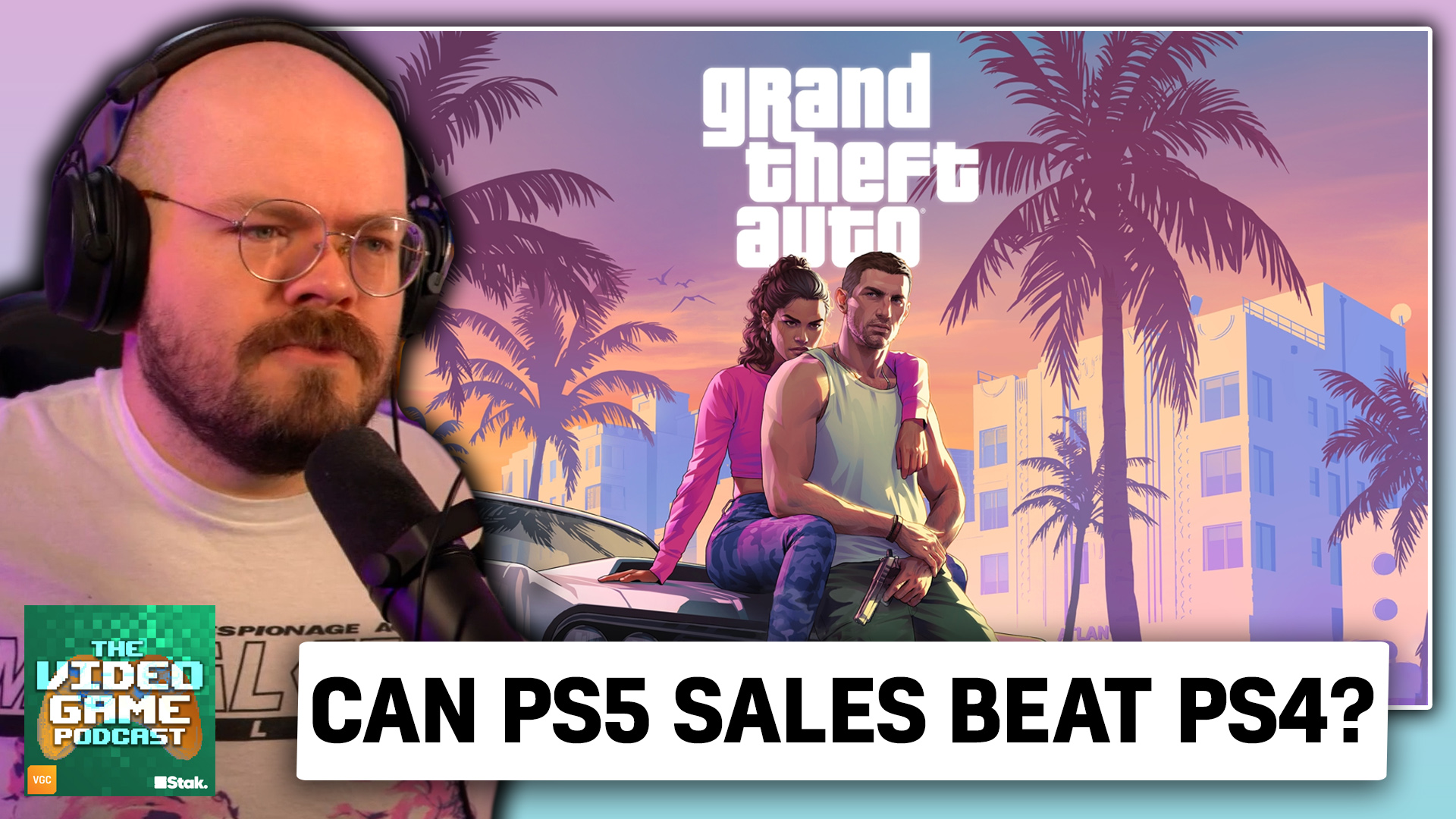
The same podcast stream that dissected GTA 6’s PS5 impact also broke down the latest Nintendo Direct. Under the surface trailers, there’s a strategic link for developers watching grand theft auto vi from the sidelines:
- Switch-friendly engines vs. next-gen fidelity – As Rockstar pushes high-end streaming, AI, and physics, Nintendo’s ecosystem still rewards efficient, stylized tech. This split lets #indiegame and mid-tier studios hedge risk: build scalable pipelines that can target both a GTA 6–era high-end console market and Nintendo’s lower-spec but massive install base.
- Visibility vs. saturation – GTA 6 will dominate mindshare on PlayStation and likely Xbox. On Nintendo hardware, however, there’s room for crime sims, city-lifers, and systemic sandboxes that can’t exist at Rockstar scale but can still ride the genre’s rising interest.
For teams planning their next project, the meta-strategy emerging from this week’s signals is clear:
- Treat GTA 6 as the reference point, not the opponent.
- Optimize engines and content scopes for platform asymmetry—high-fidelity builds where they matter, performant stylized builds where they sell.
Strategic Takeaways for Devs Watching GTA 6 from the Perimeter
- Design for contrast, not competition – Don’t build a smaller GTA; build a sharper fantasy. Lean into mechanics Rockstar won’t prioritize: social deduction, deep sim management, or handcrafted narrative branches.
- Time your launch windows – Avoid shipping your flagship within weeks of GTA 6 or its first major online expansion, unless you’re deliberately parasitic (e.g., mods, companion tools, or genre-adjacent experiments).
- Market with the wave, not against it – Position your project in relation to GTA 6’s spotlight: “tighter, weirder, cozier, more tactical” are all valid hooks when the mainstream is chasing maximalist chaos.
GTA 6’s delay isn’t just a scheduling footnote—it’s an evolving design spec for the entire open-world category. Whether you’re a triple-A studio or a three-person #indiegame outfit, the smartest play this cycle is to understand exactly what Rockstar is redefining—and then choose, very deliberately, what you refuse to copy.
Sources and corrections
This archive entry does not have a verified article-source list. Images and video embeds alone are not evidence for every claim.
Found an error? Request a correction. Include the passage and a supporting source.