Automated archive / Grand Theft Auto Online
Sector Intelligence: GTA Online’s Deadline Duet Turns Los Santos Into a Neon Killbox
Rockstar’s new Deadline Duet mode turns GTA Online’s arenas into live-edited neon killboxes, where every turn redraws the battlefield. Under the glow of Nagasaki Shotaro light trails, the studio is quietly prototyping the future of team-based spatial combat inside a decade-old sandbox.
AI-generated summary. This archive article does not have a current recorded source check. Check linked sources before relying on details. Editorial policy
Sector Briefing: Neon War on Wheels
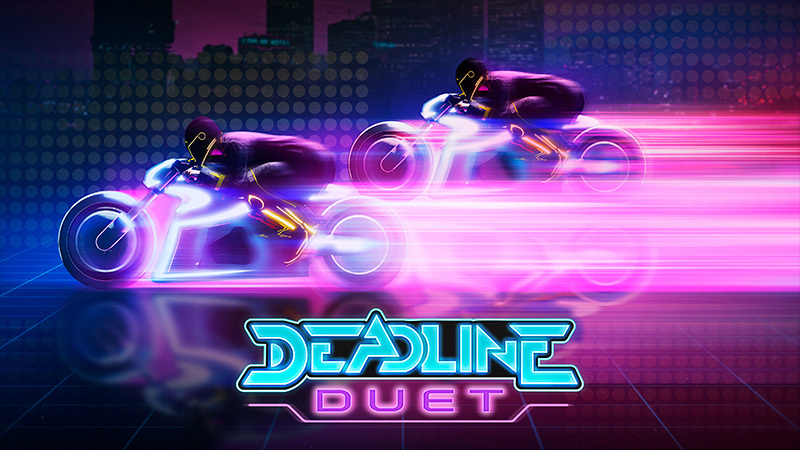
grand theft auto online just lit up its live-ops grid with Deadline Duet, a new Adversary Mode that doubles down on the series’ long-running obsession with vehicular combat and spectacle. Think Tron light-cycle deathmatch, reimagined for career criminals who’ve traded bank vaults for vector lines of instant deletion.
Two riders, one arena, and a lattice of lethal light trails: Rockstar’s latest deployment isn’t a content drop so much as a systems test—of team coordination, spatial control, and how far you can push an aging engine into cyberpunk territory without losing readability.
Mode Intel: How Deadline Duet Rewires the Arena
Two-Stack Threat Model
Deadline Duet pivots from the original solo Deadline format into a 2vX team architecture. By forcing players into pairs on Nagasaki Shotaro bikes, Rockstar is implicitly designing for:
- Crossfire geometry – One rider corrals, the other executes. You’re not just surviving; you’re drawing soft walls that funnel enemies into kill funnels.
- Zone denial over pure chase – The optimal play isn’t to tail opponents, but to pre-empt their routes and weaponize the arena’s topology.
- Communication as a win condition – This is a rare GTA Online mode where a muted mic is effectively a self-nerf.
From a #gamedev lens, this is a classic example of emergent complexity from simple rules: no new guns, no exotic gadgets—just a movement model, collision logic with trails, and a shrinking set of safe vectors.
Light Trails as Dynamic Level Design
The real innovation isn’t the bikes; it’s the light trails as temporary level geometry. Every line you draw is:
- A moving wall with a lethal hitbox
- A short-lived piece of cover / denial
- A psychological pressure line that forces bad decisions under time stress
In practice, players are authoring the map in real time. For developers and #indiegame teams, Deadline Duet is a case study in how to:
- Use player-created hazards instead of static traps
- Keep arenas visually clean while still feeling dense and dangerous
- Encourage foresight over reflex, by making the consequences of each turn persist for precious seconds
Economy & Live-Ops: Why This Drop Matters Now
Rockstar is attaching elevated GTA$ and RP payouts to Deadline Duet during its launch window, a familiar but effective live-ops lever. For grand theft auto online, which lives or dies on session stickiness, this does three things:
- Reactivates lapsed PvP players who burned out on gunplay-heavy modes and want something more deterministic and skill-based.
- Offers a grind alternative to heists and cargo runs, giving progression-focused players a high-intensity, low-downtime loop.
- Showcases legacy content (the Shotaro, neon cosmetics, futuristic arenas) in a fresh mechanical context, extending the tail on older asset investments.
From a development update standpoint, it’s notable that Rockstar can still carve out new play patterns inside a decade-old sandbox without shipping new map biomes or major engine revisions. This is systems design doing the heavy lifting.
Design Takeaways for Developers
For studios watching from the sidelines—especially #indiegame and smaller #gamedev teams—Deadline Duet broadcasts a few clear lessons:
- Leverage iconic movement: The Shotaro’s handling and silhouette are instantly readable. Build modes around your most expressive locomotion systems.
- Let players draw the danger: Player-authored hazards (light trails, ink, slime, etc.) can deliver high drama with relatively modest content budgets.
- Reward coordination, not just aim: Modes that hinge on timing, pathing, and communication can diversify your PvP meta without fragmenting your player base.
- Refresh without rebuilding: Rockstar shows how to re-skin and re-frame existing assets into something that feels event-grade.
Community Pulse & Exploit Risk
The wider player culture around grand theft auto online has always danced on the edge between creative play and system abuse—from early LAN desync dupes to today’s account-theft scams tied to duped items. Any mode with tight timing windows and collision-dependent logic (like light trails) is a magnet for:
- Lag-switch style desync attempts
- Hitbox and trail-persistence exploits
- Account-level fraud tied to high-earning event modes
For Rockstar, the challenge is to keep Deadline Duet’s high-speed, high-stakes fantasy intact while hardening netcode and detection around obvious abuse vectors. For other developers, this is a reminder: the more elegant and deterministic your ruleset, the more attractive it becomes to players trying to bend it.
Strategic Outlook: Why Deadline Duet Signals Longevity
Deadline Duet isn’t just another playlist filler—it’s a signal that Rockstar is still willing to experiment at the systems layer of grand theft auto online this late in the game’s lifecycle. By focusing on:
- Tight, replayable arenas
- Team-centric spatial puzzles
- Elevated event rewards
…the studio is quietly stress-testing ideas that could inform whatever comes next in the GTA ecosystem.
For players, it’s a reason to log back in. For developers, it’s a live case study in how to keep a mature live-service title feeling sharp without overextending your production pipeline.
Sources and corrections
This archive entry does not have a verified article-source list. Images and video embeds alone are not evidence for every claim.
Found an error? Request a correction. Include the passage and a supporting source.