Automated archive / Grand Theft Auto Online
Neon War Protocols and Relationship Economics in Grand Theft Auto Online
Rockstar’s latest Grand Theft Auto Online cycle weaponizes relationships, geometry, and nostalgia in one neon-soaked Valentine’s operation. Deadline Duet, 4X crew payouts, and meta-shifting vehicles reveal a studio quietly tuning social systems and survivability under the cover of event hype.
AI-generated summary. This archive article does not have a current recorded source check. Check linked sources before relying on details. Editorial policy
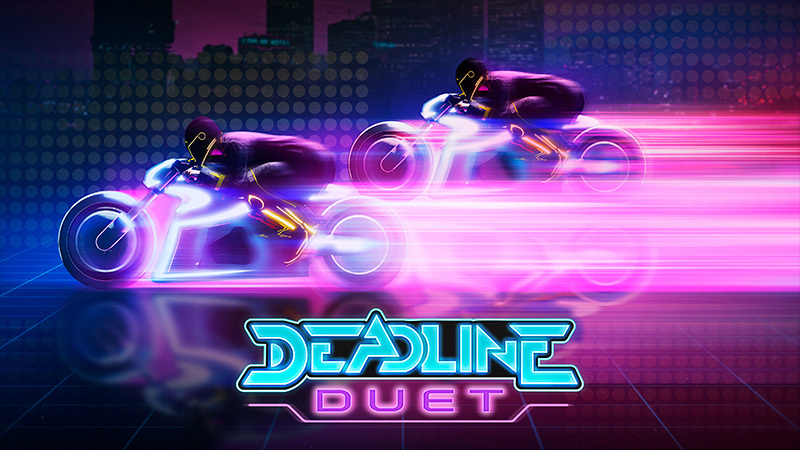
Deadline Duet: Tron-Style Murdercycling Becomes Core Seasonal Tech
Rockstar’s latest deployment into grand theft auto online is not just another Adversary Mode; it’s a systems-level experiment in co-op pressure and spatial control. Deadline Duet pairs two riders on Nagasaki Shotaro light bikes inside a neon arena, then turns geometry into the primary weapon. Your throttle finger effectively becomes a level-design tool: every tight turn and hard cut lays down a lethal light trail that rewrites the map in real time.
Mechanically, this is an evolution of the original Deadline formula, but the duet twist changes player psychology. Solo survival gives way to synchronized execution—double flanks, pincer traps, and bait-and-switch maneuvers. The arena is no longer just a killbox; it’s a shared canvas where two players sketch out a death maze under time pressure. From a #gamedev perspective, this is Rockstar doubling down on readable telegraphs (bright trails, clean silhouettes) and deterministic rulesets that reward pattern recognition over raw twitch.
Relationship Warfare: Valentine’s Event as Social Systems Test
The current event window reframes Valentine’s in Los Santos as an economic op rather than a purely cosmetic one. Deadline Duet is paying out Triple Rewards over the next two weeks, with a Weekly Challenge that hands out GTA$100,000 for two wins. That’s a low-friction objective designed to pull even lapsed players into at least a couple of matches, feeding the matchmaking pool and stress-testing the new mode’s retention curve.
On top of that, Rockstar is quietly running a social experiment: Associates and Bodyguards earn 4X GTA$ through February 18. That multiplier turns any crew configuration—couples, trios, full crew stacks—into a high-yield income engine. It incentivizes players to formalize their social graphs (SecuroServ, MC roles) instead of running freelance. For designers watching from the outside, this is a textbook example of using temporary economic buffs to steer player behavior toward more structured, role-based play.
Cosmetically, the Valentines Onesie login reward is the soft power layer—low-cost, high-visibility FOMO that syncs fashion with the event’s “weaponized romance” theme. It’s a reminder that even in a live-service built on chaos, wardrobe loops remain one of the most reliable engagement levers.
Hardware Meta: Nagasaki Shotaro Discount and Pfister Astrale Onboarding
The Nagasaki Shotaro sits at the center of the Deadline Duet design, and Rockstar has aligned the in-game economy accordingly. A 50% discount at Legendary Motorsport until February 18 is more than a sale; it’s a funnel. Lowering the buy-in cost for the mode’s signature vehicle reduces friction for new and returning players, seeding more Shotaro owners into free roam and future events.
On four wheels, the new Pfister Astrale is a deliberate nostalgia play: ‘90s sports-car silhouette wrapped around modern systems. The inclusion of Hao’s Special Works customization and Missile Lock-On Jammer support shows Rockstar’s continued response to free-roam threat saturation. In design terms, this is power creep with guardrails—offering survivability tools that let players opt into counterplay without completely invalidating existing aerial and homing-threat ecosystems.
For #indiegame and #gamedev teams analyzing from the outside, the Astrale’s integration is instructive: new content is not just a stat block, it’s an answer to a meta problem (guided chaos) and a reason to revisit old spaces with slightly altered risk profiles.
Exploit Culture and Long Memory: Same Bugs, Better Graphics
One of the more telling signals from the community this week was a reflection on the continuity of exploit culture—from tape-deck checksum errors and LAN-cable dupes to modern account-theft economies. The throughline is clear: players will always probe for desyncs, timing windows, and value leaks.
For a live-service like grand theft auto online, this is both a threat vector and a design constraint. Systems like Deadline Duet, with highly deterministic arenas and low netcode ambiguity, are partially a response to that reality. The less room for illegible state, the harder it is to mask bad behavior as “lag.”
In aggregate, this week’s update cycle paints a clear picture: Rockstar is using neon spectacle and holiday theming as a delivery vehicle for deeper structural tuning—social incentives, economic multipliers, survivability tools, and tighter competitive sandboxes. Under the glow of the Shotaro’s light trail, the long war for player time, trust, and retention continues.
Sources and corrections
This archive entry does not have a verified article-source list. Images and video embeds alone are not evidence for every claim.
Found an error? Request a correction. Include the passage and a supporting source.