Automated archive / God of War: Sons of Sparta
How Sons of Sparta Reforges God of War’s Past into a Playable Origin Dossier
God of War: Sons of Sparta is emerging as a tightly engineered origin dossier, not a disposable spin-off. This week’s intel shows how Santa Monica Studio and Mega Cat Studios are weaponizing retro design, sonic warfare, and behavioral continuity to reforge Kratos’ earliest campaigns.
AI-generated summary. This archive article does not have a current recorded source check. Check linked sources before relying on details. Editorial policy
Sector Overview: A New Theater for an Old God
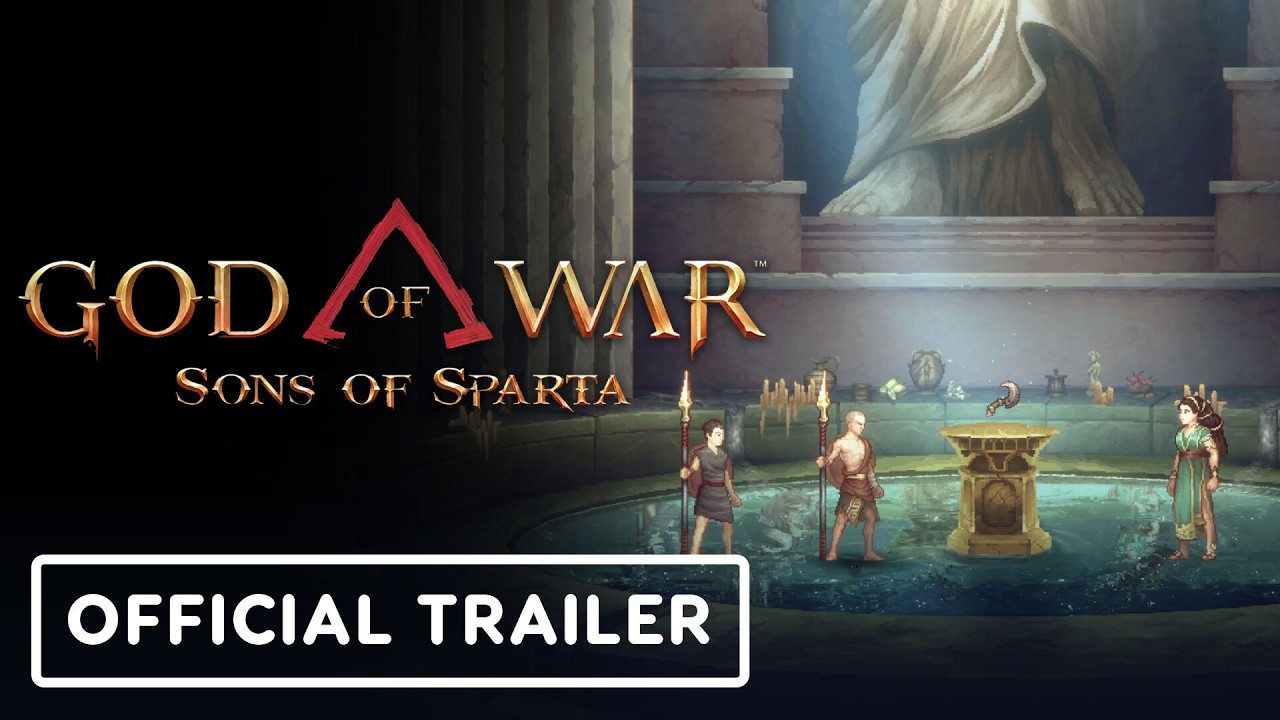
In the last seven days, god of war: sons of sparta has shifted from curiosity to calculated weapons test across the action landscape. Santa Monica Studio and Mega Cat Studios are positioning this project not as a side-story, but as a tactical origin brief: a retro-forged prequel that translates Kratos’ earliest Spartan operations into crisp, readable systems rather than cinematic overload. For developers tracking #gamedev and #indiegame workflows, Sons of Sparta is quietly becoming a live case study in IP deconstruction, legacy preservation, and format re-deployment.
Three core intel streams define this week’s signal: a clinical field review of combat and pacing, a behind-the-scenes dive into the game’s sonic warfare, and a technical autopsy of how PS2/PS3-era rage is being repackaged into a modern pixel pipeline.
Field Review: Mechanically Brutal, Structurally Disciplined
The latest operational debrief frames God of War: Sons of Sparta as “mechanically brutal, emotionally calibrated, and structurally optimized for franchise continuity.” That’s not marketing copy; it’s a design thesis.
From a systems perspective, the combat loop is described as choreographed brutality: tight hit-stop, clear animation tells, and high signal-to-noise in enemy behavior. Where mainline God of War leans into cinematic spectacle, Sons of Sparta appears to strip the encounter design down to telemetry—hitboxes, invincibility frames, and positional control you can read at a glance.
Narrative pacing is equally utilitarian. Instead of sprawling cutscenes, the campaign reportedly deploys short, high-impact narrative beats that reinforce Kratos’ Spartan conditioning and early trauma. The “Spartan legacy handoff” is the key: this game is engineered as a bridge node between mythic PS2-era rage and the more introspective fatherhood arc of the modern series.
For developers, the takeaway is clear: you can design for franchise continuity without bloating scope. Sons of Sparta is operating like a compact origin dossier—a focused, mechanically dense experience that still moves the canon forward.
Sonic Warfare: The Symphony of Sparta Initiative
The “Symphony of Sparta” behind-the-scenes clip reframes the soundtrack as a combat system in disguise. Santa Monica Studio’s audio division isn’t just painting mood; they’re weaponizing:
- Orchestral scoring that swells with combo escalation, reinforcing player momentum.
- Choral assaults that spike during narrative inflection points, tagging moments of Spartan indoctrination and battlefield horror.
- Percussive impacts synced with hit reactions and environmental destruction for heightened tactile feedback.
What’s notable from a #gamedev perspective is how the team talks about “emotional throughput” and “battlefield immersion” as measurable outputs. Every roar, clash, and lament is tuned not just for fidelity, but for readability and emotional intent—a practice more and more mid-scale and #indiegame teams can (and should) mirror.
Audio here isn’t a post-process veneer; it’s core encounter design. The soundscape is calibrated as carefully as enemy AI or level layout, giving Sons of Sparta a sense of operational cohesion that belies its retro visual profile.
From Past to Pixel: Controlled Evolution of a Spartan Weapons Platform
Watch: Transmitting Gameplay footage from the field: From Past to Pixel – Reforging Kratos’ Legacy
The “From Past to Pixel” breakdown is the week’s most valuable transmission for developers. Santa Monica Studio describes Sons of Sparta as “controlled evolution of a Spartan weapons platform”—a pointed way of saying they’re re-implementing legacy systems with surgical restraint.
Key technical and narrative maneuvers:
1. Mapping Legacy Rage into Modern Systems
Designers are reverse-engineering PS2/PS3-era Kratos by abstracting his behavior into data: attack cadence, aggression curves, and the emotional tone of his animations. Those parameters are then re-implemented in a new visual and animation stack, ensuring the pixel art Kratos still moves and feels like the same weapon we remember, just in a different rendering language.
This is franchise stewardship by behavioral continuity, not just lore bullet points.
2. Animation and Combat Logic in a Pixel Stack
The team highlights how animation systems and combat logic are being compressed into a high-clarity, low-noise pixel format. That means:
- Fewer frames, but stronger silhouettes and snappier transitions.
- Clear telegraphs on enemy attacks, readable even on small screens.
- Hit feedback tuned through screen shake, palette shifts, and sound, rather than particle overload.
For #indiegame teams looking to handle big IP or complex combat in 2D, this is a blueprint: prioritize legibility and behavior over spectacle.
3. Emotional Telemetry Between Father and Son
Even as a prequel, Sons of Sparta is built with forward-facing emotional telemetry. The devs openly talk about tracking how this younger Kratos’ decisions, regrets, and battlefield conditioning will echo into his eventual role as a father. That means narrative flags, character beats, and even combat barks are designed to align with established canon from the 2018 reboot and beyond.
The result is a rare thing: a retro project that behaves like a long-term narrative investment, not a disposable spin-off.
Mega Cat Studios: Retro Doctrine, Modern Oversight
The final intel stream focuses on Mega Cat Studios, the external unit executing this pixel-forged prequel under Santa Monica Studio oversight. Their codename “Mega Cat” is rooted in a cartridge-era mindset—a commitment to constraints, clarity, and mechanical focus.
In practice, that doctrine manifests as:
- Stripped-down mechanics that foreground core combat and traversal.
- Level design tuned for fast iteration and replayable challenge loops.
- A visual pipeline optimized for low overhead, high legibility, ideal for multi-platform deployment.
With Santa Monica Studio acting as lore and systems custodians, Mega Cat is effectively running a live R&D lab on how to miniaturize a blockbuster action franchise into something leaner without losing identity. For the broader #gamedev sector, this collaboration is a signal: AAA and retro-focused teams can co-author canon if pipelines and responsibilities are cleanly defined.
Sector Takeaways: Why Sons of Sparta Matters
Within this week’s activity window, God of War: Sons of Sparta has clarified its role in the franchise and in the development ecosystem:
- It’s a mechanically focused prequel that respects the brutality and tempo of classic God of War while adopting modern clarity and emotional nuance.
- It treats audio, animation, and narrative as tightly integrated systems, not independent departments.
- It demonstrates how a major IP can be safely entrusted to a retro-specialist partner without diluting canon.
For studios watching from the perimeter, Sons of Sparta isn’t just another spin-off. It’s an operational proof-of-concept on how to retool legacy franchises through smaller, sharper projects—and still move the long-term story forward.
Sources and corrections
This archive entry does not have a verified article-source list. Images and video embeds alone are not evidence for every claim.
Found an error? Request a correction. Include the passage and a supporting source.
Your games, in one place
Keep up with God of War: Sons of Sparta
Follow this game to collect its posts in your personal feed. Come back to see what you missed.