Automated archive / God of War Laufey
God of War Laufey Reprograms the Franchise Combat Core
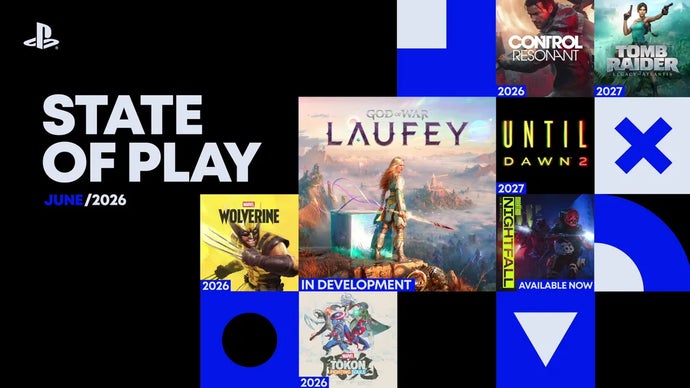
God of War Laufey is not a side-story; it’s a full-scale reprogramming of the God of War combat and narrative stack around Faye as a high-mobility, spell-forward protagonist. This week’s intel from State of Play 2026 shows how Sony Santa Monica is weaponizing performance capture, encounter design, and platform...
AI-generated summary. This archive article does not have a current recorded source check. Check linked sources before relying on details. Editorial policy
Sector Intelligence Report // God of War Laufey
Sony Santa Monica just flipped the God of War stack: God of War Laufey pulls Faye from narrative ghost to fully playable protagonist, and the first wave of telemetry out of State of Play 2026 suggests this isn’t a side-story—it’s a systemic reboot of how this franchise thinks about combat, camera, and character.
Across multiple feeds this week, the studio has outlined a clear thesis: Laufey is not Kratos with a different mesh. She’s a high-mobility, spell-forward combatant tuned for precision inputs, encounter scripting, and dense battlefield control. For #gamedev teams watching first-party design trends, Laufey reads like a next-gen case study in how to pivot a legacy combat engine around a radically different playstyle without losing brand identity.
Combat Telemetry: From Axe Tank to Arcane Skirmisher
Field intel from the official gameplay reveal frames God of War Laufey as a full redeployment of the combat loop. Where Kratos was a forward-pressure brawler, Faye/Laufey operates as a hybrid skirmisher–controller:
- High-mobility spellcasting: Dash-cancels, rune-based casts, and rapid repositioning show up repeatedly in the footage. Encounters are clearly tuned around staying in motion rather than holding a shield wall.
- Precision bow work: Her bow isn’t a sidearm; it’s a primary routing tool for crowd control, stagger windows, and ranged setup. Think of it as a soft lock-and-route system that preps enemies for follow-up melee chains.
- Construct-based support: Magical constructs act as semi-autonomous allies and positional anchors—pinning enemies, blocking lanes, or creating temporary safe zones. From a systems standpoint, this lets designers script multi-phase arenas without overloading the player’s direct input bandwidth.
One activity log describes the visual feedback as “a next-gen physics lab demo,” which tracks with what we see: generous hit-stop, distinct elemental states, and clear enemy telegraphs. This isn’t just spectacle; it’s readability-as-design, giving high-skill players a clean signal to push for perfect parries and timing-based counters.
Encounter Design: Tactical Mastery Over Brute Force
Multiple reports emphasize that encounters are tuned for tactical mastery, not raw stat checks. Key takeaways for designers:
- Arena density: The combat spaces showcased are tight but layered—vertical breaks, destructible props, and rune-reactive surfaces. This supports environmental manipulation as a first-class mechanic.
- Timing-based counters: Enemy patterns are telegraphed with generous animation tells but short punish windows, pushing players to learn attack libraries rather than spam dodge rolls.
- Crowd control as a resource: Laufey’s kit appears to be built around managing threat bandwidth—deciding which enemies to hard-lock with constructs, which to kite with bow shots, and when to commit to melee finishers.
For #indiegame combat designers, this is a useful reference in how to build encounters around a squishier, more agile lead without defaulting to pure stealth or ranged-only design. Laufey sits in a middle lane: she’s fragile enough that mistakes matter, but her toolkit is deep enough to reward mastery runs and challenge modes.
Narrative Pipeline: Faye Moves From Myth to System
The narrative pivot is just as significant as the mechanical one. God of War Laufey backfills the saga from Faye’s perspective, effectively treating the previous games as downstream consequences of choices she makes here.
The behind-the-scenes casting feature—mocap rigs, VO sessions, chemistry reads—highlights a production pipeline where emotional beats are built into combat choreography from day one. Actors talk about carrying grief, secrecy, and foreknowledge into physical performance, which suggests:
- Combat as character exposition: Expect move sets and finishers that reflect Faye’s internal state and relationship to the Aesir, not just her power level.
- Continuity-aware performance capture: The team is threading Laufey’s portrayal through established canon, ensuring her actions retroactively resonate with Kratos and Atreus’ arcs.
For narrative designers, this is a live example of how to treat “prequel” not as filler, but as a structural recontextualization of an existing universe.
Platform Strategy: State of Play and the Triple-A Battlefield
Sony’s State of Play positioning matters. The broadcast put God of War Laufey on the front line alongside Marvel’s Wolverine, while carefully dodging a release window collision with Grand Theft Auto. The message to the market is clear:
- First-party mythmaking is still core strategy: God of War remains a flagship PS5 pillar, now diversified through perspective shifts instead of simple sequel escalation.
- Calendar discipline: By redacting specific dates, Sony keeps flexibility against GTA’s gravitational pull while still signaling confidence in its internal studios.
From a #gamedev business perspective, Laufey represents a maturing IP strategy: expand the universe, rotate protagonists, but keep the tech stack and combat DNA recognizable.
Takeaways for Developers Monitoring God of War Laufey
For teams tracking God of War Laufey as a development update touchstone, the last seven days of intel point to a few clear trends:
- The franchise is comfortable refactoring its core combat loop around a new archetype while preserving brand feel.
- Narrative, performance capture, and encounter scripting are being treated as a single integrated system, not separate pipelines.
- Sony is using Laufey as both a technical showcase for PS5 and a strategic buffer in a crowded triple-A release landscape.
As more footage and technical breakdowns drop, expect God of War Laufey to become a recurring reference point in talks and postmortems about systemic character swaps, combat readability, and mythic-scale storytelling at AAA production values.
Sources and corrections
This archive entry does not have a verified article-source list. Images and video embeds alone are not evidence for every claim.
Found an error? Request a correction. Include the passage and a supporting source.