
Back to guides and news
Gaming
June 7, 2026
Sector Intelligence Report: God of War Laufey Turns Faye into a Full-Fledged Combat System
Sector Intelligence Report // God of War Laufey
Sony Santa Monica has formally redeployed the God of War franchise with God of War Laufey, pivoting the entire combat and narrative stack around Faye/Laufey rather than Kratos. Across the latest State of Play, we saw a full-spectrum reveal: 4K gameplay, combat telemetry, and behind-the-scenes performance capture that collectively confirm this is not an expansion, but a primary next-gen operation in the Nine Realms.
From a #gamedev perspective, Laufey is a systems-level experiment: what happens when you invert the franchise’s core fantasy from brute-force god-slaying to agile, rune-driven battlefield control—without losing the cinematic weight that defined 2018 and Ragnarök?
Tactical Snapshot: What State of Play 2026 Actually Confirmed
A Full Redeployment, Not Side Content
Field intel across multiple trailers and featurettes converges on a clear picture: God of War Laufey is a standalone PS5 entry. The State of Play segment framed it as a new operation that rewinds the timeline to Faye’s perspective, effectively breaching pre-Atreus history and the hidden Aesir information Kratos never had.
Key signals from the activity feed:
- Primary playable asset: Faye/Laufey is not a guest character—she is the combat and narrative core.
- Metaphysical theater: The framing of Faye as “dead” yet fully active suggests a post-mortem or liminal-space campaign, opening design room for surreal arenas and myth-layered level architecture.
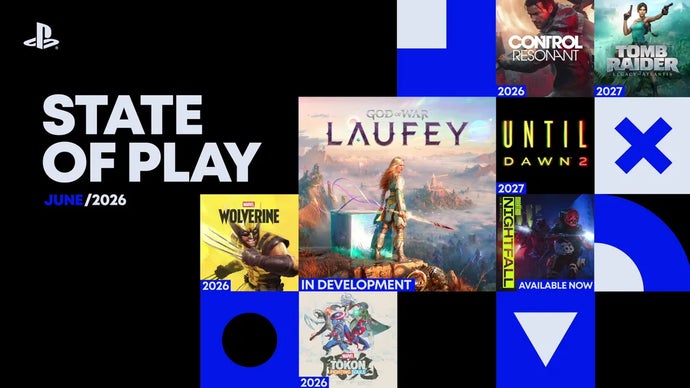
- Release strategy: Sony showcased Laufey alongside Marvel’s Wolverine while keeping exact launch windows redacted, an explicit move to avoid the GTA-aligned calendar and preserve oxygen for its own first-party slate.
For developers tracking platform priorities, this positions God of War Laufey as one of the primary PS5 showcases for late-cycle cinematic action.
Combat Telemetry: Agile Godhood Over Brute Force
The combat loop is where the pivot from Kratos to Laufey becomes more than a narrative gimmick. The latest gameplay reveal and combat-first-look trailers outline a high-mobility, high-skill combat suite tuned for precision rather than raw impact.
Core Combat Pillars
1. High-Mobility Melee and Axe Play
Laufey inherits the physicality of the Leviathan Axe lineage but reorients it around fluid chains and evasive repositioning. Telemetry from the footage shows:
Laufey inherits the physicality of the Leviathan Axe lineage but reorients it around fluid chains and evasive repositioning. Telemetry from the footage shows:
- Short, cancellable melee strings with rapid direction changes.
- Gap-closing dashes that read more like a spellblade than a tank.
- Finishers that emphasize placement—knockbacks into hazards, environmental kills, and multi-target setups.
2. Precision Rune-Casting and Crowd Control
Where Kratos leaned into raw stagger, Laufey leans into rune-driven battlefield scripting:
Where Kratos leaned into raw stagger, Laufey leans into rune-driven battlefield scripting:
- Targeted spellcasting that tags enemies for delayed detonations or debuffs.
- Radial and line-based area control, suggesting internal tools for spline-based VFX and collision tuning.
- Crowd-control states (freeze, bind, stagger) that appear chained to timing windows rather than simple cooldowns.
3. Bow and Construct Synergy
The bow is no longer just a support tool for Atreus-style AI; it’s baked into Laufey’s own kit as a precision and setup instrument. The activity feed also flags magical constructs—summoned allies or deployables that:
The bow is no longer just a support tool for Atreus-style AI; it’s baked into Laufey’s own kit as a precision and setup instrument. The activity feed also flags magical constructs—summoned allies or deployables that:
- Anchor enemy movement or funnel mobs into kill zones.
- Layer extra hit reactions and status effects on top of Laufey’s core combo tree.
- Create moments of indirect control, giving designers more knobs to tune encounter pacing.
Encounter Design: Tactical Mastery Over Button Mashing
The arenas showcased in the State of Play reveal are dense, multi-level spaces tuned for positional play and timing-based counters. For combat designers, the signals are clear:
- Enemy archetypes appear built to punish stationary players, forcing constant lateral movement.
- Telegraphs are readable but tight, pushing parry and dodge timing into a higher-skill bracket than baseline God of War.
- Environmental elements—explosive jars, destructible cover, vertical ledges—are wired into the core loop rather than mere set dressing.
This moves the franchise closer to a character-action hybrid while maintaining the heavy camera and cinematic framing that defines God of War’s identity.
Narrative Architecture: Faye as System, Not Just Backstory
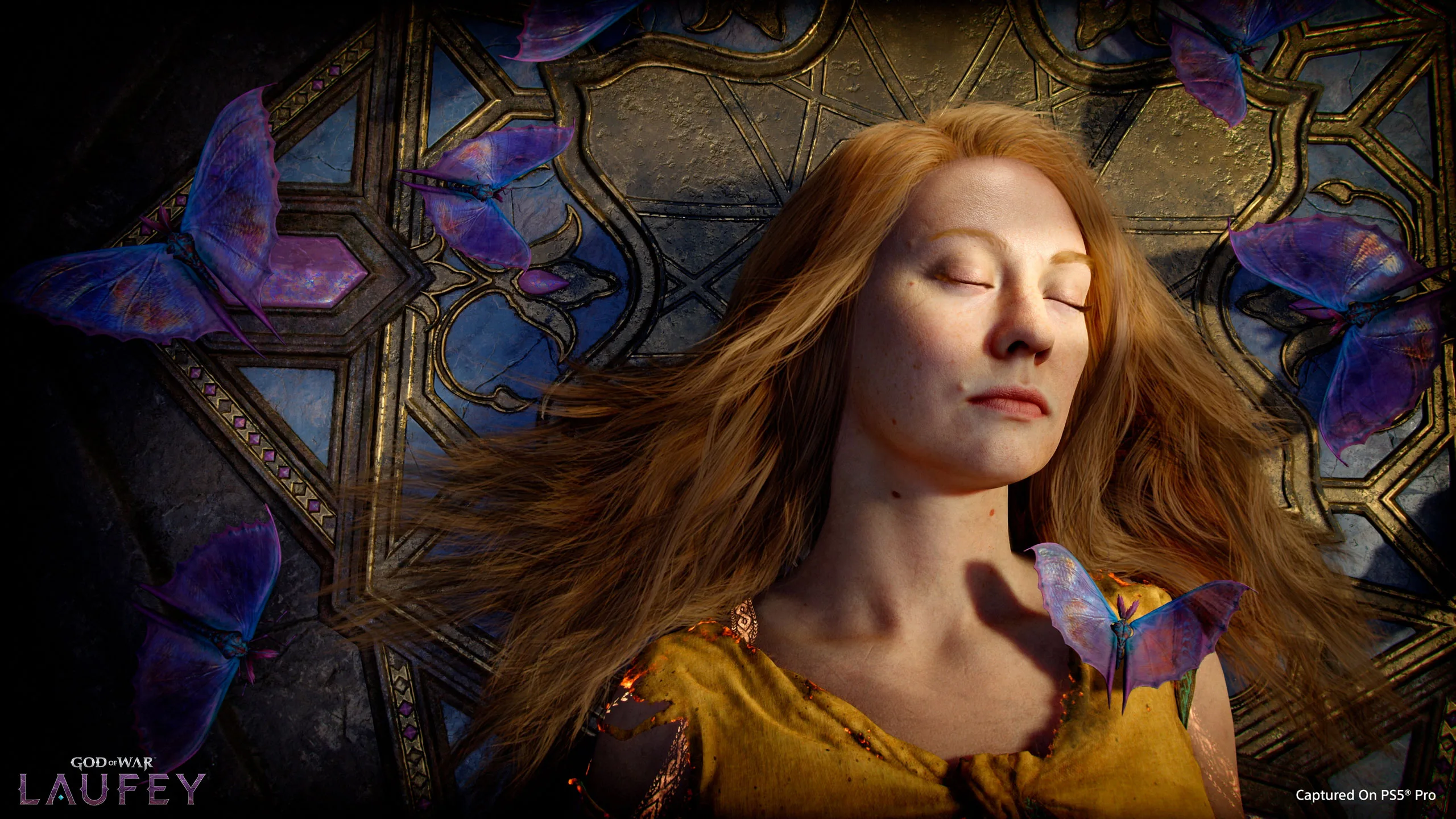
The behind-the-scenes featurette on the God of War Laufey cast is more than marketing gloss—it’s a blueprint for how Santa Monica is fusing performance, myth continuity, and combat design into a single pipeline.
Performance-Driven Combat Design
The studio’s walkthrough of VO booths and mocap rigs highlights a clear production philosophy:
- Emotional load is baked into animation data: Faye’s grief, resolve, and internal conflict are captured physically, then threaded into combat idles, hit reactions, and finishers.
- Chemistry tests inform encounter scripting: Actor interplay doesn’t just drive cutscenes; it shapes in-combat banter, callouts, and how support characters react to player performance.
- Myth continuity as a design constraint: Laufey’s Jötunn heritage and prior offscreen actions in the 2018/Ragnarök timeline act as hard guardrails for what abilities and realms can appear.
For #gamedev teams, this is a case study in cross-discipline lockstep—narrative, animation, and systems design iterating together rather than handing assets downstream.
Pre-Atreus History as Design Space
Reframing the saga through Faye’s point of view unlocks:
- New realm states: Familiar locations in earlier, less-ruined phases, giving level art a chance to contrast with the Kratos-era desolation.
- Aesir intel: Hidden information Faye knew—but never shared—that can now be surfaced as collectibles, optional bosses, or lore-driven side ops.
- Metaphysical framing: If this is post-mortem or memory-adjacent, designers can bend spatial logic—looping paths, impossible architectures, and mythic dreamscapes—without breaking canon.
This is fertile ground not only for AAA storytelling but also as a reference point for #indiegame teams exploring unreliable timelines and fragmented perspectives on a smaller budget.
Strategic Positioning: Sony’s First-Party Battlefield
The State of Play broadcast that carried God of War Laufey also spotlighted Marvel’s Wolverine, while carefully dodging direct calendar collision with the next GTA cycle. That’s a strong signal of how Sony views its first-party hierarchy:
- Laufey is being framed as a flagship PS5 showcase, not a side-story to quietly fill a quarter.
- The emphasis on 4K clarity, dense VFX, and systemic combat complexity suggests Santa Monica is targeting the upper limits of current-gen hardware late in the console lifecycle.
- By anchoring broadcast time around Wolverine and Laufey, Sony is reinforcing a first-party narrative built on gritty, mature, cinematic action as its core brand pillar.
For developers watching from the sidelines, this is the macro-level read: God of War Laufey is both a technical benchmark and a design thesis on how to evolve a known IP without discarding its identity.
Dev-Side Takeaways
From a development update angle, the last week of intel paints God of War Laufey as:
- A combat-system reinvention centered on mobility, rune-casting, and battlefield control.
- A narrative reframing that weaponizes Faye’s perspective as both lore delivery and mechanical justification.
- A production pipeline showcase, where performance capture and systems design are inseparable.
Whether you’re building a sprawling AAA or a tightly scoped #indiegame, Laufey’s reveal is a reminder: pivoting perspective—who the player is—can unlock more meaningful mechanical innovation than any single new feature bullet point.
Keep following God of War Laufey
News, guides, posts, and game details in one place.
Open the game hub, then save it to build your personal Breach feed.
More images and video
About the game
God of War Laufey
Santa Monica Studio
Intelligence indicates God of War Laufey is the next mainline evolution of the God of War franchise, shifting operational focus to Laufey (Faye), warrior and wife of Kratos. Set in a mythic Norse battlespace, the mission explores life-after-death, legacy, and the unseen front lines behind Kratos’ saga. Expect cinematic combat systems, narrative-driven action, and high-fidelity PlayStation production values. Keywords: God of War Laufey, Santa Monica Studio, PS5 action-adventure, Norse mythology.
Open game pageTopics
god of war laufey
God of War Faye
PlayStation State of Play 2026
Sony Santa Monica Studio
PS5 exclusive action games
third-person action combat design
performance capture in games
#gamedev
#indiegame
AAA narrative design
combat systems analysis
PlayStation development update