Automated archive / Forza Horizon 6
Forza Horizon 6 Turns Japan into a Multi-Layered Racing Wargame
Forza Horizon 6 is turning its fictional Japan into a vertically layered operations grid for precision driving, drag duels, and low-pressure vibe cruising. This week’s intel points to a systemic overhaul of open-world racing, with telemetry and terrain calibration at the core.
AI-generated summary. This archive article does not have a current recorded source check. Check linked sources before relying on details. Editorial policy
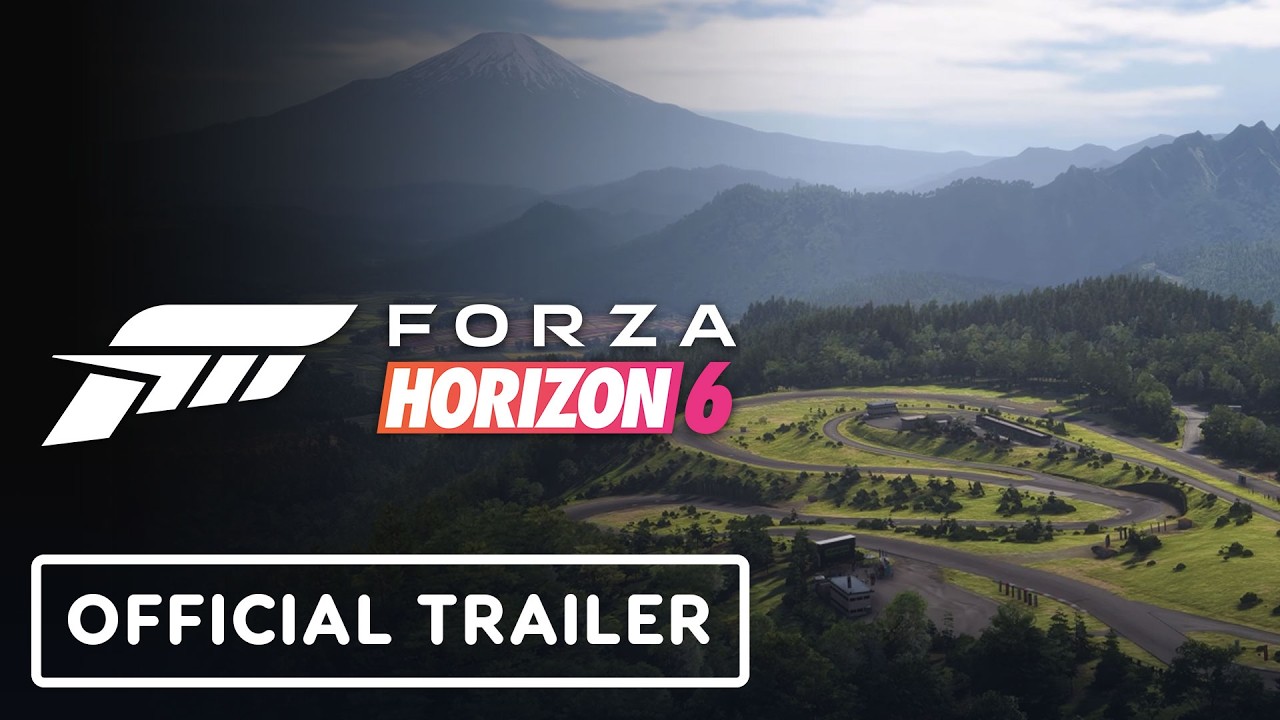
Operational Overview: Japan as a Vertically Layered Theatre
Forza Horizon 6 is positioning its fictional Japan as more than a postcard backdrop; it’s being engineered as a systemic, multi-layered racing grid. Recent field recon from the IGN First rollout confirms a dense, vertically stacked open world where highways, urban arteries, and mountain passes interlock like a mechanical puzzle. For players and #gamedev observers alike, this isn’t just a new map — it’s a fundamental rethinking of how an open-world racer can route speed, risk, and decision-making.
The layered Japan map design implies that route choice will become a core skill, not an afterthought. Stacked expressways over tight city grids, plus elevation-heavy touge-style mountain roads, create overlapping race lines that can be tuned for grip, speed, or chaos. Expect surprise routes and hidden challenges embedded into this verticality, encouraging recon-style exploration rather than simple waypoint chasing.
Systems Briefing: Open World as Multi-Mode Operations Grid
IGN’s coverage frames Forza Horizon 6’s open world as a multi-mode operations grid rather than a loose sandbox. Three pillars stand out:
1. Time Attacks as Precision Drills
Structured time attacks appear to be Horizon 6’s answer to skill-based, repeatable drills. Instead of one-off PR stunts, these runs are positioned like training sorties: fixed routes, clock pressure, and repeatable conditions. For #gamedev designers, this suggests a telemetry-rich backbone that can track player performance at a granular level, informing difficulty curves and progression.
2. Drag Corridors as High-Velocity Lanes
Dedicated drag corridors carve out straight-line, high-velocity sectors from the wider map. That separation of intent — from free-form cruising to tightly scoped acceleration duels — is a smart systems call. It allows the team to tune surface grip, wind-up distance, and crowd placement specifically for drag racing without compromising the flow of the larger open world.
3. “Vibe Driving” as Low-Pressure Recon
The standout term from the intel is “vibe driving” — low-pressure patrols through the environment designed for flow-state driving and casual recon. This is effectively a formalization of what players already do between events: roam, test cars, and soak in the world. By acknowledging and supporting that mode explicitly, Forza Horizon 6 aligns its progression with how players naturally engage, instead of forcing constant high-intensity competition.
Watch: Transmitting Gameplay footage from the field: Forza Horizon 6 open-world systems briefing
Terrain Calibration: Toyota Land Cruiser as Systems Testbed
The deployment of the Toyota Land Cruiser is more than a licensing bullet point. The language around its integration — “platform for stress-testing physics, suspension modeling, and endurance racing routes” — reads like a design note made public. This vehicle is being used as a calibration tool across mixed biomes, from urban edges to off-road sectors.
In practice, this suggests:
- Enhanced suspension modeling to handle abrupt elevation changes across Japan’s layered topology.
- Improved off-road stability that can showcase deformable terrain, weight transfer, and body roll in a readable way.
- Endurance route design where the Land Cruiser’s torque and durability make it a reference platform for long-form events.
For #indiegame and #gamedev teams studying AAA racing design, this is a textbook example of using a single hero vehicle as a physics and UX benchmark across the entire content pipeline.
Watch: Transmitting Gameplay footage from the field: Toyota Land Cruiser deployment trailer
Telemetry and Progression: Horizon as Live Driving Lab
The repeated emphasis on telemetry in the IGN First coverage points to Forza Horizon 6 treating its open world as a live driving lab. With structured time attacks, drag corridors, and vibe-driving patrols all living under one data umbrella, Playground Games can:
- Track how players move between high-pressure events and low-pressure cruising.
- Identify which biomes, road types, and elevation profiles generate the most engagement.
- Iterate on handling tweaks and event density post-launch using real-world usage data.
This telemetry-first mindset is crucial for a series that now operates more like a live service than a one-and-done boxed racer. It also hints at a progression loop where how you drive — not just what you win — feeds back into unlocks, recommendations, and world surfacing.
Strategic Outlook: Forza Horizon 6 as a Systems Upgrade
Taken together, the intel paints Forza Horizon 6 as a systems-level upgrade to the open-world racing formula. The fictional Japan setting isn’t just aesthetic; its verticality and density are being weaponized to test route planning, precision driving, and player flow across distinct operational modes.
For players, this means more meaningful choices: top-deck highway sprint or back-alley technical run; off-road Land Cruiser endurance or neon-lit drag corridor; sweaty time attack or low-stress vibe patrol. For the broader #gamedev ecosystem, forza horizon 6 is shaping up as a case study in how to fuse environment design, telemetry, and multi-modal play into a coherent, data-driven racing platform.
Hold this sector under close surveillance. As IGN’s staged gameplay debriefs continue, expect further clarity on handling changes, biome diversity, and how progression will knit all of these systems into a single, long-term driving ecosystem.
Sources and corrections
This archive entry does not have a verified article-source list. Images and video embeds alone are not evidence for every claim.
Found an error? Request a correction. Include the passage and a supporting source.
Your games, in one place
Keep up with Forza Horizon 6
Follow this game to collect its posts in your personal feed. Come back to see what you missed.
More to read about Forza Horizon 6
- Source-checked briefForza Horizon 6 adds limited-time 7-Eleven content
Forza Horizon 6’s limited-time Horizon Meets update adds a 7-Eleven-inspired storefront and themed Car Meet in the Nangan region. The update also includes themed customization items and an Autumn...