Back to guides and news
Gaming
March 9, 2026
Sector Intelligence Report: Forza Horizon 6 Enters High-Fidelity Field Trials
Sector Overview: Horizon Tech Stack Goes Tactical
Forza Horizon 6 is shifting from teaser phase to tangible telemetry, with fresh footage and manufacturer partnerships revealing a clear intent: evolve the open-world racer into a denser, more physically grounded sandbox without sacrificing spectacle. Over the last week, new gameplay debriefs and an official Toyota Land Cruiser reveal have provided the sharpest look yet at Playground Games’ next-gen driving model, environment density, and event design.
This isn’t just a visual uplift over Forza Horizon 5; the latest intel points to systemic changes in handling, biome design, and progression loops that will matter to #gamedev watchers, racing sim enthusiasts, and even #indiegame developers studying large-scale open-world pacing.
Vehicle Intel: Toyota Land Cruiser as Physics Testbed
Recent field intel confirms that the Toyota Land Cruiser is entering Forza Horizon 6 not as a novelty cameo but as a core off-road systems test platform. The official trailer positions the Land Cruiser as a workhorse for:
- High-torque traversal across mixed terrain, from rugged off-road paths to transitional asphalt segments.
- Suspension and body-roll modeling, with clear emphasis on articulation over uneven surfaces.
- Impact and debris visualization, suggesting a refinished effects pipeline for dirt, gravel, and body interactions.
In design terms, that’s a statement of intent: Playground is using a heavy, torque-rich SUV to stress-test the lower-speed end of their physics spectrum. Forza Horizon 5 often favored high-grip, high-speed road racing; Forza Horizon 6 appears to be broadening the sandbox so that slow, technical traversal is just as authored and rewarding as 250 km/h highway sprints.
Systems Briefing: Denser World, Deeper Driving Dynamics
IGN First’s ongoing coverage functions as a rolling development update, and the latest 9-minute gameplay slice reads like a vertical slice of Playground’s new priorities:
1. Handling Model: Stability Under Fire
The revised handling model shows vehicles that are more communicative without becoming sim-hostile. Key observations from the footage:
- Road feedback: Micro-corrections at speed are more visible, with cars subtly tracking camber changes and surface irregularities.
- Weight transfer: Corner entry and exit look more deliberate; body weight shifts are clearer, especially under braking.
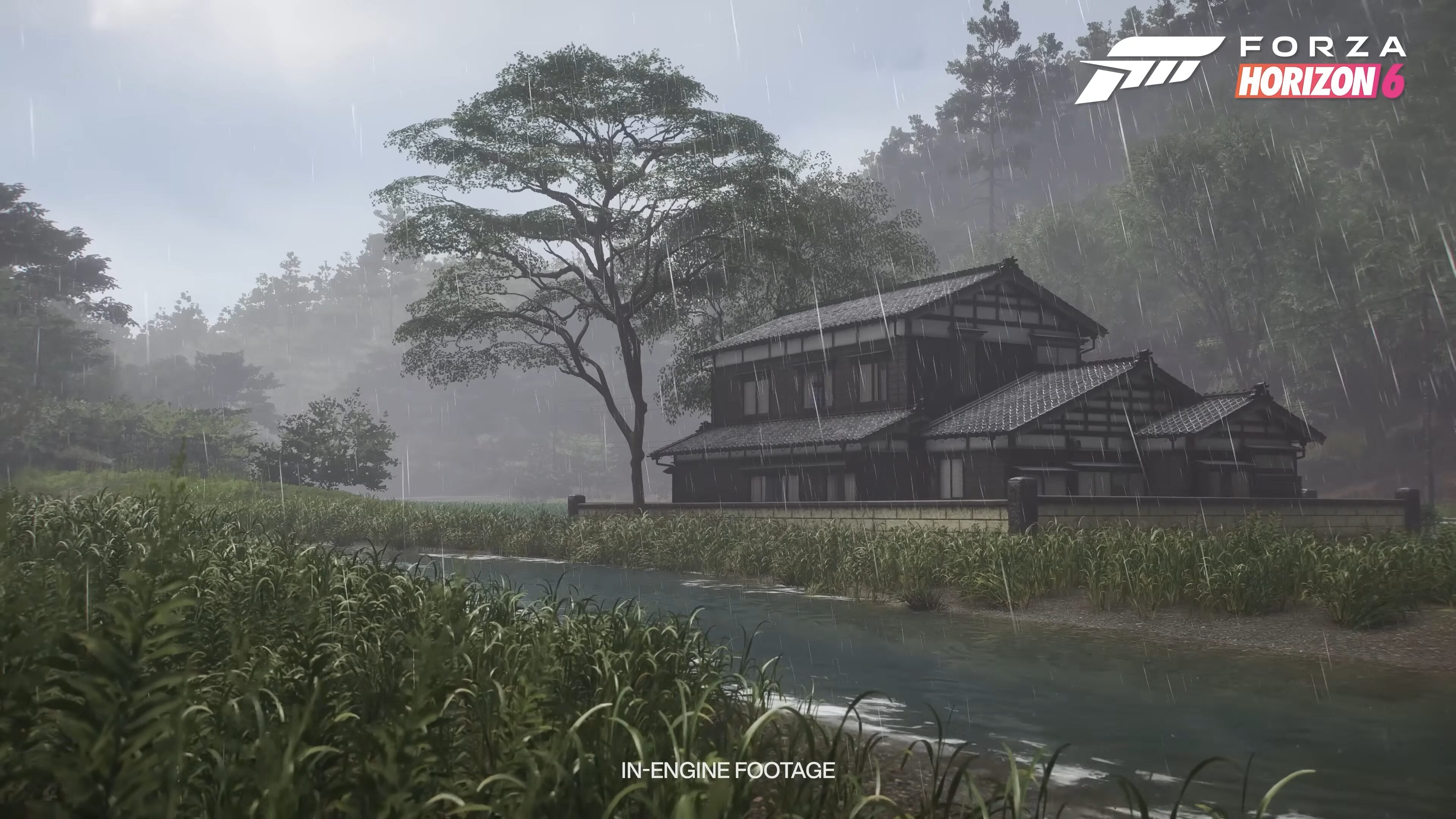
- Weather and grip states: Wet surfaces and changing light conditions influence not just visuals but perceived traction, hinting at a more granular grip model.
For #gamedev observers, this suggests Playground is iterating on internal physics parameters rather than bolting on a new engine—refining data curves, not rewriting the rulebook.
2. Environmental Density: Urban and Coastal Biomes
The new urban and coastal biomes are denser than their Forza Horizon 5 counterparts:
- Traffic patterns look more layered, with varied vehicle types and more believable spacing.
- Street furniture and micro-detail (signage, barriers, environmental clutter) appear more tightly packed, giving speed a stronger sense of danger.
- Lighting passes show improved global illumination, with dusk and coastal reflections selling a more cinematic, HDR-first presentation.
This density ups the design burden: navigation, event placement, and AI routing all have to adapt to busier streets without overwhelming the player. The early footage suggests Playground is threading that needle by reserving true chaos for curated events, while free-roam remains legible.

Forza Horizon 6 gameplay field capture – urban and coastal biomes
Event Architecture: Expanded Coverage, Controlled Escalation
IGN’s framing of their coverage—staged drops focusing on new gameplay systems—implies that Forza Horizon 6’s event structure is more modular and data-driven than before. The language around “expanded event coverage” suggests:
- More granular event types, potentially splitting disciplines (street, dirt, cross-country, endurance) into deeper, progression-aware tracks.
- Improved progression loops, where rewards and unlocks better reflect player style rather than a flat festival-wide XP grind.
- Systemic replayability, likely via rotating playlists and dynamic conditions rather than pure map spam.
For developers, this reads like a push toward live-ops readiness: a framework where events can be rotated, tuned, and A/B tested without destabilizing the core festival fantasy.
Visual Telemetry: Cinematic but Readable
Across both the Land Cruiser briefing and the 9-minute gameplay drop, Forza Horizon 6’s visuals maintain a critical balance: they’re more cinematic, but still readable at 200+ km/h.
- Refined lighting boosts contrast and depth without obscuring track limits.
- Particle and weather effects are more pronounced but restrained enough to keep braking points visible.
- Camera work in replays leans into automotive cinematography, while gameplay views stay relatively conservative, prioritizing control.
This is an important distinction for anyone studying racing game UX: Forza Horizon 6 is clearly chasing spectacle, but not at the expense of input clarity.
Sector Outlook: What to Watch Next
As Forza Horizon 6 moves deeper into public field tests, key watchpoints for future reports include:
- How the Land Cruiser and similar off-road vehicles scale across different biomes and difficulty settings.
- Whether the handling refinements remain approachable for casual players while rewarding high-skill input.
- How the expanded event architecture supports long-term retention and live-ops content.
For #gamedev and #indiegame teams, Forza Horizon 6 is shaping up as a case study in iterative evolution: same core fantasy, sharper systems, denser worlds. Expect subsequent IGN First drops and official transmissions to further clarify how far Playground is willing to push simulation within its festival-first identity.
Keep following Forza Horizon 6
News, guides, posts, and game details in one place.
Open the game hub, then save it to build your personal Breach feed.
More images and video
About the game
Forza Horizon 6
Playground Games
Mission Intelligence: Forza Horizon 6 deploys its open-world festival into Japan, fusing dense urban networks with high-altitude touge routes and coastal straights. Operators can expect advanced weather, wet surfaces, and variable road widths designed to stress-test racing lines and braking discipline. The environment acts as both track and weapon, rewarding precise control and high-speed risk-taking. Ideal for players seeking next-gen open-world racing, drifting, and car culture immersion.
Open game pageTopics
forza horizon 6
Forza Horizon 6 gameplay
Forza Horizon 6 Toyota Land Cruiser
Forza Horizon 6 IGN First
Forza Horizon 6 development update
Forza Horizon 6 physics
Forza Horizon 6 open world
racing game design
#gamedev
#indiegame