Automated archive / Fortnite
Sector Intelligence: Fortnite’s iOS Reboot, Star Wars Offensive, and Overwatch Incursion Reshape the Island Meta
Fortnite’s latest week fuses platform warfare, Star Wars live ops, Overwatch crossovers, and a stealthy first‑person test into a single live‑service statement. Here’s what the chaos actually means for developers, live‑ops teams, and anyone building the next big service game.
AI-generated summary. This archive article does not have a current recorded source check. Check linked sources before relying on details. Editorial policy
Sector Overview
Fortnite’s last seven days read like a live-service playbook for how to weaponise IP, platforms, and camera tech all at once. Epic has:
- Relaunched Fortnite on iOS in most global regions, setting up a high‑stakes confrontation over App Store fees.
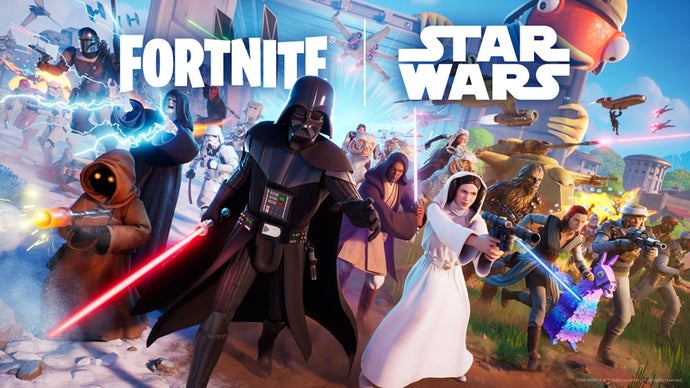
- Deployed a full Star Wars combat theatre on Nevarro, plus a Mandalorian & Grogu Watch Party Island that blurs the line between streaming and in‑game social hubs.
- Opened the gates to Overwatch heroes, further consolidating Fortnite as the central crossover arena of the industry.
- Quietly pushed an experimental first‑person mode into the live grid—small in scope, big in engine and design implications.
For #gamedev teams and every #indiegame studio watching from the sidelines, this week’s Fortnite development update is a masterclass in cross‑media design, platform strategy, and incremental systems testing at scale.
iOS Uplink Reboot: Platform War as Product Feature
Fortnite’s return to iOS across most of the globe—Australia notably excluded—is more than a distribution note; it’s a live case study in platform power dynamics. With US courts pressuring Apple to reveal more about its revenue stack, Epic is openly framing this as a “final battle” over App Store fees and discoverability.
From a development and business standpoint:
- Monetisation Meta: Any settlement or policy shift here could ripple across mobile for years, especially for free‑to‑play economies built on cosmetic throughput and seasonal passes.
- Discoverability as Design Constraint: Epic’s willingness to fight for alternative payment rails and storefront visibility will inform how future live‑service titles approach mobile—expect more devs to architect backends with multi‑store, multi‑payment flexibility from day one.
- Operational Complexity: Maintaining parity across console, PC, and a politically volatile mobile ecosystem adds serious QA, deployment, and compliance overhead. Fortnite remains the test case for how to run that at scale.
For smaller teams, the lesson isn’t “fight Apple,” it’s “design your tech, content cadence, and legal posture assuming platform rules can and will change mid‑season.”
Star Wars Nevarro: Narrative Live Ops as Retention Engine
Watch: Transmitting Gameplay footage from the field: Mandalorian & Grogu Watch Party Island
The Nevarro deployment turns a familiar Star Wars location into an active Fortnite theatre: structured quests, wave‑based Stormtrooper encounters, and high‑risk objectives layered over the core sandbox.
Design takeaways:
- Themed Modes as Limited‑Time Systems: Rather than bolt on a separate game, Epic folds Nevarro into existing mechanics—quests, PvE waves, and objective runs—minimising new rules while maximising flavour.
- Cross‑Franchise Traffic: Every Star Wars beat is double duty: it’s fan service and a reactivation trigger for lapsed players who treat Fortnite as a content platform, not just a battle royale.
- Production Strategy: Reusing systemic building blocks (quests, waves, objectives) lets the team ship high‑impact collabs without reinventing core gameplay. That’s a crucial pattern for any live‑ops #gamedev team with limited bandwidth.
The Mandalorian & Grogu Watch Party Island pushes even further. It’s not combat; it’s a controlled social environment wrapped around curated series content. This effectively turns Fortnite into a co‑viewing lounge with cosmetics as social signalling. For developers, this is a blueprint for how to integrate streaming culture into the game client instead of losing that attention to external platforms.
Overwatch Heroes: Visual Crossover Without Mechanical Fragmentation
Overwatch operators entering Fortnite is a big optics move, but note how carefully Epic keeps the core ruleset intact:
- Cosmetics, Not Combat Overhaul: Abilities are reimagined as emotes, VFX, and skin theming rather than full ability kits. Gunplay remains Fortnite’s, not Blizzard’s.
- Shared Visual Language: Silhouettes and effects now echo Overwatch’s roster, which creates instant recognition for players crossing over from Blizzard’s ecosystem.
- IP as Acquisition Funnel: This is two competitive ecosystems sharing visual assets. For both publishers, the bet is that familiarity reduces friction for players to try the other game.
From a #indiegame perspective, you probably won’t be importing Overwatch heroes, but the pattern scales down: build cosmetics and events that can resonate across communities (streamers, other games, or adjacent fandoms) without destabilising your core balance.
Experimental First‑Person Mode: Quiet but Critical Tech Move
Watch: Transmitting Gameplay footage from the field: Experimental First-Person Module
Epic’s “first‑person (kind of)” rollout is a textbook example of how to stage a risky camera shift in a live product:
- Scoped Integration: First‑person appears only in specific actions and limited scenarios. This reduces the blast radius of bugs and balance issues while still collecting real player data.
- Engine Readiness: Even if players see this as a novelty, for the engine team it’s a milestone. Proper first‑person support touches animation sets, weapon view models, FOV handling, input feel, and network replication of camera states.
- Future‑Facing Design: A mature first‑person pipeline opens doors for new modes (dedicated FPS playlists, PvE raids, or even spin‑off experiences) without needing a separate codebase.
For developers, the key lesson is incrementalism: ship partial functionality into controlled contexts, harvest telemetry, iterate. Fortnite’s scale makes this visible, but the same approach is viable for any studio experimenting with new perspectives, control schemes, or netcode‑sensitive features.
Strategic Readout for Developers
Across iOS, Star Wars, Overwatch, and first‑person tests, Fortnite’s weekly sector intel points to three enduring patterns:
- Treat Platforms as Design Variables: Business constraints (store fees, discoverability, regional exclusions) are now core to game design and content planning, not an afterthought.
- Re‑Skin Systems, Not Your Whole Game: Nevarro and Overwatch show how to resurface existing systems under new IP, keeping production sustainable while still delivering headline‑worthy events.
- Prototype in Public, but Safely: The first‑person module demonstrates how to de‑risk major tech shifts by embedding them in limited contexts.
For anyone tracking Fortnite as a live‑ops benchmark, this week’s activity isn’t just another crossover barrage—it’s a forward signal of where large‑scale service games are steering: toward platform‑aware design, transmedia social spaces, and engines flexible enough to pivot camera, genre, and IP on demand.
Sources and corrections
This archive entry does not have a verified article-source list. Images and video embeds alone are not evidence for every claim.
Found an error? Request a correction. Include the passage and a supporting source.
Your games, in one place
Keep up with Fortnite
Follow this game to collect its posts in your personal feed. Come back to see what you missed.