Automated archive / Final Fantasy VII Revelation
Sector Intelligence: Final Fantasy VII Revelation Locks Global Spring 2027 Strike
Final Fantasy VII Revelation has broken cover with a Spring 2027 global launch window and confirmed Xbox deployment, signaling a fully synchronized, multi-platform strike. This Sector Intelligence Report unpacks what that means for narrative design, combat systems, and the broader gamedev landscape.
AI-generated summary. This archive article does not have a current recorded source check. Check linked sources before relying on details. Editorial policy
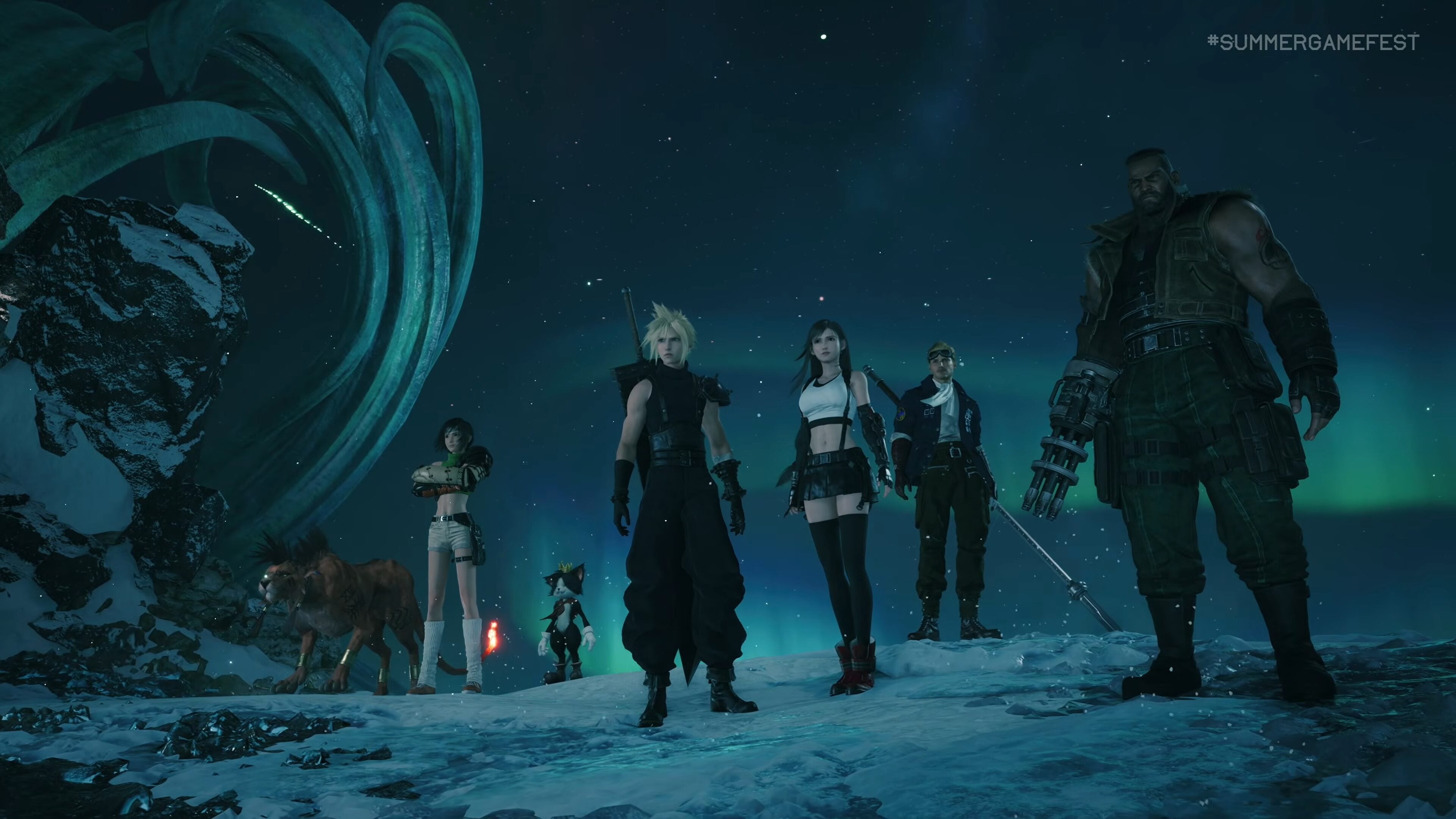
Sector Intelligence Report: Final Fantasy VII Revelation
Square Enix has pushed the next phase of its remake campaign out of the Lifestream and into clear view: final fantasy vii revelation is now confirmed as the third entry in the FFVII Remake project, targeting a unified Spring 2027 launch across all major platforms, including Xbox. No staggered rollouts, no region delay—this is a synchronized global operation designed for maximum narrative and commercial impact.
This weekly Sector Intelligence Report dissects what the latest signals tell us about scope, structure, and strategy—and what it all means for players, creators, and the wider #gamedev ecosystem.
Global Launch Strategy: One Strike, All Platforms
The most significant data point in this week’s feed is operational, not narrative: Final Fantasy VII Revelation will deploy simultaneously on all major platforms, with a dedicated Spring 2027 window confirmed for Xbox.
From a production and business standpoint, this is a major pivot from the staggered, timed-exclusive tactics used earlier in the Remake cycle. A unified launch implies:
- Parallel certification and optimization across ecosystems, especially Xbox, which is now clearly a first-class citizen rather than an afterthought.
- Aligned marketing beats—trailers, influencer pushes, and press cycles can all converge on a single release horizon, amplifying reach.
- Reduced fragmentation for content creators (streamers, analysts, modders), who won’t have to navigate months of platform-specific spoilers.
For developers watching from the sidelines—especially in #indiegame and AA spaces—this is a high-profile case study in how to orchestrate a multi-platform, story-heavy release without sacrificing day-one parity.
Narrative Positioning: “Revelation” as Design Thesis
The codename isn’t subtle. The activity feed describes “new fractures in fate” and “dense story payloads,” signaling that Revelation will likely double down on the meta-narrative introduced in Remake and escalated in Rebirth.
Key takeaways from the language used in the official comms:
- “Revelation” suggests payoff, not just escalation. Expect major clarifications around the nature of the Whispers, timelines, and the broader cosmology of this reimagined FFVII saga.
- “Reimagined encounters” implies that even familiar story beats—Midgar’s steel canyons, legacy boss fights, and classic party dynamics—will be structurally remixed.
- The reference to “classic heroes, new fractures in fate” hints at a deliberate tension between nostalgia and divergence, a design axis that has defined the remake project from day one.
From a narrative design perspective, Revelation looks positioned as the installment where player expectations and canon collide, forcing the team to reconcile 1997’s legacy with 2020s storytelling standards.
Combat & Systems: “Tuned for Maximum Impact”
While the current intel is light on raw mechanics, the feed’s emphasis on “combat tuned for maximum impact” and “extended character builds” is telling.
What that likely means in practical #gamedev terms:
- Iterative, not revolutionary, combat design. Expect the hybrid action/ATB system to be refined, not replaced—tighter responsiveness, more expressive materia synergies, and more distinct party roles.
- Deeper progression arcs. “Extended character builds” suggests longer-term investment in skill trees, weapon cores, and materia loadouts—potentially with more cross-character synergies and late-game specializations.
- Encounter design as narrative delivery. “Reimagined encounters” implies boss and set-piece fights will be used to communicate the story’s branching or converging timelines, rather than just serving as combat spikes.
For designers, Revelation may become a reference point in how to scale a combat system over multiple titles without creating onboarding fatigue or power-creep chaos.
Midgar, Revisited: World-Building and Cinematic Ops
The phrase “Neon Echoes of Midgar” signals a renewed focus on the city that started it all. Even if Revelation extends beyond Midgar geographically, the messaging frames the steel megacity as a central symbolic and possibly mechanical hub.
The feed calls out “high-grade cinematic ops” and “large-scale JRPG incursion,” pointing to:
- Increased cinematic density. Expect a higher ratio of cutscenes to traversal, with more in-engine transitions and fewer hard cuts.
- Set-piece layering. Combat, traversal, and narrative events likely converge more frequently—think chained sequences where player control and cinematics alternate without obvious seams.
- Hardware-aware direction. With a 2027 window and fully committed cross-platform plan, Square Enix can assume a baseline of SSD-driven IO and modern GPU pipelines, enabling more ambitious environmental transitions and crowd scenes.
For world-builders and technical artists, Revelation’s approach to vertical city design, lighting, and crowd simulation will be worth deconstructing once more footage surfaces.
Production Signals: Scheduling, Tooling, and Risk
Locking in a Spring 2027 window this early is a confident move, especially with a multi-platform, story-heavy title. It suggests:
- Mature, reusable pipelines established during Remake and Rebirth—asset workflows, cinematic tooling, and combat scripting are likely stable and iterated rather than reinvented.
- Cross-team synchronization between narrative, gameplay, and tech, required to pull off a global drop without the buffer of staggered releases.
- Risk management through familiarity. By building on an existing engine/toolset and a known combat framework, the team can focus complexity on narrative branching, encounter design, and content density.
For #gamedev teams—particularly those in long-running series—Revelation is shaping up as a case study in how to ship the “third album” of a large-scale project without losing coherence or burning out your pipeline.
Why This Matters Beyond Final Fantasy
Even if you’re not embedded in the JRPG frontlines, final fantasy vii revelation is a bellwether for several industry-wide trends:
- The normalization of simultaneous multi-platform launches for major narrative franchises.
- The viability of multi-part remakes as long-term product lines rather than one-off nostalgia plays.
- The continued blending of cinematic storytelling and systemic combat, where each new entry must justify its existence as more than a content pack.
As more footage and technical details surface, expect Revelation to become a recurring reference in discussions around AAA narrative design, long-form franchise planning, and cross-platform deployment.
For now, the message from Midgar is clear: Revelation isn’t just another chapter—it’s the convergence point where this entire remake experiment has to pay off.
Sources and corrections
This archive entry does not have a verified article-source list. Images and video embeds alone are not evidence for every claim.
Found an error? Request a correction. Include the passage and a supporting source.