Automated archive / FINAL FANTASY VII REBIRTH
Final Fantasy VII Rebirth Enters Live Operation Phase
Final Fantasy VII Rebirth has fully entered its live operation phase, transforming nostalgic setpieces into dense, replayable systems. From math-driven Chocobo races to tactical Junon parades and a controversial Sephiroth recast, this week’s intel shows how Square Enix is rewriting a classic through modern design...
AI-generated summary. This archive article does not have a current recorded source check. Check linked sources before relying on details. Editorial policy
Sector Intelligence Report // FINAL FANTASY VII REBIRTH
Square Enix’s final fantasy vii rebirth initiative has shifted from controlled rollout to full live operation. Over the last seven days, the signal has spiked across three key vectors: systemic minigame design (Chocobo Races and the Junon Parade), narrative pipeline continuity (Sephiroth’s recast), and the broader launch-state deployment of the remake project.
This report deconstructs those fronts from a #gamedev and systems-design perspective, with takeaways that apply well beyond AAA—even to #indiegame teams wrestling with scope, nostalgia, and player mastery.
1. Launch-State Telemetry: Rebirth as a Live Systems Showcase
The new launch trailer confirms what was increasingly evident from pre-release slices: Rebirth is structured like a dense, multi-system playground, not a linear nostalgia tour. The campaign is framed as a tension between “fate vs. freedom,” but mechanically that translates into:
- Wide-area regions that behave like layered simulation spaces (exploration, traversal, side systems).
- Party combat tuned around synergy actions and ATB tempo control.
- Optional content that isn’t just filler, but mechanically literate—minigames with depth, learnable patterns, and optimization ceilings.
For developers, the key lesson is how Rebirth uses familiar IP as a shell for experimentation. It’s not merely recreating scenes; it’s re-authoring them as interactive systems that can sustain repetition and mastery.
Watch: Transmitting Gameplay footage from the field: FINAL FANTASY VII REBIRTH – Launch Trailer
From a production standpoint, this trailer functions as a vertical slice of the project’s design thesis: every nostalgic beat is now a node in a broader systemic network.
2. Golden Saucer Circuits: Chocobo Racing as Systems-First Design
The latest data packet on FF7 Rebirth Chocobo Races makes one thing clear: this is not a luck-driven side activity. It’s a math-first racing sim disguised as a carnival diversion.
Key systemic pillars visible in the activity feed:
- Breed & Build Meta: “Top-tier Chocobo breed” and “precision gear” imply a multi-layered stat ecosystem—speed, stamina, acceleration—with meaningful trade-offs. This is loadout design 101: offer clear strengths, but no singular dominant build.
- Track Literacy: Players are encouraged to “read the track” and treat each heat like a time trial. That’s classic racing design—memorization + reaction—but embedded into a JRPG.
- Boost Windows & Choke Points: The language of “boost windows” and “scripted choke points” confirms intentional pacing nodes. Designers are effectively placing decision spikes where player skill expression is most visible.
For #gamedev teams, especially #indiegame racers or RPGs with side systems, Rebirth’s approach is instructive:
- Give minigames enough systemic depth to justify guides and meta discussion.
- Make optimization feel like cracking a code, not just grinding a stat.
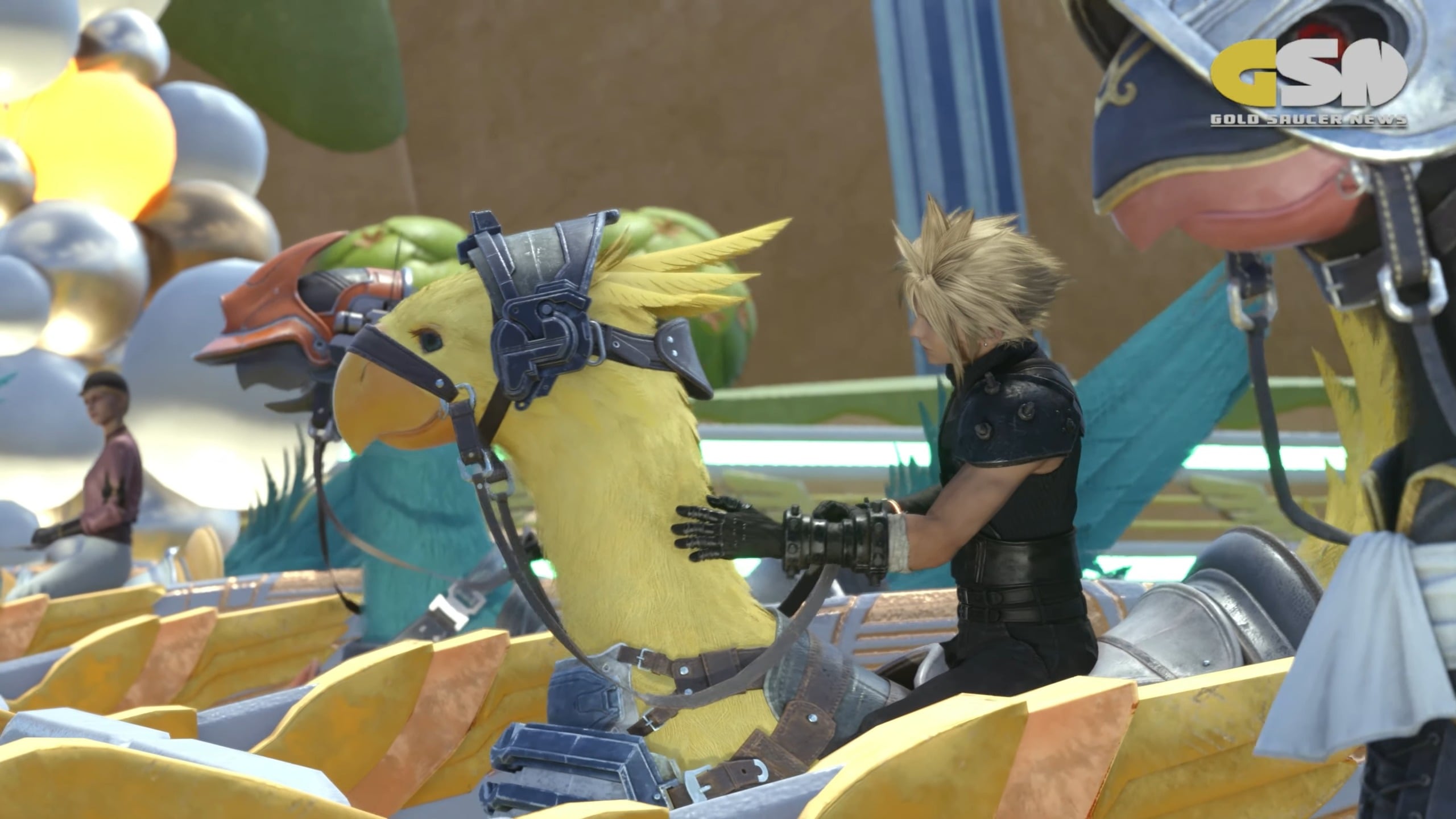
The Chocobo races are functioning as a microcosm of the entire remake philosophy: familiar fantasy, modern systemic rigor.
3. Junon Parade: Scripted Spectacle as Tactical Puzzle
The Junon Parade has always been an iconic FFVII setpiece. In Rebirth, it’s been reframed as a tactical grid problem rather than a simple rhythm or QTE spectacle.
The activity feed highlights three crucial mechanics:
- Soldier ID Tracking: Players must identify and track specific Shinra Soldier units. This elevates NPCs from background dressing to interactive tokens in a light tactics puzzle.
- Positional Logic: Locking in “exact street positions” and assembling the “optimal parade formation” means the formation itself is a solvable layout problem—almost like a micro squad tactics game.
- Performance-Ranked Rewards: Tying formation accuracy to rank and rewards converts what could’ve been a one-and-done story beat into a replayable optimization challenge.
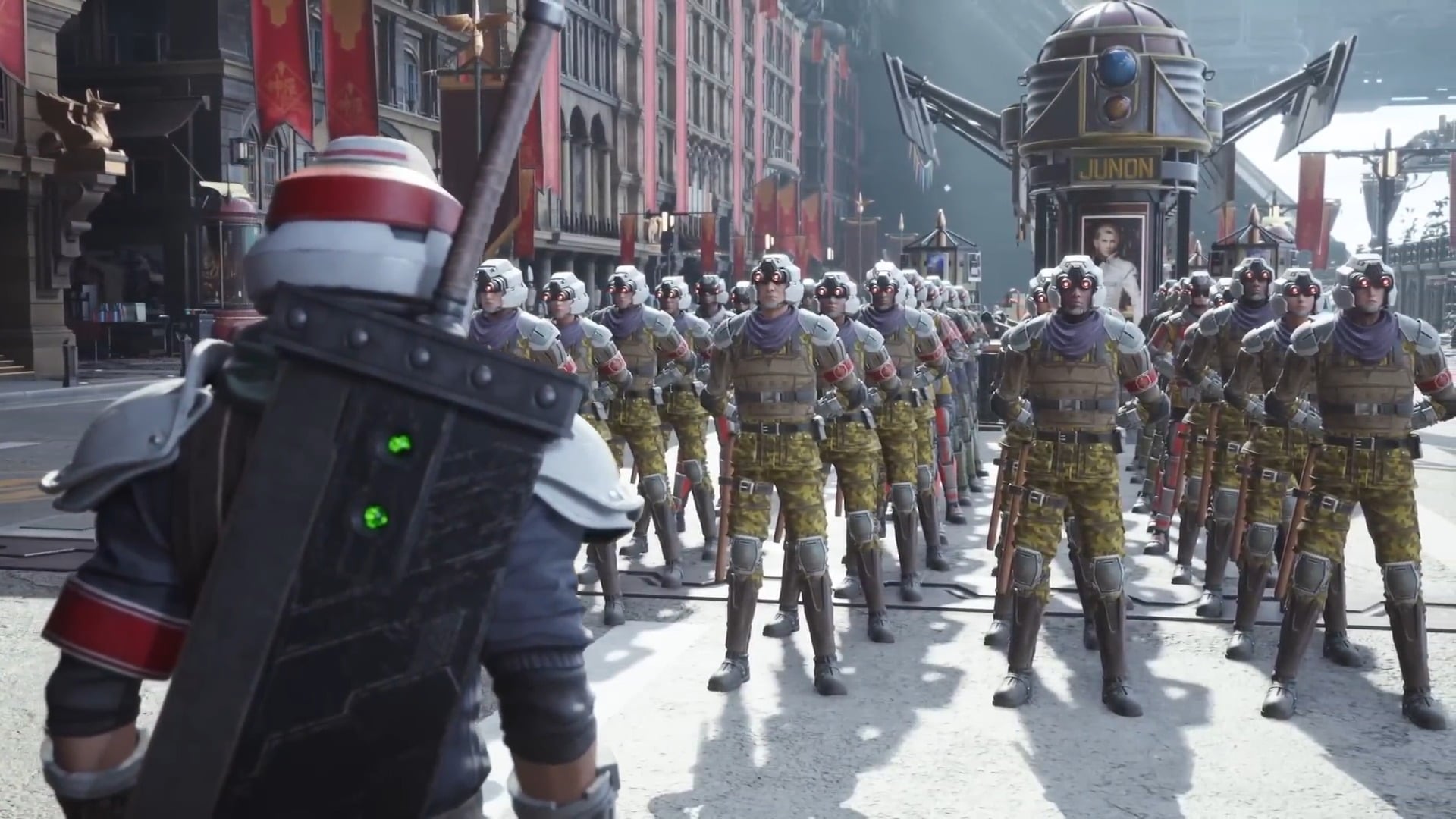
From a design lens, this is a strong example of spectacle with mechanical teeth. For developers:
- If you’re staging a big story moment, consider how it can double as a lightweight systems sandbox.
- Use scoring, ranks, and optional rewards to turn narrative setpieces into design exercises without alienating story-first players.
4. Sephiroth Recast: Asset Pipeline vs. Character Continuity
The recasting of Sephiroth—rotating out George Newbern in favor of a new voice actor—illustrates the production realities of a multi-phase remake.
From a fan-facing perspective, the response is “mixed,” which is predictable when dealing with a character this iconic. From a development update standpoint, a few key points stand out:
- Long-Form IP Requires Flexible Pipelines: Voice talent changes, contract windows close, and schedules slip. For teams planning multi-game arcs, building in contingency for talent rotation is essential.
- Performance Direction as Glue: Even with a new actor, strong voice direction and consistent character writing can maintain perceived continuity.
- Communication Strategy Matters: The earlier and clearer the messaging around such changes, the less disruptive it is to community sentiment.
For #indiegame creators, the scale is smaller but the lesson is similar: don’t hard-wire your identity to a single irreplaceable collaborator without a plan.
5. Strategic Takeaways for Developers
Across this week’s intel, final fantasy vii rebirth is signaling a consistent design ethos:
- Nostalgia as Framework, Not Constraint: Iconic moments (Chocobo Races, Junon Parade, Sephiroth) are being reinterpreted as systemic opportunities.
- Minigames as Meaningful Systems: Side content is treated with enough depth to justify guides, optimization, and community theorycrafting.
- Production Resilience: Talent changes and multi-phase releases are handled as part of an ongoing live pipeline, not one-off crises.
For #gamedev teams at any scale, Rebirth’s current phase is a high-budget case study in how to:
- Turn legacy content into modern interactive systems.
- Use spectacle to teach mechanics and reward mastery.
- Navigate long-term production realities while keeping a cohesive player-facing experience.
As Rebirth continues its rollout, expect more of these legacy touchpoints to surface—not as static remakes, but as live systems waiting to be solved.
Sources and corrections
This archive entry does not have a verified article-source list. Images and video embeds alone are not evidence for every claim.
Found an error? Request a correction. Include the passage and a supporting source.
Your games, in one place
Keep up with FINAL FANTASY VII REBIRTH
Follow this game to collect its posts in your personal feed. Come back to see what you missed.