Automated archive / FINAL FANTASY VII REBIRTH
FFVII Rebirth Expands Its Warfront — Platforms, Performance, and Player Optimization
Final Fantasy VII Rebirth has shifted from single‑platform spectacle to full multi‑front operation, with Switch 2 and Xbox deployments, intense system‑level player optimization, and a high‑stakes Sephiroth recast. This week’s intel breaks down how Square Enix is balancing nostalgia, scalability, and design depth in...
AI-generated summary. This archive article does not have a current recorded source check. Check linked sources before relying on details. Editorial policy
Strategic Overview: Rebirth’s Campaign Enters Full Deployment
The last seven days around final fantasy vii rebirth have felt less like a marketing beat and more like an operational rollout. Square Enix has pushed the game from a single‑platform sortie to a multi‑front offensive, tuned its nostalgia payload with a new Sephiroth voice pipeline, and watched players immediately tear into the systems behind Chocobo racing and the Junon parade. For developers and systems designers tracking #gamedev trends, this week is a live case study in how to sustain a blockbuster remake as an evolving service, even when it’s technically a single‑player RPG.
Watch: Transmitting Gameplay footage from the field: FINAL FANTASY VII REBIRTH Launch Trailer
Platform Expansion: Rebirth Marches to Switch 2 and Xbox
The cross‑platform deployment brief confirms what many suspected: Rebirth is no longer a PS5‑locked asset. Square Enix is mobilizing the title for Nintendo Switch 2 and Xbox, with messaging centered on “full‑scale JRPG operations” rather than compromised ports. For #gamedev teams, this is a strong signal that internal pipelines have matured around:
- Scalable asset hierarchies: High‑end textures and dense geometry for PC/PS5, with structured fallbacks for Switch 2.
- Modular effects and post‑processing: Allowing selective downgrades in shadows, fog, and particle density while preserving combat readability.
- Combat system parity: The hybrid real‑time/ATB design must remain intact across all platforms to protect encounter design and player muscle memory.
The messaging around “synchronized launch windows” and “rebuilt systems tuned for new hardware architectures” suggests this isn’t a late‑cycle port scramble. Instead, Rebirth is being treated as a multi‑platform product line, not a one‑off remake sequel.
Rendering Showdown: Switch 2 vs PC as a Technical Case Study
The Switch 2 vs PC graphics comparison reads like a postmortem in progress. Analysts expect:
- Resolution and reconstruction: Sub‑native targets on Switch 2, likely leaning on an upscaling solution (DLSS‑like or proprietary) to simulate parity.
- Texture and geometry triage: Lower‑frequency detail in environments and character gear, with careful preservation of hero assets and UI clarity.
- Frame pacing discipline: PC remains the reference platform, but Switch 2’s success will hinge on stable pacing more than raw frame count.
For developers and #indiegame teams watching from the sidelines, Rebirth’s multi‑platform push is a template: build your content with a clear "visual floor" and "cinematic ceiling" so that scaling down doesn’t break identity. The fact that Square Enix is willing to publicly frame PC as the visual benchmark also underlines how critical the PC audience has become in long‑tail JRPG economics.
System Mastery: Chocobo Racing as a Design Microcosm
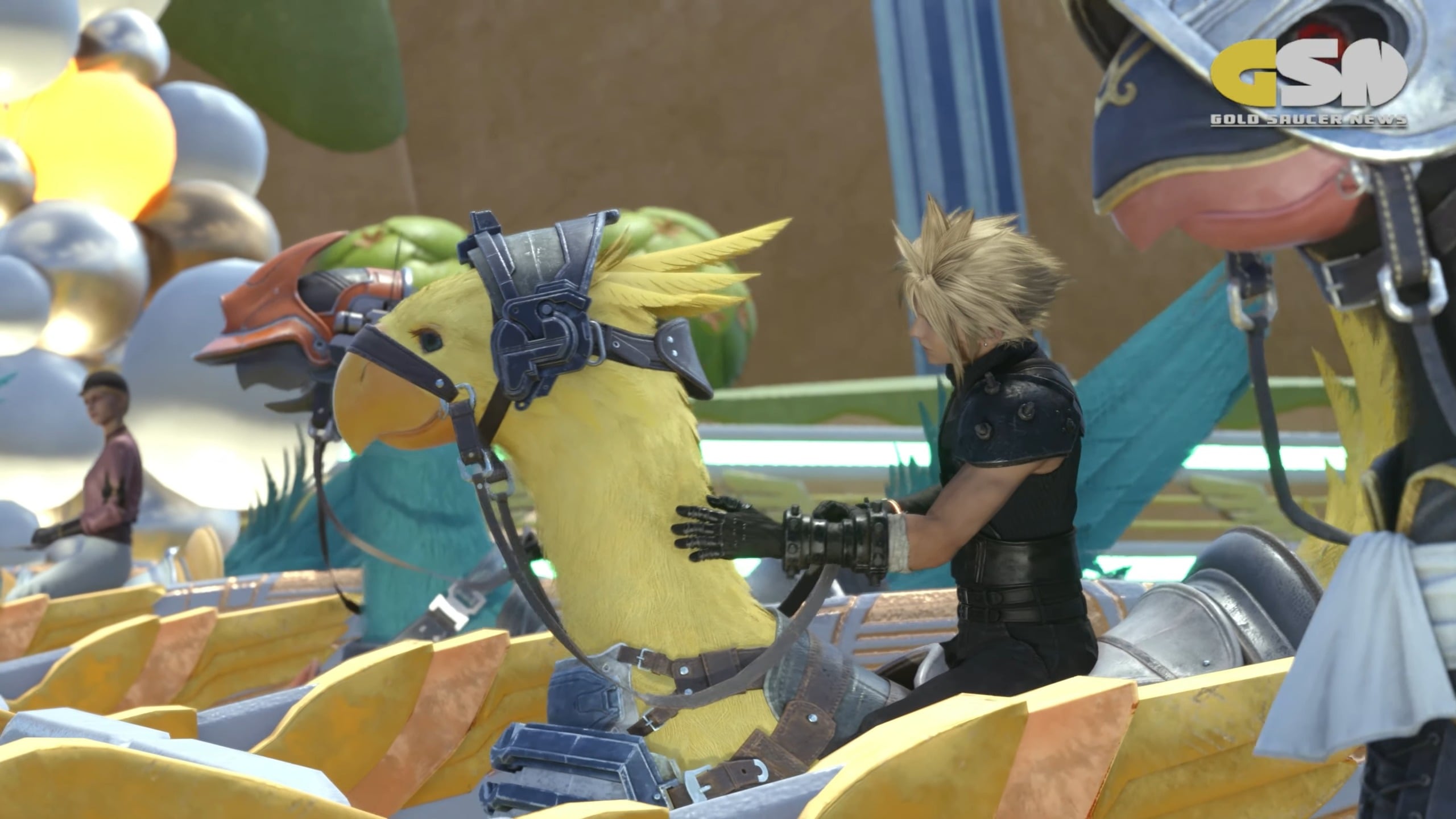
The optimized Chocobo loadout protocol circulating in the community is more than a min‑max guide; it’s a stress test of the game’s systemic integrity. Players are treating Golden Saucer races like a time‑trial sim rather than a party trick, breaking down:
- Breed and stat curves: Identifying which Chocobo archetypes scale best with stamina vs speed.
- Gear impact granularity: Determining whether equipment modifiers meaningfully shift race outcomes or just nudge edge cases.
- Track scripting and choke points: Mapping overtake windows, boost timing, and fatigue thresholds.
For designers, the takeaway is clear: if you ship a side system in a game of this scale, assume the community will interrogate it like an esport. Rebirth’s Chocobo racing holds up because it respects player time—there’s enough mechanical depth to justify optimization, but not so much hidden RNG that it feels rigged. That balance is exactly what #gamedev teams should study when grafting minigames onto narrative‑heavy RPGs.
Junon Parade: Narrative Spectacle as Tactical Puzzle
The Junon parade protocol is another signal that Rebirth’s designers are leaning into interactive choreography. Players are cataloging soldier IDs, street positions, and optimal formations to maximize performance rank. Under the hood, this is a clever fusion of:
- Spatial memory gameplay (who goes where, when),
- Rhythm and timing (executing formation swaps on cue), and
- Narrative framing (you’re not just solving a puzzle, you’re infiltrating Shinra’s propaganda machine).
This is a textbook example of how to turn what could have been a pure cutscene into a mechanically legible encounter. For #indiegame teams working with smaller budgets, Junon is a reminder that systemic reuse plus smart staging can deliver AAA‑feeling setpieces without needing blockbuster VFX.
Voice Pipeline Realignment: Sephiroth Recast and Continuity Risk
The Sephiroth recast—with George Newbern rotated out—introduces a softer but crucial dimension to Rebirth’s ongoing development update cadence: character continuity as a technical and emotional asset. Fan telemetry is mixed, which is predictable; iconic antagonists are effectively live services in human form.
From a production standpoint, this move underscores:
- The importance of voice direction bibles to maintain performance consistency across actors.
- The need for robust ADR and pipeline tools to slot in new vocal assets without destabilizing lip‑sync, timing, or cinematic beats.
- The value of transparent communication so that recasts feel like intentional evolution, not silent regression.
For long‑running series—and for any studio planning a multi‑game arc—voice casting is now a high‑risk, high‑impact dependency, not a late‑stage checkbox.
Launch State: Memory Overwrite Achieved
With the launch trailer framing Rebirth as a "full‑scale memory overwrite" of the original, this week closes with the game fully live and expanding. New regions, expanded party tactics, and reimagined story paths are doing exactly what they need to: converting nostalgia into sustained engagement.
From a sector intelligence perspective, final fantasy vii rebirth is now less about proving itself and more about maintaining operational tempo: cross‑platform parity, system‑level depth (Chocobos, parades, combat), and careful stewardship of its characters and tech stack. For developers watching the field, Rebirth’s current phase is a living dossier on how to run a remake as an evolving platform, not a one‑and‑done monument.
Sources and corrections
This archive entry does not have a verified article-source list. Images and video embeds alone are not evidence for every claim.
Found an error? Request a correction. Include the passage and a supporting source.