Automated archive / FINAL FANTASY VII REBIRTH
FINAL FANTASY VII REBIRTH Breaches New Platforms and Redefines the Remake Warfront
FINAL FANTASY VII REBIRTH has shifted from a PS5 showcase to a full multi‑platform campaign, with new intel on its launch, cross‑platform rollout, and rendering strategy. This week’s Sector Intelligence Report breaks down how Square Enix is scaling nostalgia, combat systems, and visuals across PC, Xbox, and...
AI-generated summary. This archive article does not have a current recorded source check. Check linked sources before relying on details. Editorial policy
Sector Intelligence Report // FINAL FANTASY VII REBIRTH
The last seven days have pushed final fantasy vii rebirth from a single‑platform operation into a full multi‑front campaign. Between the official launch transmission, confirmation of Xbox and Nintendo Switch 2 deployments, and fresh rendering analysis, Rebirth has shifted from a PS5 showcase to a live case study in cross‑platform JRPG engineering.
This report breaks down how Square Enix is scaling its tech stack, combat systems, and content delivery to maintain fidelity across wildly different hardware ecosystems—intel that’s increasingly relevant for #gamedev teams and any #indiegame studio planning multi‑platform launches.
1. Launch Transmission: Rebirth as a High‑Density Nostalgia Machine
The new “Midgar Signal Spike” launch beat positions FINAL FANTASY VII REBIRTH as both a memory overwrite and a systems upgrade. The trailer leans into three pillars: expanded regions, reimagined story paths, and a more expressive party combat layer.
Watch: Transmitting Gameplay footage from the field: FINAL FANTASY VII REBIRTH – Launch Trailer
From a development lens, several things stand out:
1.1 Region Design as a Systems Testbed
Open‑region patrols are framed less as traditional open world and more as segmented, high‑density zones. That’s a crucial distinction for performance and content planning:
- Streaming budgets: Chunked regions allow tighter control over asset streaming and memory usage, which becomes vital when targeting Switch 2 and potentially lower‑spec PCs.
- Encounter scripting: Rebirth’s zones show layered event triggers—cinematic beats, optional side ops, and emergent combat states—suggesting a robust tooling pipeline for designers to iterate without overhauling core systems.
For #gamedev teams, this is a reminder that “open” doesn’t have to mean “boundless”—it can mean modular and controllable, especially when you know cross‑platform is on the roadmap.
1.2 Combat: Hybrid Systems, Unified Feedback
The real‑time/ATB hybrid returns as a central hook, but the trailer signals deeper party tactics: tag‑team abilities, synergy attacks, and more readable enemy telegraphs.
Key takeaways for combat system designers:
- Input latency tolerance: Hybrid systems need tight animation cancel windows and generous buffering to feel responsive across platforms with different frame pacing.
- FX readability: Rebirth’s VFX language leans on clear color coding and silhouette emphasis. That’s not just aesthetic—it’s a hedge against lower resolution and effects downgrades on weaker hardware.
2. Cross‑Platform Deployment: From PS5 Stronghold to Global Theater
The Cross‑Platform Deployment Brief confirms what many speculated: FINAL FANTASY VII REBIRTH is no longer a PS5‑only statement piece. It’s rolling out to Nintendo Switch 2 and Xbox, turning the game into a full‑scale test of Square Enix’s engine portability.
Watch: Transmitting Gameplay footage from the field: Cross‑Platform Launch Trailer Signal
2.1 Synchronized Launch Windows & Asset Strategy
The language around “synchronized launch windows” and “upgraded assets” implies a few likely production realities:
- Centralized master asset set at or near PC/PS5 quality, from which downscaled variants are auto‑generated or selectively authored.
- Platform‑specific lighting and post‑processing profiles, especially for Switch 2, where HDR, motion blur, and heavy bloom may be dialed back to preserve clarity.
- Networked build pipelines that can branch per platform late in development while still sharing core logic, combat tuning, and narrative content.
For #indiegame teams, this is a blueprint in miniature: build once, branch late, and let tooling handle 80% of the asset adaptation.
2.2 Xbox & Switch 2: Different Fronts, Different Compromises
On Xbox, Rebirth is likely to track close to PS5 parity: similar resolution targets, texture quality, and effects, with minor variance in frame pacing and streaming behavior.
On Switch 2, the strategy changes:
- Aggressive LODs: Lower polygon counts and simplified geometry on distant structures.
- Shadow and AO cuts: Fewer dynamic shadows and lighter ambient occlusion to protect GPU headroom.
- Dynamic resolution + upscaling: A DLSS‑like solution is hinted at in the analysis, suggesting reconstruction will carry a lot of the visual load.
The design challenge is to keep the game’s identity intact even as visual elements are stripped back—something Rebirth appears to tackle via strong art direction and silhouette‑first character design.
3. Rendering Showdown: Switch 2 vs PC as Reference Platform
The Rendering Showdown intel frames PC as the reference build, with Switch 2 as the “mobile deployment compromise.” That framing matters: it implies the top of the stack is no longer console, but scalable PC pipelines.
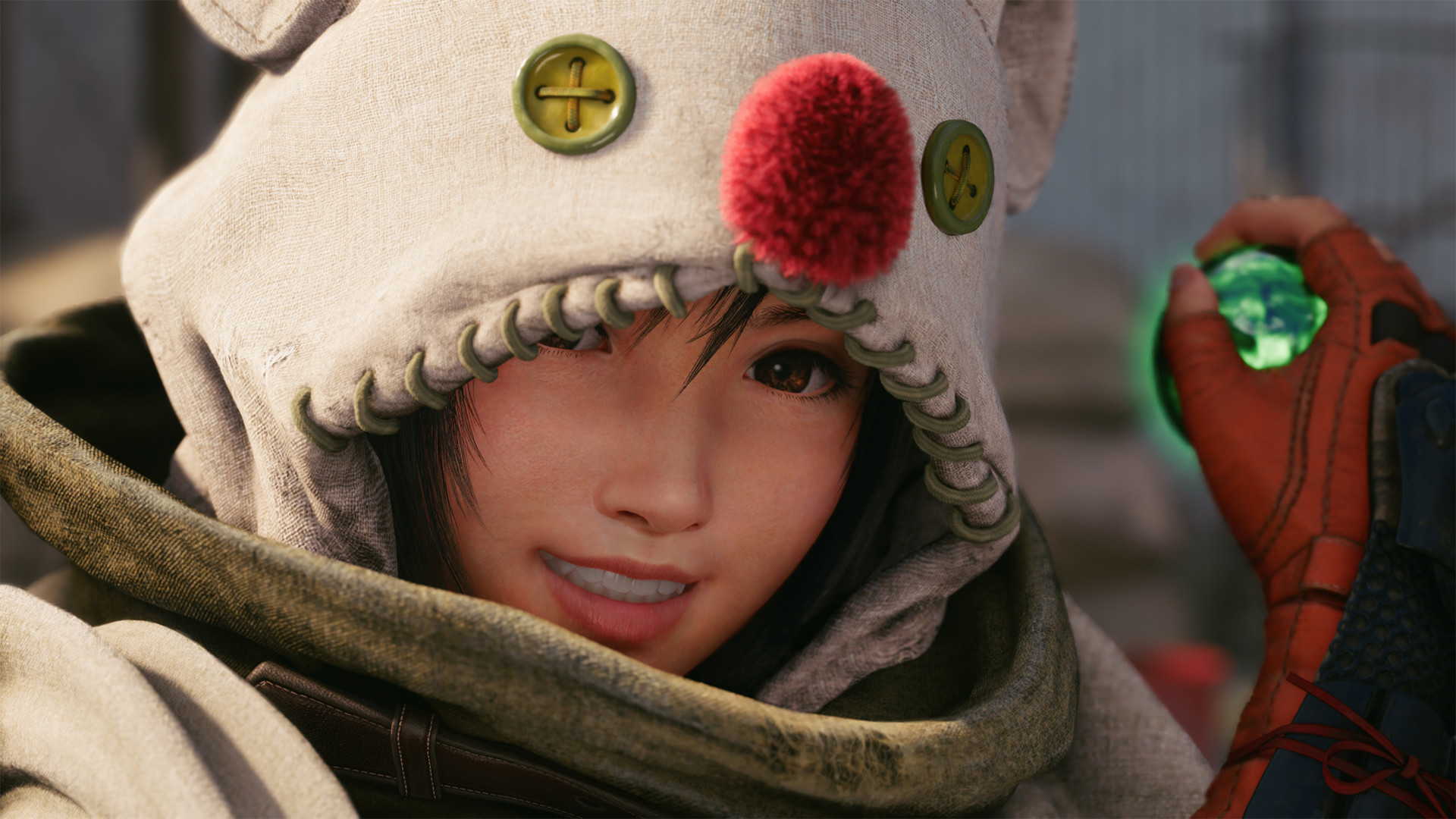
3.1 PC as the Design Ceiling
Using PC as the baseline allows Square Enix to:
- Author high‑density textures and detailed materials, then down‑res as needed.
- Maintain unlocked or higher frame rate targets for players with high‑end rigs.
- Experiment with ray‑traced lighting or GI variants without committing them to all platforms.
For developers, this reinforces a practical pattern: build your content ceiling on PC, then define clear, automated downgrade paths for console and handheld.
3.2 Switch 2: The Mobile Compromise, Not the Afterthought
The analysis expects downgraded shadows, geometry, and effects—but crucially, it also anticipates a DLSS‑style upscaler to “keep the illusion intact.” That phrase is the heart of modern multi‑platform rendering:
- The goal isn’t parity—it’s perceptual equivalence. If the composition, silhouettes, and key lighting reads are preserved, the fantasy survives.
- FX can be simplified so long as their gameplay signaling remains consistent: enemy tells, AoE markers, and synergy ability cues must remain readable even at lower resolutions.
This is a lesson that scales down perfectly to #indiegame production: prioritize clarity over raw fidelity, especially if you’re targeting handheld or cloud platforms.
4. Strategic Takeaways for Developers
FINAL FANTASY VII REBIRTH’s latest week of signals offers a compact playbook for studios of any size:
- Design regions as modular slices, not monolithic worlds—easier to stream, tune, and port.
- Build a clear visual language that survives resolution drops and effects cuts.
- Adopt PC as your high‑end reference, even if console is your primary revenue driver.
- Plan for cross‑platform from day one: abstract platform‑specific features, keep content logic unified, and let builds diverge late.
Rebirth isn’t just a nostalgia engine; it’s a live demonstration of how a flagship JRPG can stretch across hardware generations without snapping its core identity. For #gamedev teams tracking the future of large‑scale RPG production, this week’s intel makes one thing clear: the real remake isn’t just the story—it’s the pipeline.
Sources and corrections
This archive entry does not have a verified article-source list. Images and video embeds alone are not evidence for every claim.
Found an error? Request a correction. Include the passage and a supporting source.
Your games, in one place
Keep up with FINAL FANTASY VII REBIRTH
Follow this game to collect its posts in your personal feed. Come back to see what you missed.