Back to guides and news
Gaming
April 23, 2026
Sector Intelligence Report: Dragon Ball Xenoverse 3 Reactivates the Time Patrol on PS5
Sector Overview: A New Temporal Operation Begins
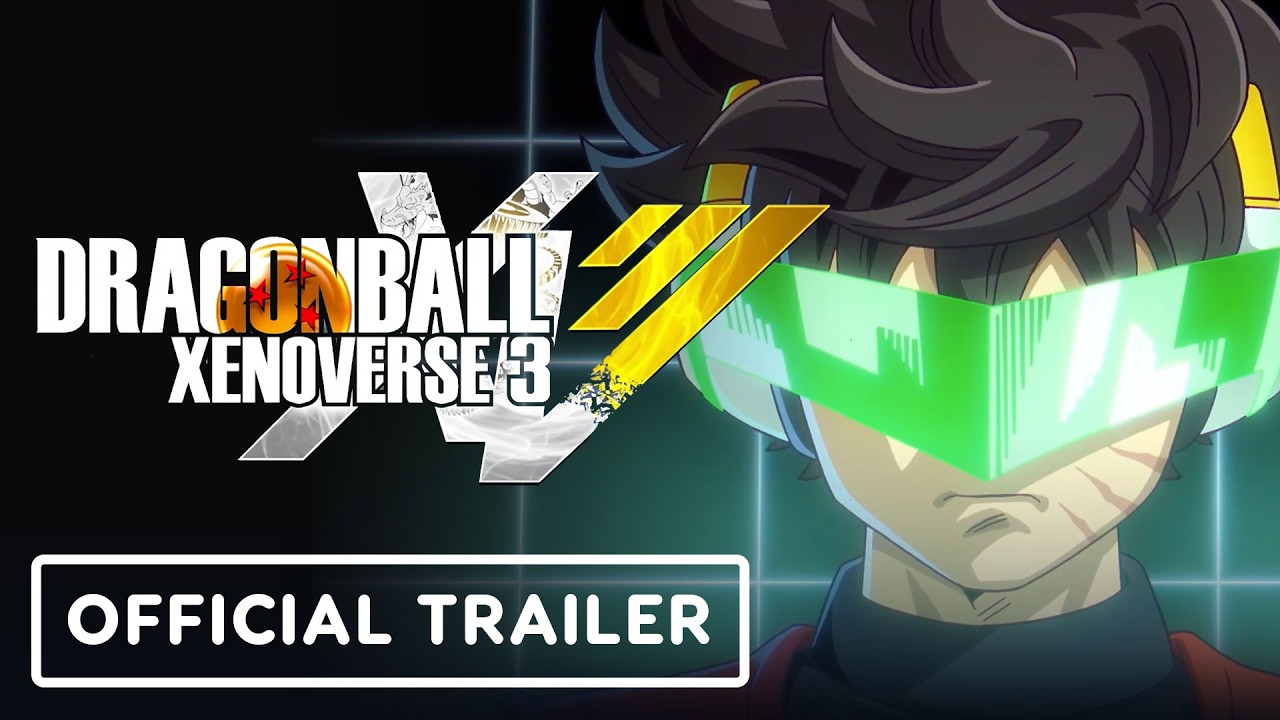
After nearly a decade of dormancy, dragon ball xenoverse 3 has formally entered the grid, reactivating the Time Patrol and extending Bandai Namco’s long‑running experiment in rewritable timelines. Announced during Dragon Ball Games Battle Hour, the new entry targets PS5 hardware for a launch next year, positioning itself alongside Sparking Zero, FighterZ, Xenoverse 2, and Gekishin Squadra as part of a multi‑pillar Dragon Ball live‑ops ecosystem.
The activity feed over the last seven days reads like a controlled breach in continuity: multiple confirmations of branching story routes, upgraded arena combat, and an explicit emphasis on player‑driven causality. For the broader #gamedev sector, Xenoverse 3 is shaping up as a high‑budget case study in long‑tail franchise support, cross‑title coexistence, and persistent avatar‑driven progression.
Design Intelligence: Toriyama’s Legacy Encoded in the Grid
One of the most critical data points from this week’s transmissions is confirmation that character and world designs from the late Akira Toriyama are being encoded directly into Xenoverse 3’s combat and narrative scaffolding. That immediately reframes the project from “just” a sequel into a legacy-preserving deployment.
From a production standpoint, this suggests:
- Asset Pipeline Continuity: Pre-existing Toriyama designs likely serve as high‑fidelity reference for new 3D pipelines, enabling a tighter feedback loop between concept and in‑engine implementation.
- Lore‑First Content Strategy: Rather than purely fan-service callbacks, expect canonical reinterpretations of known arcs, with Toriyama’s visual language anchoring even the most divergent timelines.
- Market Positioning: Leaning on Toriyama’s final era of work gives Xenoverse 3 a narrative and emotional edge that other licensed fighters can’t easily replicate.
For #indiegame teams studying large‑scale IP adaptation, Xenoverse 3 is a live example of how art direction continuity can be used as both a marketing hook and a production stabilizer.
Systems Forecast: Branching Timelines, Persistent Avatars
The repeated language in the feed—“every branch matters,” “rewritten Dragon Ball timeline,” and “fresh distortions in Dragon Ball history”—signals a more aggressive branching narrative architecture than Xenoverse 2.
Key takeaways from the intel:
- Branching Story Routes: Expect mission structures where failures, alternate outcomes, or optional interventions create persistent timeline states, rather than simply triggering a retry.
- Avatar-Scale Engagements: The reference to “avatar-scale engagements” implies deeper RPG‑style progression, potentially expanding skill trees, loadouts, and cooperative builds across unstable eras.
- Co‑op Deployments: The report of “co-op deployments across unstable eras” points to a more network‑aware campaign layer, where matchmaking and instanced raids could be framed as timeline repair operations.
For designers, this is a notable evolution of the “hub + instance” model: the Time Patrol HQ remains the anchor, but the branching timeline concept gives Bandai Namco more freedom to push seasonal events and limited‑time incursions without breaking canon.
Combat & Arena Tech: Scaling Up the Spectacle
The feed repeatedly flags “upgraded arena engagements” and “large‑scale 3D combat”, confirming that Xenoverse 3 is still committed to its signature spatial brawling rather than pivoting toward traditional 2D fighting.
From a technical and #gamedev perspective, that implies:
- Improved Verticality & Traversal: PS5‑targeted development should allow more aggressive draw distances, particle density, and destructible environments, making aerial duels and beam clashes more readable.
- Netcode & Synchronization Demands: Large‑scale 3D arenas with high‑speed mobility will stress rollback or hybrid netcode systems; how Bandai Namco handles this will be a key metric for competitive viability.
- Spectacle as UX: “Amplified spectacle” isn’t just marketing language—it’s a UX directive. Expect clearer telegraphs, cinematic camera sweeps, and improved hit feedback tuned for both players and spectators.
For competitive design watchers, Xenoverse 3 will be a test of whether the team can reconcile MMO‑adjacent chaos with the clarity and responsiveness expected from modern fighting systems.
Field capture: in-engine Xenoverse 3 combat scenario
Ecosystem Strategy: Coexistence, Not Replacement
One of the more subtle but important details in the activity log is that Xenoverse 3 will “extend support alongside Sparking Zero, FighterZ, Xenoverse 2, and Gekishin Squadra.” Rather than sunsetting older titles, Bandai Namco appears to be:
- Maintaining a Multi‑Layered Portfolio: Each title occupies a distinct combat and community niche, from 2D competitive to 3D arena to co‑op operations.
- Using Xenoverse 3 as a Live‑Ops Anchor: With its timeline framework, Xenoverse 3 can function as a cross‑era narrative hub, occasionally echoing or cross‑promoting events from other Dragon Ball games.
- Extending Monetization Windows: Keeping Xenoverse 2 alive while launching 3 suggests a staggered sunset strategy, where legacy content and new releases overlap to retain lapsed players.
For studios tracking long‑term franchise health, this is a template for parallel live service: instead of a hard reset, Xenoverse 3 is being framed as the next operation in an ongoing timestream.
Operational Outlook
With dragon ball xenoverse 3 now officially in active development, the next phase of intelligence will hinge on concrete details: roster composition, netcode architecture, monetization strategies, and how deeply those branching timelines truly diverge.
But even at this early stage, the signal is clear: Xenoverse 3 isn’t just another licensed brawler. It’s a live‑service timeline experiment that fuses Toriyama’s late‑era designs with PS5‑scale arena combat, persistent avatar progression, and a multi‑title Dragon Ball ecosystem strategy that other #gamedev and #indiegame teams will be dissecting for years.
Keep following Dragon Ball Xenoverse 3
News, guides, posts, and game details in one place.
Open the game hub, then save it to build your personal Breach feed.
More images and video
About the game
Dragon Ball Xenoverse 3
Bandai Namco Entertainment
Mission Intelligence: Dragon Ball Xenoverse 3 reactivates the Time Patrol to contain large-scale anomalies across the Dragon Ball timeline. Players deploy custom avatars into 3D arena battles, intercept altered events, and neutralize new threats manipulating history. The operation emphasizes high-speed team combat, character progression, and cooperative incursions. Keywords: Dragon Ball Xenoverse 3, anime fighting game, time travel, 3D arena combat, character customization.
Open game pageTopics
dragon ball xenoverse 3
Dragon Ball Games Battle Hour
Bandai Namco
Time Patrol
branching timelines
PS5 arena fighter
Akira Toriyama designs
3D combat systems
live service fighting game
anime fighting game
Dragon Ball game ecosystem
gamedev analysis
indiegame lessons from AAA
Xenoverse 3 development update
multiplayer co-op combat