Automated archive / DOOM: The Dark Ages
DOOM: The Dark Ages Turns Combat Into a War Puzzle, Not a Shooting Gallery
DOOM: The Dark Ages is emerging not as chaotic demon-slaying, but as a tightly engineered medieval war puzzle where every encounter is a systems test. This week’s Revelations intel exposes a combat loop built on decision density, attrition, and ruthless UX expectations.
AI-generated summary. This archive article does not have a current recorded source check. Check linked sources before relying on details. Editorial policy
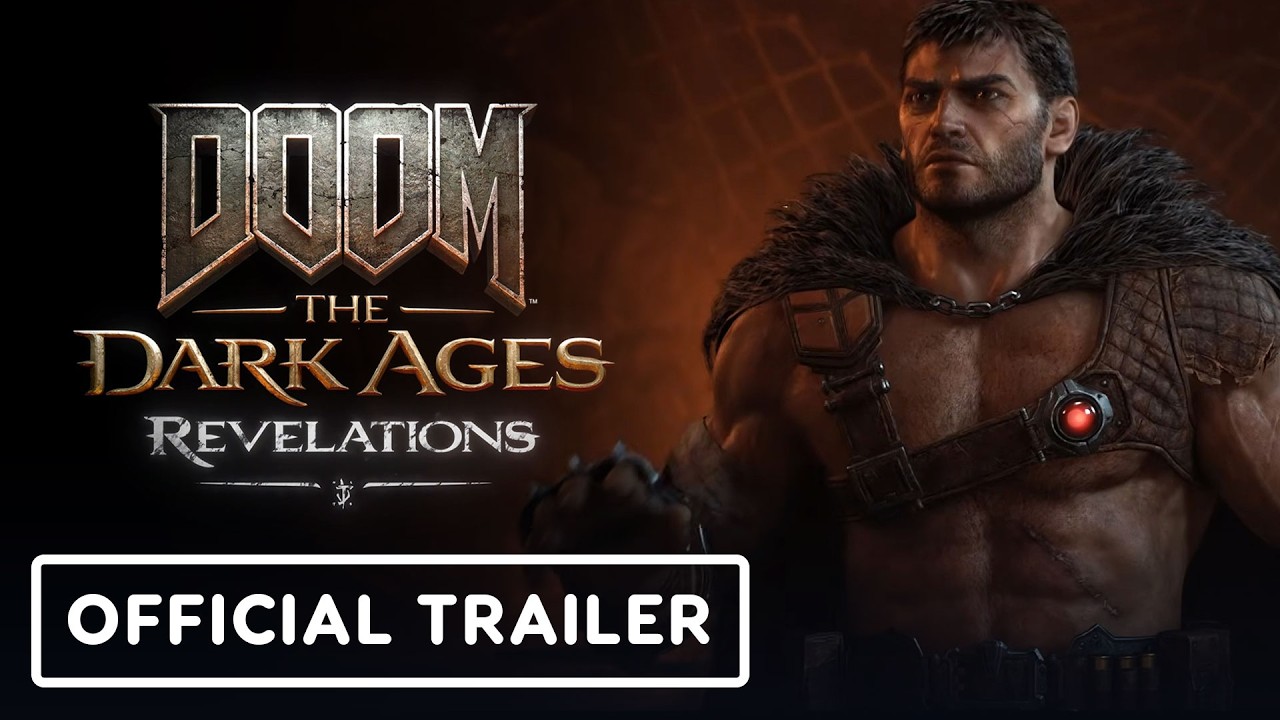
Sector Intelligence Report // DOOM: The Dark Ages – Week of July 7–13
DOOM: The Dark Ages is quietly redefining what “hard” means in a modern shooter. Across this week’s telemetry—Revelations rollout, early campaign footage, and late-game Nightmare captures—the signal is consistent: id isn’t chasing chaos, it’s engineering a medieval war machine where every encounter operates like a solvable, lethal puzzle.
This is a systems-first evolution of the Slayer fantasy, and for anyone in #gamedev or tuning their own #indiegame combat loop, there’s a lot to dissect.
Nightmare Telemetry: Difficulty as Sustained Systems Mastery
The late-game Nightmare footage from Revelations confirms that DOOM: The Dark Ages isn’t interested in surprise one-shots or cheap spikes. Instead, it leans into sustained attrition:
- Encounter Design as War Puzzles: Enemy compositions force constant target triage—hard counters, soft supports, and space-denial threats layered together. You’re not reacting to randomness; you’re solving a live-fire problem.
- Cooldown and Mobility as Co-Equal Resources: The Slayer’s kit—cooldowns, dashes, shield mechanics, and the new Chain Spear—are tuned like a resource economy. Mis-spend one (whiff a spear, burn a dash early) and the failure cascades.
- Punishment for Hesitation, Not Experimentation: The runs show that experimentation with routes and weapon pairings is viable, but hesitation in the wrong 2–3 second window is fatal. That’s a deliberate tuning choice, and it reads like a studio confident in its combat grammar.
For designers, this is a case study in how to push difficulty without resorting to simple health inflation. The game’s Nightmare curve is about decision density, not just damage numbers.
First 20 Minutes: Pre-Industrial Death Engine, idTech Precision
The opening 20 minutes of DOOM: The Dark Ages, as seen in this week’s Revelations drop, frame the game as a pre-industrial death engine wrapped in idTech brutality.
Key takeaways from the early campaign intel:
1. Shield-Saw Ballistics and the New Combat Grammar
The shield-saw isn’t a gimmick; it’s a ballistic decision node:
- Ranged and Melee in One Slot: It collapses the traditional “swap to shotgun vs. close gap and melee” dilemma into a single, expressive tool.
- Positional Commitment: Throwing the shield creates a temporary vulnerability window where your defensive option is literally flying across the arena. That trade-off is critical to how encounters are paced.
This hybrid design is a strong reference point for #indiegame teams looking to merge weapon roles without bloating the arsenal.
2. Vertical Arenas as Behavioral Filters
Early arenas are already tuned like behavioral filters rather than simple sandboxes:
- Multi-level layouts force players to route vertically to break line-of-sight and reset pressure.
- Enemy density is calibrated so that staying on a single plane is effectively a soft fail state.
The result is that movement is designed behavior, not just a player option. That’s high-value intel for any #gamedev team trying to make traversal feel mandatory rather than ornamental.
3. Execution as Pacing Valve, Not Just Spectacle
Close-quarters executions continue to function as a pacing and resource valve—a design throughline from DOOM (2016) and Eternal—but with the medieval framing, they read even more like battlefield finishers than arcade bonuses. The loop is still: push, punish, reload reality.
Chain-Spear Protocol: Input Ghost and UX Under Fire
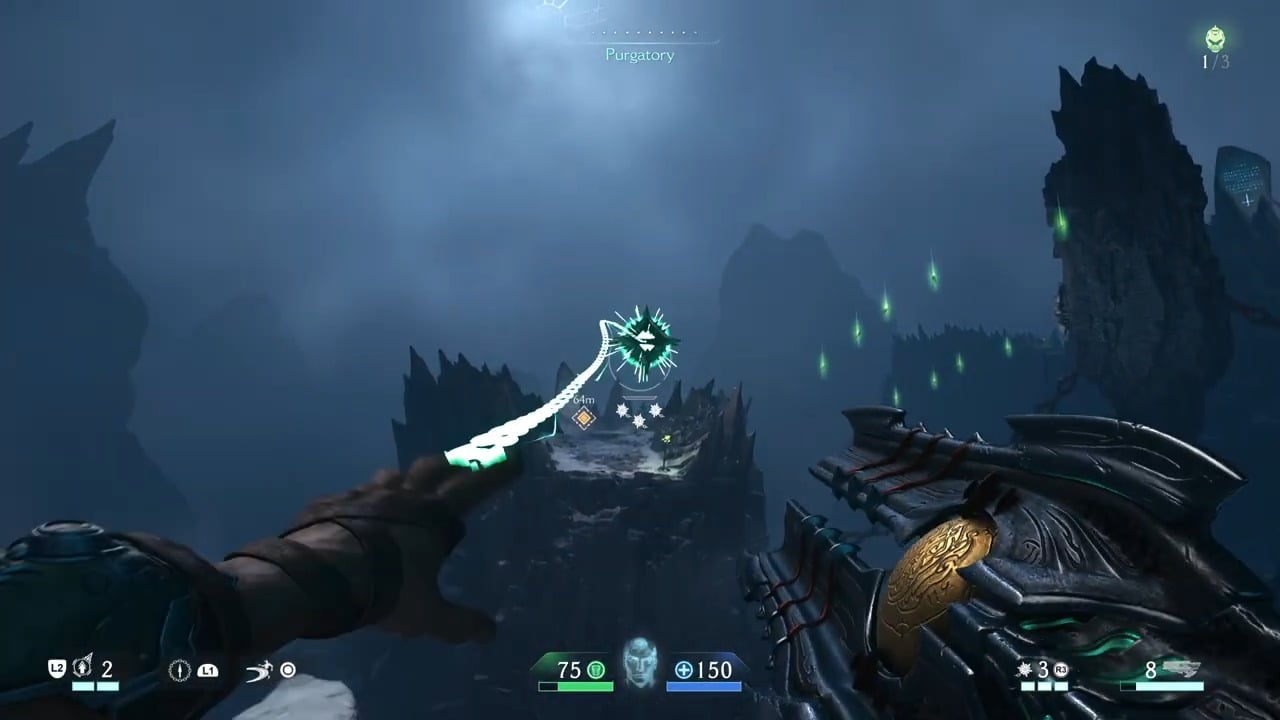
One notable friction point surfaced this week: a missing button prompt for the Chain Spear Throw in the Revelations build.
Operators report that the on-screen prompt for the spear simply disappears, leaving players guessing in the middle of high-intensity combat. The current workaround—diving into settings, rebinding controls, and forcing the prompt back into the HUD—restores full functionality, but it highlights a key lesson:
- Critical Actions Must Have Redundant Feedback: For a move as central as the Chain Spear, relying on a single UI layer (a prompt) is risky. Muscle memory, audio cues, animation tells, and HUD reinforcement should all overlap.
- UX Bugs Hit Harder in High-Cognition States: In a game tuned around rapid prioritization and route planning, any ambiguity in input mapping becomes exponentially more punishing.
From a development update perspective, this is the kind of issue that’s trivial to patch but disproportionately impactful on first impressions. It’s also a reminder that late-stage UI/UX QA is as strategically important as weapon balance.
Revelations Live: Ecosystem, Audio, and Future Tuning
With the Revelations intel packet now live, DOOM: The Dark Ages is effectively running a soft systems rehearsal in public. The broadcast confirms:
- Campaign Structure and Demon Ecosystem: The medieval framing isn’t just aesthetic dressing; enemy archetypes are clearly slotted into a larger war-theater logic, with siege-scale demons telegraphing their role in the macro encounter economy.
- Sound as Mechanical Telemetry: Audio design is doing heavy lifting as combat signaling—distinct tells for priority threats, ability wind-ups, and environmental hazards. For combat-heavy projects, this is a live example of audio as UX, not just atmosphere.
- Platform and Pipeline Confidence: The cadence of official drops, from trailers to tightly edited gameplay segments, reads like a studio comfortable with its current tuning pass rather than scrambling to hide instability.
For the broader #gamedev community, DOOM: The Dark Ages is shaping up as a benchmark in systemic difficulty design—where failure is readable, recoverable (until it isn’t), and almost always traceable back to a decision, not a dice roll.
Sector Summary
This week’s DOOM: The Dark Ages data paints a clear picture: id isn’t just making another fast shooter, it’s building a structured, medieval war puzzle where every weapon, cooldown, and movement option is a lever in a tightly wound system.
As more Revelations builds circulate and the Chain Spear UX issues get patched, expect the conversation to shift further from "Is it hard?" to "How is it teaching players to think like a Slayer-general?" That’s the real frontier here—for id, and for any #indiegame team watching closely.
Sources and corrections
This archive entry does not have a verified article-source list. Images and video embeds alone are not evidence for every claim.
Found an error? Request a correction. Include the passage and a supporting source.
Your games, in one place
Keep up with DOOM: The Dark Ages
Follow this game to collect its posts in your personal feed. Come back to see what you missed.