Automated archive / DOOM: The Dark Ages
DOOM: The Dark Ages – Revelations, Combat Puzzles, and a Chain-Spear Ghost in the Machine
DOOM: The Dark Ages is emerging as a pre-industrial death engine built on war-puzzle encounters, not random chaos. This week’s intel covers the Revelations systems brief, early combat telemetry, and a critical Chain Spear HUD bug every Slayer needs to log.
AI-generated summary. This archive article does not have a current recorded source check. Check linked sources before relying on details. Editorial policy

Sector Intelligence Report // Week of July 9
DOOM: The Dark Ages has shifted from concept fantasy to battlefield reality this week, with the Revelations intel drop and fresh hands-on reports mapping out the opening 20 minutes of the campaign. What’s emerging is not just another demon-slaying power trip, but a tightly engineered combat puzzle box—one that fuses pre-industrial war tech with idTech’s trademark brutality.
This report consolidates the latest signals from the field: early combat telemetry, a live systems brief from Revelations, and a critical UX fault in the Chain Spear protocol that every Slayer needs to log.
Combat Telemetry: A Pre-Industrial Death Engine
Early field logs describe the first 20 minutes of doom: the dark ages as a “pre-industrial death engine wrapped in idTech brutality.” The fantasy-medieval setting isn’t just cosmetic; it’s wired directly into the combat loop.
Shield-Saw Ballistics and War-Puzzle Arenas
The opening encounters highlight three core design pillars:
- Shield-Saw Ballistics – The shield isn’t a passive block; it’s a ranged weapon and kinetic battering ram. Throw arcs, ricochet paths, and return timing all factor into optimal DPS and crowd control.
- Siege-Scale Demons – Enemy silhouettes are larger and more theatrical, built to read clearly across vertical arenas. This supports rapid threat triage in the middle of chaos.
- Execution-Driven Sustain – Glory kills and execution windows are tuned to keep you “reloading reality” instead of reloading ammo. The loop remains: push, punish, convert aggression into resources.
Enemy density and vertical layout suggest encounters are war puzzles, not raw chaos. Each arena feels authored around specific solutions—angle control, mobility routes, and weapon synergies—rather than pure attrition. For #gamedev observers, it’s a case study in encounter design: density + legibility + traversal tuned to force creative aggression.
Revelations Intel: Systems Brief Goes Live
The Revelations packet is now live, functioning as a multi-channel systems brief for upcoming demon-theater engagements. It’s less a trailer and more a design manifesto in motion, showcasing:
- Expanded armament specs – including the shield-saw, heavy medieval ordnance, and the Chain Spear.
- Narrative framing that anchors the Slayer mythos in an older, grimmer epoch without losing the series’ surgical pacing.
- Hints of platform strategy and ecosystem planning, as id Software positions this entry as a long-tail content platform rather than a one-and-done campaign.
For #indiegame and #gamedev teams dissecting big-budget pipelines, Revelations is a masterclass in vertical slice communication: one asset that sells fantasy, systems, and long-term support in a single, coherent language.
Chain-Spear Protocol: Input Ghost and Field Fix
Amid the clean systems rollout, operators have flagged a critical UX fault: a missing button prompt for the Chain Spear Throw in DOOM: The Dark Ages. In live combat, this effectively creates an “input ghost”—the mechanic exists, but the HUD fails to surface the control cue.
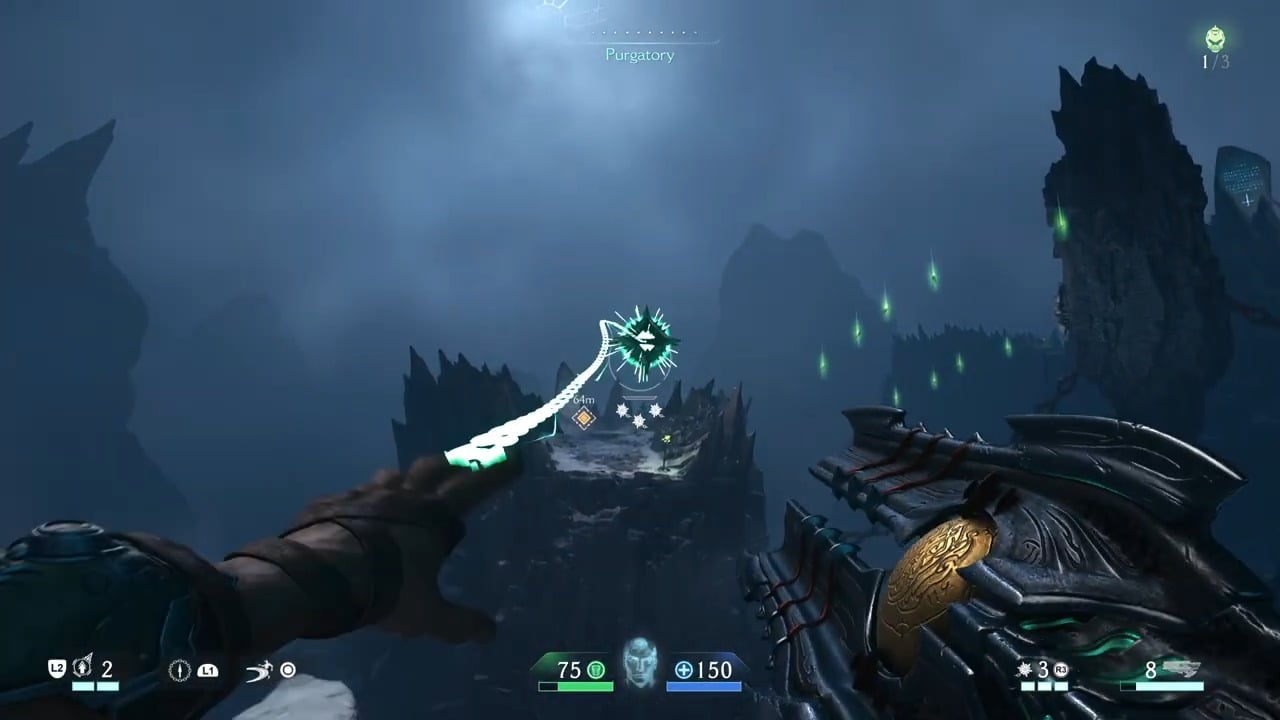
Field Workaround: Restoring Chain-Spear Functionality
Until an official patch lands, the current patchwork protocol is:
- Dive into Settings → Controls and locate the Chain Spear Throw action.
- Rebind the control to a fresh input (or re-confirm the existing one) to force a state refresh.
- Apply and exit back to the arena; this often restores the on-screen prompt and full functionality.
From a design and production standpoint, this is a textbook reminder: high-complexity combat systems live or die on HUD clarity and input feedback. One missing prompt can turn a showcase weapon into dead weight, especially in an encounter model tuned around specific tool usage.
For developers tracking this from the outside, the Chain Spear bug is a live example of:
- The fragility of UI-action binding layers in fast iteration cycles.
- Why late-cycle changes to keybind defaults and on-screen prompts demand regression passes as rigorous as any balance patch.
Strategic Outlook: Where The Dark Ages Is Pointing
Across this week’s activity, a clear picture is forming:
- Combat is leaning harder into authored war puzzles, making each arena a readable problem space rather than a random horde.
- Fantasy-medieval tech isn’t a skin; it’s a systems-level choice that informs weapon behavior, traversal, and enemy silhouette language.
- Live support expectations are high, with Revelations setting the tone for ongoing intel drops, DLC, and balance tuning.
For players, that means a campaign built around deliberate aggression and mechanical literacy. For #gamedev and #indiegame teams, DOOM: The Dark Ages is shaping up as a high-visibility reference point in encounter design, UI robustness, and how to communicate a complex combat ecosystem without diluting its edge.
Sources and corrections
This archive entry does not have a verified article-source list. Images and video embeds alone are not evidence for every claim.
Found an error? Request a correction. Include the passage and a supporting source.
Your games, in one place
Keep up with DOOM: The Dark Ages
Follow this game to collect its posts in your personal feed. Come back to see what you missed.