Automated archive / DOOM: The Dark Ages
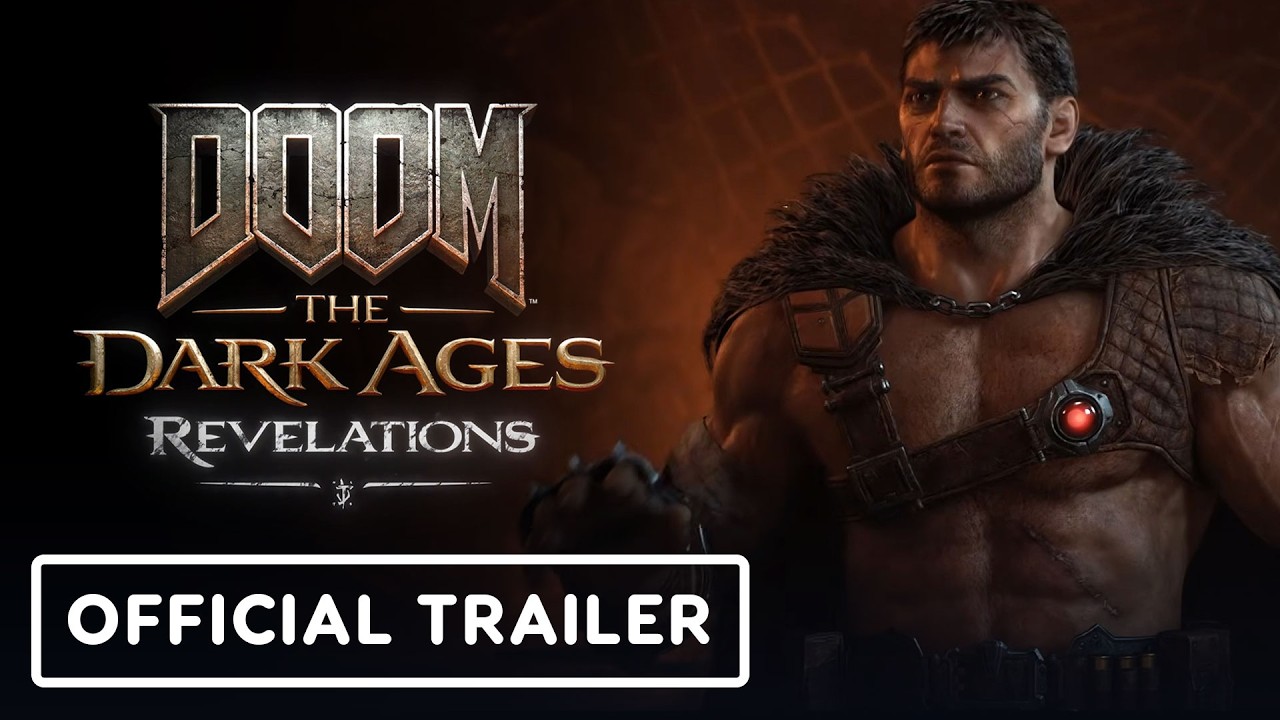
DOOM: The Dark Ages – Revelations Turns Medieval Hell Into a Battlefield Sandbox
DOOM: The Dark Ages is shifting the franchise from claustrophobic corridors to full-scale medieval hellsieges, and the newly announced Revelations expansion is the clearest proof yet. This week’s intel burst locks in a summer deployment window and showcases how shield-based gunplay and siege arenas are redefining...
AI-generated summary. This archive article does not have a current recorded source check. Check linked sources before relying on details. Editorial policy
Strategic Overview: Hell Goes Medieval, Again
DOOM: The Dark Ages just locked in its next major escalation: Revelations, a story-driven expansion that doubles down on medieval hell-tech, siege-scale combat, and prequel-era lore. Over the last seven days, id Software and Xbox have pushed a coordinated intel burst—trailers, release timing, and high-resolution combat feeds—that collectively reframe this prequel not as a side story, but as a foundational war campaign for the franchise.
For players, this is a new theater of war. For #gamedev watchers, it’s a clear signal that id’s design thesis for DOOM is shifting from corridor pressure-cooker to battlefield sandbox, where space, verticality, and siege mechanics drive encounter design.
Revelations DLC: Story Payload and Release Window
The activity feed confirms that DOOM: The Dark Ages – Revelations is:
- A story DLC expansion for the core game, not a standalone spin-off.
- Scheduled to deploy this summer, with one report pinning it to July 7.
- Focused on expanding the prequel-era Slayer campaign with:
- New narrative threads (“fresh narrative payloads”)
- Additional hell-forged arenas
- Expanded demonic target profiles—new enemy variants and encounter mixes
From a development update perspective, that cadence is aggressive. Launch window plus first story expansion in the same seasonal cycle implies parallel content production—core campaign and DLC likely co-developed, sharing tools, modular encounter kits, and art pipelines.
Combat Design: Shield-Saw Meta and Siege-Scale Encounters
The latest 4K combat feed, flagged as “Forged in Hellsteel”, crystallizes id’s new combat pillars:
1. Shield-Based Gunplay as a Core System
The shield-saw isn’t a gimmick; it’s a systemic anchor. The trailer and intel copy emphasize:
- Deflect → Close → Execute loops, where timing a block or parry opens enemies to brutal finishers.
- Shield as ranged platform—bladed returns, possible ricochets, and crowd-control utility.
For #gamedev designers, this is a notable pivot from DOOM Eternal’s pure mobility meta. Here, micro-positioning and front-facing defense are being elevated to first-class mechanics.
2. Battlefield, Not Hallway: “Siege-Scale” as Design Mandate
The report explicitly calls out “less corridor crawl, more battlefield theater.” That implies:
- Larger, multi-phase arenas that play more like warzones than combat rooms.
- Integration of siege engines, fortifications, and destructible set-pieces as encounter drivers.
- AI scripting that must handle flanking, elevation shifts, and long sightlines, not just arena loops.
This will be a key watch-point for level designers and technical artists: how id balances readability of threats in visually dense medieval environments without sacrificing the series’ trademark clarity.
Visual Telemetry: Medieval Hell-Tech in Motion
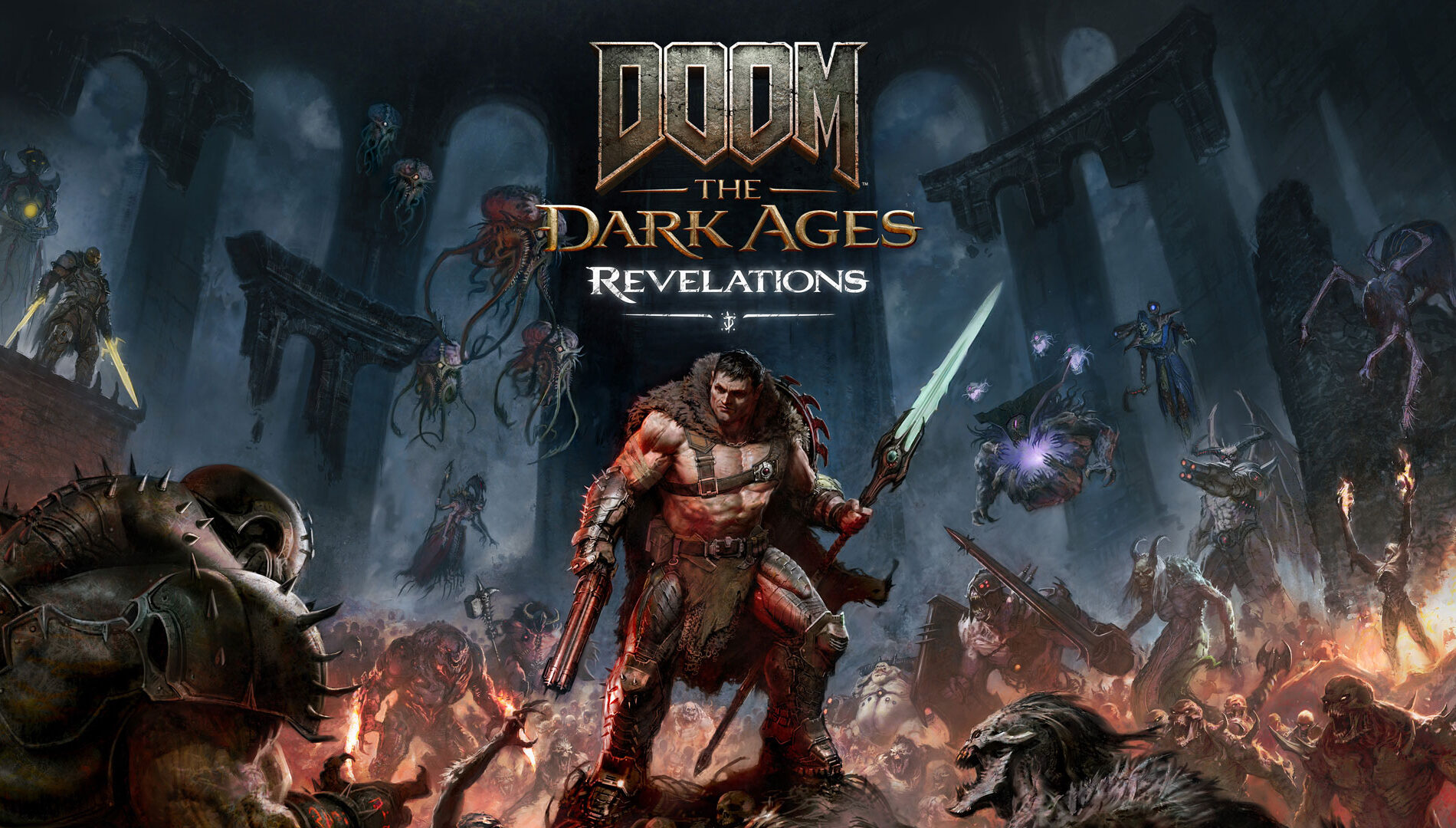
The official imagery and 4K trailer position DOOM: The Dark Ages as a texture-rich, material-heavy take on hell:
- Hellsteel armor, chain, and plate dominate the Slayer’s silhouette, telegraphing bulk and brutality.
- Environments lean into gothic fortresses, war-torn battlements, and infernal war machines, fusing medieval architecture with demonic bio-tech.
- Effects work—embers, ash, volumetric fog—supports the fantasy of a permanent siege state, not isolated incursions.
For #indiegame and AA teams watching from the sidelines, the lesson isn’t budget; it’s visual hierarchy. Despite the visual density, enemies, pickups, and traversal markers remain strongly color-coded and silhouette-driven—core DOOM readability principles carried into a busier art direction.
Systems & Content Forecast: What Revelations Likely Adds
Based on the language in the intel drops, Revelations is poised to:
- Extend the lore timeline, clarifying the Slayer’s role in this prequel-era war.
- Introduce new arenas that stress-test siege mechanics—larger maps, more layered objectives.
- Add enemy variants tuned to the shield-saw meta (e.g., shield breakers, parry bait, or armor-stacking heavies).
From a development update standpoint, this suggests a modular content strategy:
- Core game establishes baseline systems (shield combat, siege arenas, medieval traversal).
- DLC like Revelations plugs in incremental complexity—more enemy synergies, environmental hazards, and mission structures—without fragmenting the player’s mechanical vocabulary.
Sector Takeaways for Developers and Players
- For players: Expect DOOM: The Dark Ages to play less like a linear demon gauntlet and more like a series of hellish warfronts, where positioning, shield tech, and siege tools matter as much as raw aim.
- For #gamedev observers: This is id Software openly iterating on its own combat formula—testing whether DOOM’s pacing can survive (and thrive) in wider, more tactical spaces.
- For #indiegame teams: Watch how Revelations rolls out. The DLC’s structure will be a live case study in shipping tightly scoped expansions that deepen core systems instead of bloating them.
doom: the dark ages is no longer just a setting tweak; with Revelations on the calendar, it’s shaping up to be a systemic reframe of what DOOM combat can be in the next generation.
Sources and corrections
This archive entry does not have a verified article-source list. Images and video embeds alone are not evidence for every claim.
Found an error? Request a correction. Include the passage and a supporting source.