Automated archive / Diablo II: Resurrected
Diablo II: Resurrected Just Broke Its Own Rules With the Warlock
Diablo II: Resurrected just did the unthinkable for a 25-year-old ARPG: it added another brand-new class and rewired the meta without detonating its legacy. The Warlock’s arrival cements D2R as a live, evolving platform rather than a nostalgia museum piece.
AI-generated summary. This archive article does not have a current recorded source check. Check linked sources before relying on details. Editorial policy

Sector Overview: Sanctuary Isn’t a Museum Anymore
diablo ii: resurrected just crossed a line most legacy ARPGs never dare touch: it’s adding new classes a quarter-century after launch. The Warlock reveal marks the second modern-era addition after the Tempest, signaling that Blizzard no longer treats D2R as a nostalgia artifact but as a live, evolving platform. For #gamedev watchers, this is a textbook case of long-tail product resuscitation; for players, it’s a reason to dust off rune word spreadsheets and re-theorycraft the entire meta.
Parallel transmissions from Diablo 4’s camp—promising players will “freak out” at upcoming content—frame the broader franchise as a multi-headed live-service organism. D2R’s Warlock and Tempest updates now look less like fan-service and more like a deliberate portfolio strategy: keep the classic loot grinder mechanically relevant while Diablo 4 pushes seasonal experimentation at scale.
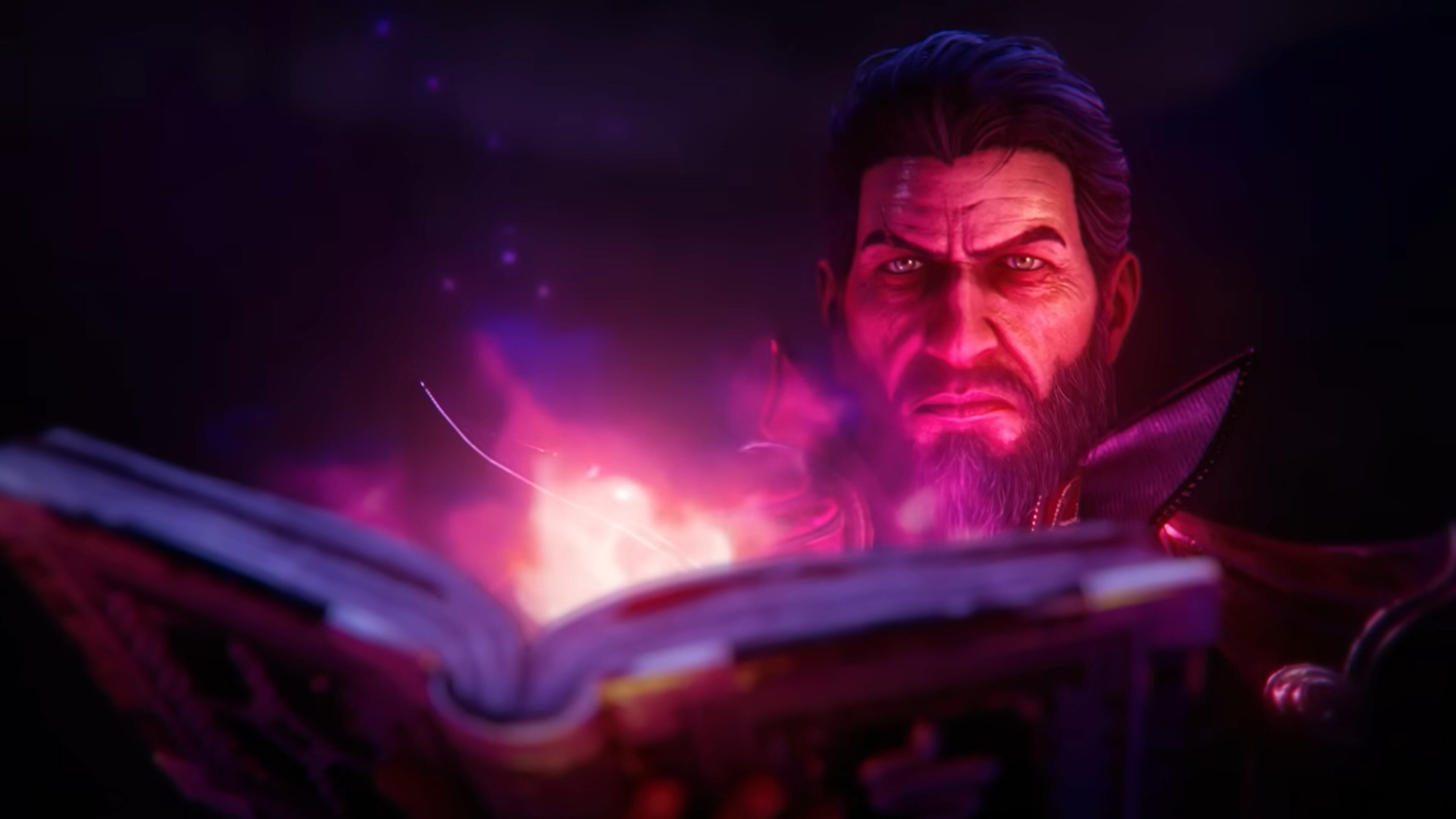
Watch: Transmitting Gameplay footage from the field: Official Warlock class gameplay trailer
Warlock Class: Dark Magic as Systems Design
Design Pillars: Curses, Control, and Calculated Risk
The Warlock is pitched as a ruthless dark caster leveraging curses, demonic fire, and forbidden magic. In practical systems terms, that implies three main design pillars:
- Aggressive spell rotations – The activity feed highlights swift, aggressive spell rotations and life-draining abilities. That suggests short-cooldown loops, potentially stacking debuffs and DoTs rather than the slow, lumbering casts of classic Necromancer curses.
- Crowd control as offense – Sinister crowd control reads as hard CC embedded directly into DPS skills—think stuns, fears, or immobilizes that reward proactive positioning instead of passive kiting.
- Self-sustain through corruption – Life-drain mechanics are a deliberate counterweight to glass-cannon fantasy, allowing Blizzard to push higher baseline damage while keeping the class self-contained for solo ladder play.
For #gamedev and #indiegame designers, this is a notable case study in retrofit design: introducing a fast, modern-feeling caster into a combat model authored in 2000 without detonating the game’s pacing.
Synergy With a 25-Year-Old Meta
The Warlock is described as a volatile new variable in D2R’s long-settled equation. That volatility matters because Diablo II’s meta is historically calcified around a few archetypes: Hammerdin, Blizzard Sorc, Javazon, and a narrow band of rune word breakpoints.
Key implications:
- Buildcraft disruption – New skills and synergies will inevitably interact in unexpected ways with legacy items and rune words. Expect early ladder seasons to be dominated by discovery: which classic uniques secretly become Warlock BIS, which obscure runes spike in value, and whether curses stack with existing debuff sources in multiplicative or additive ways.
- Economy shock – Even a small tweak to demand for niche runes can ripple through trading ecosystems. The Warlock’s reliance on life drain and CC may elevate specific leech, cast-rate, and crowd-control gear that previously lived in stash purgatory.
- Co-op composition – A curse-centric kit could reposition the Warlock as a debuff support in party play, potentially dislodging some Paladin aura dominance in coordinated groups.
The Tempest and the “Modernization Without Betrayal” Strategy
The Warlock doesn’t arrive in isolation. Recent intel confirms the Tempest—the first new class in roughly 25 years—mixes melee and magic as a storm-wielding spellblade, “a budget Sorc that still bonks things in the face.” This dual-class identity is Blizzard’s attempt to make D2R feel “a bit less 2000 and a bit more 2025” without erasing the original buildcraft DNA.
Design-wise, Tempest and Warlock form a clear pattern:
- Hybridization (Tempest) – Melee–caster fusion to modernize moment-to-moment combat and give players mobility and agency beyond teleport spam.
- Specialization (Warlock) – A focused dark-magic specialist that leans into debuffs, sustain, and control to re-open the high-end theorycraft space.
This is how you extend a classic without rewriting it: add new vectors of expression that live alongside the holy cows instead of slaughtering them. For developers, it’s a playbook on evolving a legacy title as a live service without invalidating years of community knowledge.
Live-Service Hydration: Diablo as a Multi-Game Ecosystem
The activity feed frames the franchise as a “live service hydra—cut off one season and three more appear.” D2R’s Warlock and Tempest drops, plus Diablo 4’s teased mega-update, are not random; they’re coordinated signals:
- Retention via nostalgia + novelty – D2R keeps veterans engaged through new classes and balance passes, while Diablo 4 chases broader seasonal and expansion beats.
- Onboarding via cross-pollination – Newer players entering through Diablo 4 now see diablo ii: resurrected as a living game, not a static remaster. That expands the funnel and extends franchise lifetime value.
- Brand coherence – The Warlock’s dark-magic fantasy and the Tempest’s kinetic combat feel aligned with Diablo 4’s more modern action sensibilities, creating a smoother aesthetic and mechanical bridge between titles.
Player Behavior Forecast: Spreadsheets, Stash Tabs, and Exploit Hunting
The Warlock’s arrival will trigger predictable behavioral patterns in the D2R ecosystem:
- Theorycrafter deep dive – Expect a week of silence from build crafters as they vanish into Excel, PoB-style planners, and community simulators to map optimal curse rotations, breakpoints, and ladder routes.
- Ladder resets as content – New classes are effectively soft expansions for D2R. Each ladder season becomes an R&D cycle where the community stress-tests Blizzard’s assumptions about balance and build diversity.
- Exploit pressure – As one veteran player in the feed notes, the search for “the next big glitch” never stops. New skills and interactions mean new edge cases, from unintended infinite loops to economy-breaking synergies. In a live-service context, the race is between players discovering exploits and developers patching them—now a core part of the gameplay culture itself.
Strategic Takeaways for Developers and Observers
For #gamedev and #indiegame teams studying D2R’s trajectory, a few lessons stand out:
- You can add systemic complexity late in a game’s life if you respect existing meta structures and let new content coexist rather than overwrite.
- Legacy doesn’t preclude live service; it just demands a more surgical approach. D2R’s Warlock and Tempest show that even 20-year-old combat models can support new class fantasies.
- Communication matters – Framing these updates as bold experiments rather than sacrilege helps align veteran expectations and invites newer audiences in.
In sector terms, Diablo II: Resurrected has pivoted from “preserved artifact” to “active testbed.” The Warlock is more than a dark caster; it’s Blizzard’s latest proof-of-concept that even the oldest ARPGs can still mutate.
Sources and corrections
This archive entry does not have a verified article-source list. Images and video embeds alone are not evidence for every claim.
Found an error? Request a correction. Include the passage and a supporting source.