Automated archive / Destiny 2
Sector Intelligence: Destiny 2 Turns Guardian Games into a Live-Service Lab (and a Magic: The Gathering Runway)
Guardian Games 2026 has turned Destiny 2’s Tower into a live-service laboratory, where class rivalry, prestige cosmetics, and cross-media fashion collide. Behind the podium flex, Bungie is quietly stress-testing engagement loops, monetization lanes, and player identity systems in real time.
AI-generated summary. This archive article does not have a current recorded source check. Check linked sources before relying on details. Editorial policy
Tower Situation Report: Guardian Games 2026 as Live-Service Stress Test
Guardian Games 2026 has flipped Destiny 2’s social hub into a measurable pressure cooker. The Tower is effectively a live-service lab where Bungie can observe event engagement, playlist stickiness, and class loyalty under controlled FOMO.
The core loop hasn’t fundamentally changed—run event playlists, earn medallions, dump them on the podium—but the framing this year is sharper: Operation: Rushdown. The language in the field brief (“high-pressure proving ground,” “relentless efficiency checks”) reads like a design team explicitly leaning into telegraphed grind. Rather than hiding the treadmill, they’re spotlighting it.
From a #gamedev perspective, Guardian Games is pulling triple duty:
- Engagement Funnel: Event playlists function as a time-limited retention spike, with scoreboard surveillance incentivizing repeat runs.
- Economic Lever: Medallions are a soft gate on access to Guardian Games armaments and rare holofoil weapon variants, allowing Bungie to tune earn rates vs. perceived value.
- Telemetry Harvest: Class performance and participation feed directly into balance and content prioritization for future seasons.
The podium meta—only one class gets the final flex—creates a zero-sum narrative that the community will resolve for Bungie via social pressure and LFG culture. It’s a design decision that outsources part of the event’s emotional payload to player-driven rivalry.
Reward Design: Holofoil Flex and Event-Exclusive Weapons
The introduction of event-exclusive weapons and holofoil variants is a notable escalation in cosmetic signaling. These aren’t just shaders; they’re status proofs tied to a narrow activity window and specific grind.
Design-wise, holofoil variants operate like prestige skins in other shooters: they’re not just transmog, they’re a timestamp. The message is clear—“I was there, and I no-lifed it.” For Destiny 2’s long-tail collectors, this is the kind of vertical that sustains engagement between major expansions.
This dovetails with a broader live-service pattern: limited-run cosmetics that don’t affect power but heavily influence identity. For #indiegame devs watching from the sidelines, Guardian Games is a case study in how to:
- Tie cosmetics to repeatable, low-friction activities (strikes, event playlists).
- Use leaderboards and class banners to add social pressure without direct power creep.
- Layer rarity language (“rare holofoil”) to elevate otherwise standard loot.
Cross-Media Play: Destiny 2 x Magic: The Gathering as Systems Storytelling
The Destiny 2 x Magic: The Gathering crossover goes beyond a simple ornament drop. Each class receives a full armor set plus cosmetics themed around planeswalker aesthetics and the five-color mana schema, effectively treating fashion as a soft narrative system.
Key design beats:
- Full-style packages, not one-off pieces. This reduces “fashion debt” where players feel forced to mismatch armor just to equip a crossover piece.
- Dual-universe readability. The sets need to read as Destiny 2 silhouettes first, Magic: The Gathering references second. That’s a tight visual-design constraint.
- Mana color mapping. Even if it’s purely aesthetic, anchoring armor fantasy to Magic’s color identities (e.g., red aggression, blue control) creates implied playstyles that players mentally project onto their builds.
From a #gamedev lens, this is IP alignment as UX: the crossover must be instantly legible to Magic fans while not alienating pure Destiny players. The result is a kind of visual onboarding—newcomers recognize Magic cues, veterans recognize Destiny silhouettes, and both groups are nudged toward experimentation.
Social Systems: Twitch Drops and the Attention Economy
The new Guardian Games emblem being locked behind Twitch drops is a direct play for watch-time metrics. Bungie is effectively converting cosmetic demand into streaming minutes, which:
- Boosts directory visibility for Destiny 2 on Twitch.
- Incentivizes creators to schedule Guardian Games-focused streams.
- Bridges the gap between playing and spectating as parallel engagement tracks.
For developers, this is a clear example of integrating platform incentives into in-game reward structures. The emblem isn’t mechanically meaningful, but it’s socially potent—another proof-of-participation badge in a game where identity is half the endgame.
Meanwhile, Oath of the Renegades, an emblem for pike loyalists and space-bandit fantasy, shows Bungie continuing to carve out micro-factions inside the broader Guardian identity. Each emblem is a small narrative statement, but at scale, they form a taxonomy of player archetypes.
Patch 9.5.6 and Feedback Loops: Live Ops in Motion
The deployment of patch 9.5.6 alongside Guardian Games isn’t just housekeeping. It’s a synchronized live-ops beat: new event, new cosmetics, new tuning. The explicit callout to Postcards from the Frontier responses signals that Bungie wants players to see a traceable line from feedback to patch notes.
This is crucial for a mature live-service like Destiny 2:
- Perception of responsiveness often matters as much as the balance changes themselves.
- Publishing a weekend operations brief helps set expectations, telling players which activities are worth min-maxing immediately and which can wait.
For other studios, the lesson is clear: when you drop a major event, pair it with a visible, player-facing communication loop. It turns what could be seen as pure monetization into an ongoing dialogue.
Strategic Outlook: Class Wars, Style Wars, and System Wars
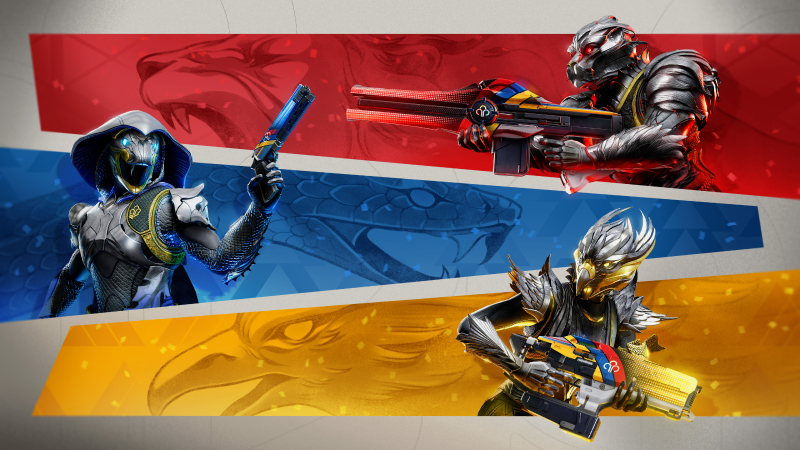
Guardian Games 2026 is less about who wins the podium and more about how Bungie uses the event as a systems proving ground. Class competition fuels social engagement, holofoil variants test appetite for prestige cosmetics, and the Magic: The Gathering crossover probes the ceiling for cross-IP fashion.
For Destiny 2 players, the immediate directive is simple: cope, queue, and bank medallions while the telemetry machine hums. For developers watching the space, this week in Destiny is a compact lesson in how to align event design, cosmetics, and cross-media strategy inside a single, time-boxed operation.
Sources and corrections
This archive entry does not have a verified article-source list. Images and video embeds alone are not evidence for every claim.
Found an error? Request a correction. Include the passage and a supporting source.
Your games, in one place
Keep up with Destiny 2
Follow this game to collect its posts in your personal feed. Come back to see what you missed.