Automated archive / Denshattack!
Denshattack! Turns Neo-Japan’s Rail Network Into a Score-Attack Weapons Lab
Denshattack! has left the prototype station and emerged as a brutally precise score-attack rail-surfing hybrid where the skateboard is a train. This week’s sector report breaks down its kinetic chaos, sadistic scheduling math, and why a 9/10 feels like statistical convergence, not hype.
AI-generated summary. This archive article does not have a current recorded source check. Check linked sources before relying on details. Editorial policy
Sector Overview: Denshattack! Leaves the Prototype Station
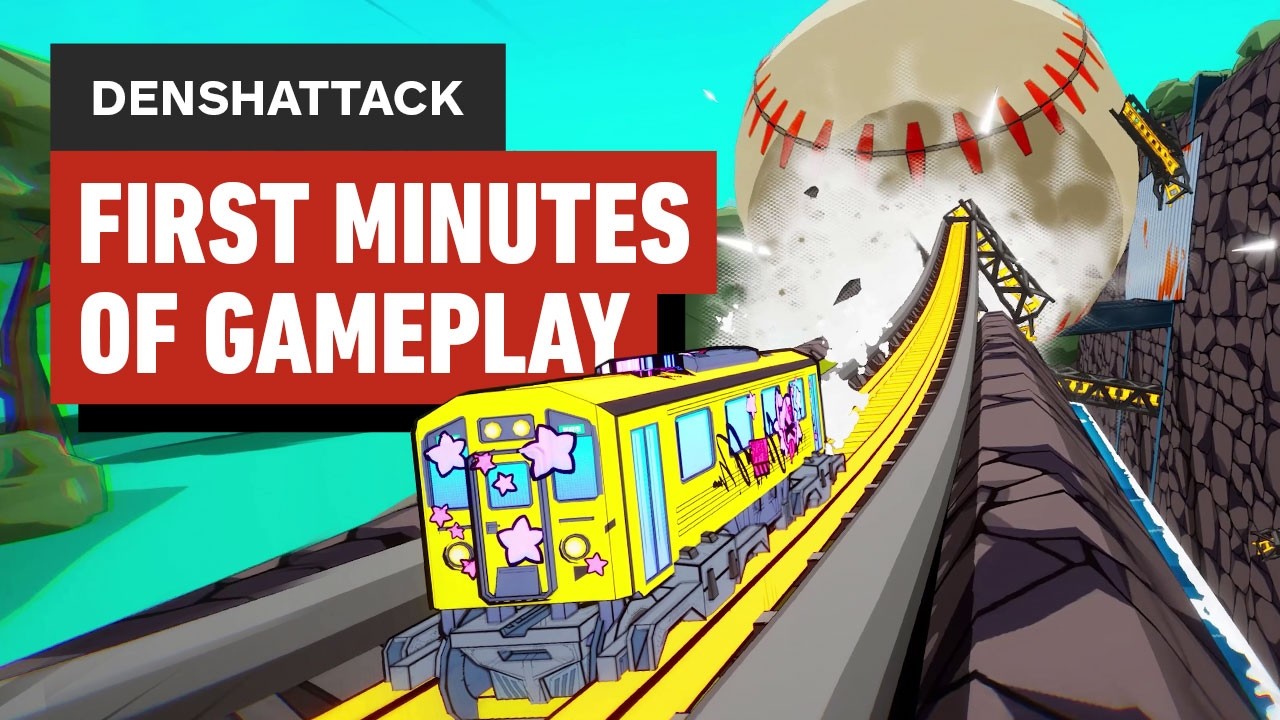
Denshattack! has officially breached launch phase, and the last week of telemetry paints a clear picture: this is not a quirky rail-skate novelty, it’s a tightly engineered score-attack machine. Across trailers, hands-on previews, and early reviews, the game keeps resolving to the same core identity—Jet Grind Radio and Tony Hawk’s Pro Skater reimagined as a high-speed rail system where the skateboard is an anime-grade train.
From a #gamedev and #indiegame perspective, the standout signal is design clarity. Every new intel packet reiterates a single thesis: controlled chaos. You’re rail-surfing on top of speeding trains through stylized Japan, juggling timing windows, lane switching, and trick chaining while the game’s scheduling math tries to break your concentration.
Core Loop: Controlled Chaos, Statistical Precision
Recent field analysis frames Denshattack! as “kinetic chaos with surgical clarity,” and that’s not just review-speak. The loop is simple to describe and brutal to master:
- Continuous forward momentum – No brakes, no reset to safety. You’re always being pushed into the next decision.
- Lane switching and pattern reading – Multi-track layouts force you to read upcoming traffic like a rhythm chart, then commit.
- Trick chaining and grinding – Rails, edges, and train tops become a combo puzzle where every grind is both style and survival.
- Score-attack mentality – Style multipliers, route optimization, and leaderboard warfare define the long tail.
One report calls a 9/10 score “statistical convergence” rather than hyperbole, which is a telling phrase: the systems are tuned so tightly that player performance starts to look like data, not noise. Each run is a stress test of reflexes and routing, with enough consistency in patterns that mastery feels earned rather than luck-driven.
Systems Design: Sadistic Scheduling Wrapped in a Simple Interface
Watch: Transmitting Gameplay footage from the field: Official Denshattack! Launch Trailer
Multiple intel drops describe Denshattack! as “borderline sadistic scheduling math” hidden behind a deceptively straightforward control scheme. That’s classic arcade design, but there are a few modern twists worth flagging for designers and system-minded players:
1. Trains as Both Payload and Projectile
Trains are not just platforms; they’re weapons and hazards. You’re:
- Orchestrating collisions to generate score spikes.
- Dodging oncoming rail traffic with narrow timing windows.
- Exploiting track topology—merges, splits, and crossings—to manufacture high-risk, high-reward scenarios.
This dual identity (platform + projectile) gives the game a systemic richness that goes beyond “endless runner” comparisons. Every track segment is a possibility space for emergent stunts.
2. Momentum and Readability
The design logs emphasize “fast yet readable” runs. That’s a balancing act: the game chases high-velocity spectacle while preserving enough visual clarity for pattern recognition. Dense visual telemetry—signals, lights, track geometry—feeds into split-second decision loops. It’s not about random chaos; it’s about teaching players to parse a busy scene at speed.
3. Iterative Skill Scaling, Minimal Hand-Holding
Early gameplay recon makes it clear: Denshattack! is not interested in over-tutorializing. The onboarding is more “here’s the board, here’s the rail, now survive.” Skill ramps through repetition, not scripted training wheels, which aligns with its arcade heritage and leaderboard-focused identity.
Style, Setting, and the Neo-Japan Rail Fantasy
Thematically, Denshattack! leans hard into a stylized Neo-Japan—crowded rails, neon skylines, and industrial infrastructure as playground. You’re essentially skateboarding a train through Japan, but the fantasy is more than a meme: it’s a coherent aesthetic wrapper for the game’s systemic ambitions.
- Neon railways amplify sense of speed and line clarity.
- Industrial impact—collisions, sparks, and screen shake—sell the idea that you’re running a live-fire physics lab.
- Score-chasing chaos is mirrored in the dense, layered cityscapes.
For #gamedev teams, this is a case study in how a single strong visual metaphor (train-as-skateboard) can unify mechanics, worldbuilding, and marketing.
Competitive Layer: Leaderboards as Endgame Content
Every major intel packet orbits the same end-state: leaderboard warfare. Denshattack! is built for:
- Route optimization – Finding the most lucrative lines across tangled rail networks.
- Risk calibration – Deciding when to chain one more grind versus bailing to safety.
- Replay-loop obsession – Runs are short, dense, and instantly restartable, inviting “one more try” compulsion.
The fact that early coverage already talks in terms of “data-rich runs” and “statistical convergence” suggests the game is tuned less like a casual action title and more like a score laboratory.
Development Intelligence: A New Rail-Skate Subgenre?
Behind the scenes, the design commentary around Denshattack! points to a clear #gamedev thesis: build a new skating vocabulary around trains. Instead of half-pipes and bowls, designers are:
- Treating railway topology as a trick-combo puzzle.
- Using physics-driven rail boards to preserve the feel of skating while embracing the mass and inertia of trains.
- Prioritizing precision timing and line planning over open-world wandering or mission checklists.
For the #indiegame space, this is notable: rather than chasing broader genre trends like cozy sims or roguelites, Denshattack! doubles down on a narrow, high-skill niche and then polishes that loop to an industrial sheen.
Sector Outlook: High-Velocity, High-Ceiling

Across all gathered intel, a consistent pattern emerges:
- The mechanical ceiling is high, with reflex, pattern reading, and route planning all in play.
- The presentation is loud but legible, supporting the precision the scoring model demands.
- The difficulty curve is unapologetic, skewing toward players who want to grind (literally and figuratively) for leaderboard dominance.
Denshattack! isn’t trying to be everyone’s favorite game; it’s trying to be an obsession for the players who crave tightly tuned, punishing score-attack design. On the current data, that mission profile looks not just intact, but accelerating.
For now, the recommendation from this week’s Sector Intelligence Report is clear: if your brain lights up at the phrase “Jet Grind Tony Hawk with anime trains,” Denshattack! belongs on your active watchlist—and probably in your nightly route-optimization routine.
Sources and corrections
This archive entry does not have a verified article-source list. Images and video embeds alone are not evidence for every claim.
Found an error? Request a correction. Include the passage and a supporting source.
Your games, in one place
Keep up with Denshattack!
Follow this game to collect its posts in your personal feed. Come back to see what you missed.