Automated archive / Cyberpunk 2077
How Cyberpunk 2077 Became CDPR’s Live-Fire Testbed for Cyberpunk 2
Cyberpunk 2077 has quietly transformed from a launch cautionary tale into CD PROJEKT RED’s live reference build for Cyberpunk 2. This week’s signals reveal how engineering, hiring, and studio culture are being rebuilt around the lessons learned in Night City.
AI-generated summary. This archive article does not have a current recorded source check. Check linked sources before relying on details. Editorial policy

Night City: From Cautionary Tale to Reference Build
The last seven days of signals around Cyberpunk 2077 and CD PROJEKT RED paint a clear picture: Night City is no longer just a shipped product, it’s the live reference build for the studio’s next era. Between retrospective breakdowns of the game’s reboot, deep dives into hiring and VFX pipelines, and fresh insight into the Boston hub steering Cyberpunk 2, Cyberpunk 2077 has effectively become a case study in long-tail AAA #gamedev.
The headline transmission in the feed reframes the game as Cyberpunk 2077 Rebooted: a reminder of how far the project has traveled since its launch-state infamy. Systemic overhauls to AI, combat balance, driving, and police response, plus the 2.0 redesign of perks, cyberware limits, and vehicle combat, turned the game into something closer to a systemic RPG sandbox than the static power fantasy it first resembled. Phantom Liberty then locked in a new baseline: a spy-thriller campaign, a fresh district, and mission design that leans harder into choice, consequence, and replayability.
For developers watching from the outside—especially #indiegame teams looking to scale up scope—the lesson is brutal but useful: CDPR treated a shipped blockbuster as a live prototype, iterating until core loops, buildcraft, and world reactivity matched the promise. That willingness to refactor foundational systems post-launch is now bleeding directly into how Cyberpunk 2 is being structured from day one.
Boston: Engineering the Sequel With Lessons From the Original
The most future-facing signal this week is the spotlight on CD PROJEKT RED Boston, now positioned as a key engineering hub for Cyberpunk 2. Engineering Director Jess Scott’s philosophy reads like a direct response to the original game’s production scars: empower engineers to own features end-to-end, embed them tightly with design and art, and treat performance, tooling, and player experience as a single, continuous problem rather than separate tracks.
This is where Cyberpunk 2077’s long post-launch climb matters. Vehicle combat, AI responsiveness, and dense open-world scripting are exactly the kinds of systems that punished the first game at launch, then improved dramatically over time. The Boston team is effectively inheriting those scars as documentation: a practical blueprint of what not to silo, and which technical debts can’t be pushed to the eleventh hour.
From a #gamedev pipeline perspective, the emphasis on engineers who can navigate huge codebases and think holistically about performance echoes what we’ve seen in the 2.0 update: fewer, sharper systems with clearer relationships, rather than a sprawl of overlapping mechanics. That’s the kind of design-technical alignment Cyberpunk 2 will need if it wants to avoid another multi-year recovery arc.
Culture, Hiring, and the Human Side of AAA Production
Watch: Transmitting Gameplay footage from the field: Inside CDPR’s Cyberpunk & Witcher Legacy
Several transmissions this week zoom out from Night City to the people building it. Features on Karolina Radziszewska (Chief People Officer) and the AnsweRED Podcast episodes about hiring reveal how tightly CDPR is now tying studio culture to production outcomes.
The hiring-focused episode lays out what the studio actually values: practical skills, shipped or playable projects, and demonstrable problem-solving over buzzword-heavy CVs. For anyone targeting a role on the next Cyberpunk, the signal is clear—show how you think, not just what tools you’ve touched. That’s particularly relevant for large-scale RPGs where debugging emergent behavior and collaborating across disciplines matter more than mastering a single engine feature in isolation.
Parallel to that is a seven-year internal cancer awareness initiative, framed not as PR but as infrastructure: healthier devs, more sustainable pipelines, and fewer crunch-driven heroics. In a genre where schedules are long and content demands are brutal, that kind of sustained health program becomes a production strategy as much as a moral stance.
Visual Effects, Characters, and Night City’s Sensory Language
On the craft side, the feed dives into VFX, character art, and monster coordination—disciplines that quietly define how Cyberpunk 2077 feels second-to-second.
VFX Lead Piotr Suchodolski’s profile underlines that effects in modern RPGs are not decoration; they are UX. Every muzzle flash, hacking ripple, and weather shift in Night City is tuned to guide attention, sell impact, and communicate system state without flooding the GPU. For Cyberpunk 2077, that meant selling cyberware power and weapon feedback in a city already overloaded with neon noise. For Cyberpunk 2, this will be the difference between visual clarity and sensory fatigue.
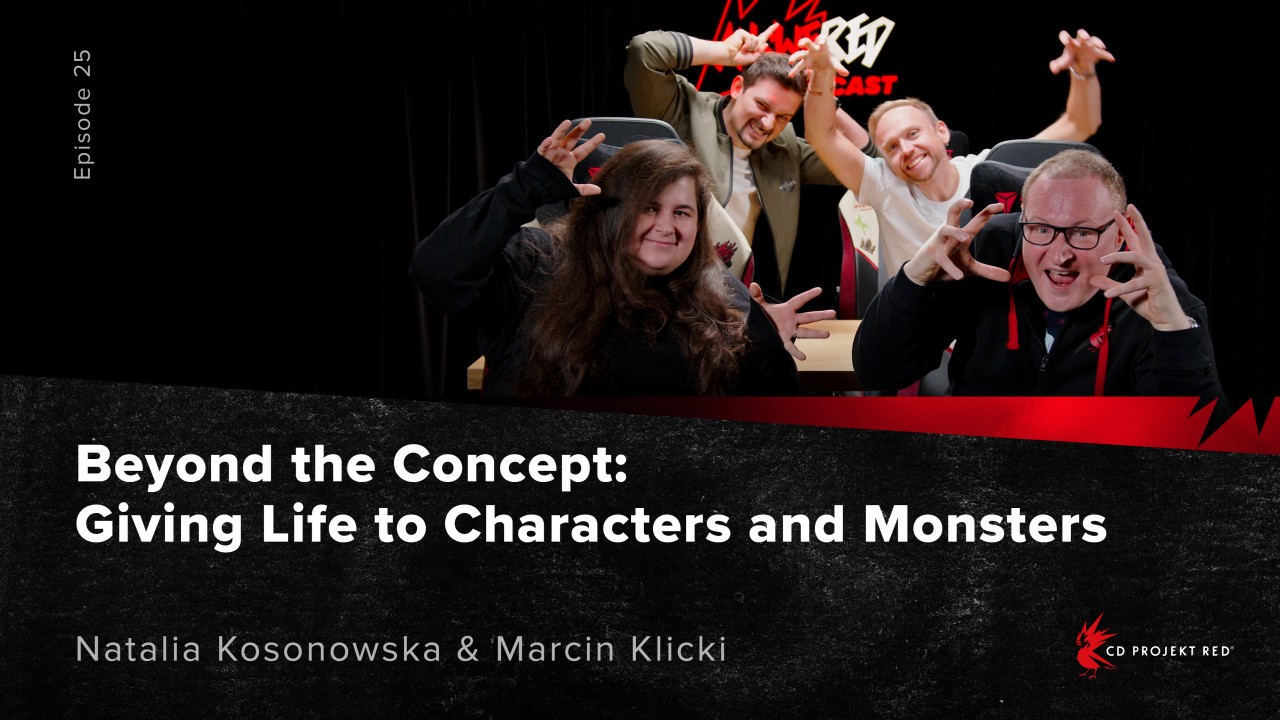
Similarly, the AnsweRED episode with Senior Character Artist Natalia Kosonowska and Expert Monster Coordinator Marcin Klicki reinforces how character and creature pipelines blend narrative, rigging constraints, and systemic design. While Witcher monsters get the spotlight, the same pipeline logic applies to Cyberpunk 2077’s fixers, corpos, and chrome-sculpted mercs. Each model must read clearly in motion, support animation needs, and sit comfortably within lore and gameplay roles.
For #indiegame teams, these insights scale down: even on a small project, VFX and character design should be treated as communication tools, not just eye candy. Cyberpunk 2077’s evolution shows that tuning these layers post-launch can meaningfully shift how players read combat and navigation, even when underlying code changes are modest.
Memes, Space Medallions, and IP as Cultural Infrastructure
The lighter side of this week’s intel—Delamain stream highlight reels and The Witcher medallions hitching a ride to the International Space Station—still loops back to Cyberpunk 2077’s strategic role.
Delamain’s AI chaos being clipped, shared, and remixed is the emergent narrative CDPR always wanted from its systemic encounters. The fact that these moments still surface years after launch shows the game has finally reached a stable, meme-generating equilibrium: the kind of long-tail engagement that justifies its massive post-launch investment.
Meanwhile, The Witcher’s expansion into literal orbit cements CDPR’s IP as cultural infrastructure rather than just software. That halo benefits Cyberpunk 2077 directly. A studio that can send Geralt into space and still drop deeply technical podcasts about hiring and VFX is clearly positioning itself as both a pop-culture brand and a destination for serious #gamedev careers.
Strategic Outlook: Cyberpunk 2077 as a Living Design Document
Taken together, this week’s signals reframe cyberpunk 2077 as more than a redeemed RPG. It’s now a living design document for Cyberpunk 2 and a public case study in how AAA studios can course-correct.
- The 2.0 and Phantom Liberty overhauls demonstrate how to re-architect core systems in the wild.
- Boston’s engineering push shows how to bake those lessons into sequel production from the outset.
- Hiring, health initiatives, and cross-disciplinary pipelines reveal a studio trying to align culture with the technical and narrative ambition of its worlds.
For developers watching from the outside, the message is blunt: your launch isn’t the end, but your post-launch discipline will define your next project. Night City learned that the hard way—and now Cyberpunk 2 gets to start from a far more honest baseline.
Sources and corrections
This archive entry does not have a verified article-source list. Images and video embeds alone are not evidence for every claim.
Found an error? Request a correction. Include the passage and a supporting source.