Automated archive / Crimson Desert
Crimson Desert’s Elemental Arms Race and the Endgame Content Crunch
Crimson Desert just hit the top of the Steam revenue charts while its most dedicated players are already reporting an endgame content void. This week’s Sector Intelligence Report breaks down the elemental systems, gear economy, and encounter design pressure points that will decide whether it becomes a long-term...
AI-generated summary. This archive article does not have a current recorded source check. Check linked sources before relying on details. Editorial policy
Strategic Overview
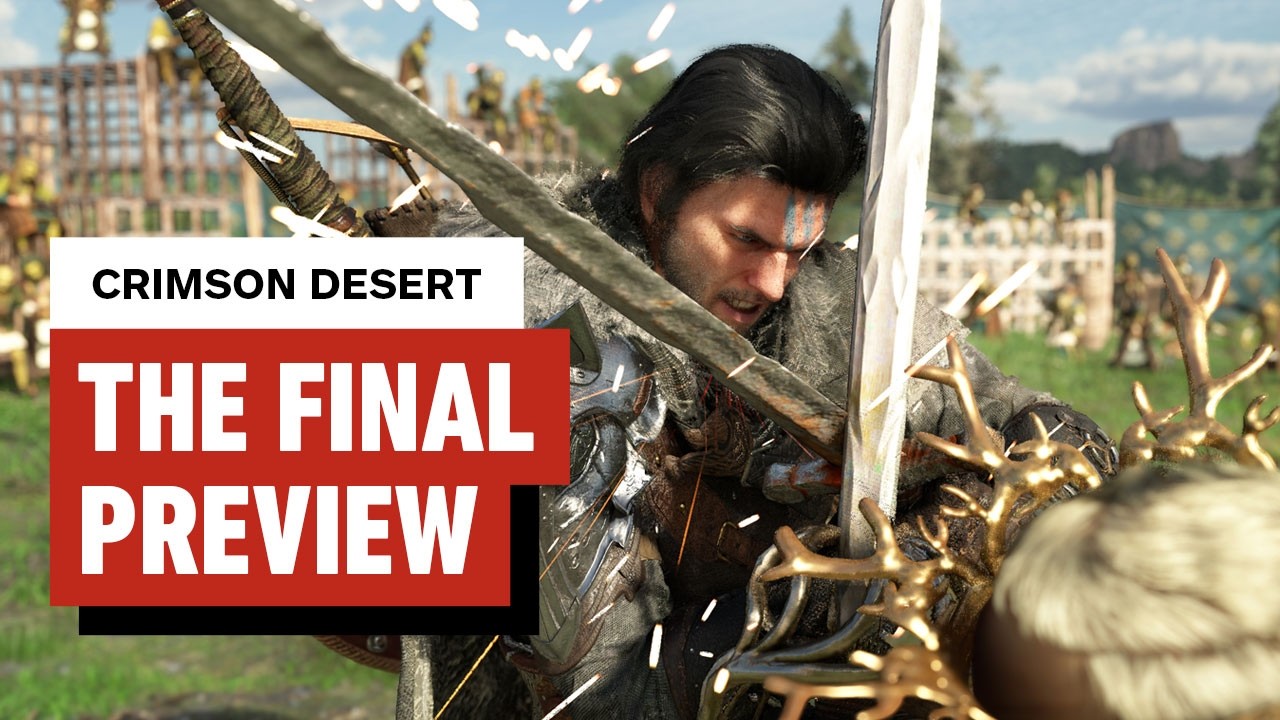
Crimson Desert just logged one of its sharpest weeks on the board: surging to the top of the Steam revenue charts while its most dedicated operators are already reporting an endgame content void. On one axis, Pearl Abyss has successfully positioned crimson desert as a must-play premium action RPG; on the other, its progression and encounter pipelines are being stress-tested by players who burn through content faster than the current deployment cadence can sustain.
From a #gamedev and systems design perspective, this week’s intel highlights three pressure points: the late-game elemental imbuement layer, high-value gear acquisition routes, and a looming question around scalable endgame loops. For #indiegame teams watching from the sidelines, Crimson Desert is rapidly becoming a live case study in how aggressive combat design and progression pacing collide at scale.
Market Pulse: Steam Revenue Apex, Meta Risk
A fresh Steam market scan flags Crimson Desert as the top earner in the non-F2P segment, outpacing Slay the Spire 2 and Resident Evil 4 and holding lane against tactical risers like Gray Zone Warfare and ARC Raiders. That revenue apex sends a clear signal: the launch window positioning, visual fidelity, and combat-forward marketing are converting awareness into sales.
But high revenue plus a hardcore community that’s “out of things to kill” is a double-edged sword. The faster top-tier players hit the ceiling, the faster sentiment can pivot from “must-buy” to “wait for more content.” For live-ops minded studios, this is the classic retention trap: front-loaded spectacle, back-loaded uncertainty.
Watch: Transmitting Gameplay footage from the field: Official Crimson Desert systems & world trailer
Systems Intel: Elemental Imbuement as Late-Game Force Multiplier
Field reports confirm that elemental imbuement in Crimson Desert is positioned as a late-game force multiplier rather than a baseline combat tool. Operators must first unlock the elemental matrix, then gradually imbue weapons and gear to align with enemy resistances, environmental modifiers, and encounter archetypes.
From a design lens, this effectively treats each element as a distinct weapons platform:
1. Elemental Matrix Unlock as Progression Gate
Requiring players to unlock the elemental matrix before accessing full imbuement depth creates a clear mid-to-late-game inflection point. The upside: it gives designers a moment to pivot combat complexity upward, layering in status interactions and counter-play. The risk: if the unlock comes too late relative to playtime, many players will only experience the system in a compressed window before they hit the current endgame wall.
For developers, this is a pacing lesson: powerful systemic layers should arrive early enough that players can iterate, fail, and optimize over dozens of hours—not just at the tail end of a content funnel.
2. Loadout Calibration and Encounter Design
The intel frames elemental choices as pre-deployment calibration: you tune your kit before stepping into high-threat zones. This is fertile ground for encounter design—rotating elemental weaknesses, environmental hazards that reward specific builds, and boss patterns that punish loadout complacency.
However, this only pays off if encounter variety is deep and persistent. With elite players already reporting an absence of worthwhile targets, the elemental sandbox risks becoming theoretical: a robust system with too few meaningful contexts to exploit it.
Gear Economy: Spada Sword & Drake Shield as Anchor Assets
Another data point from the week: targeted guides for acquiring the Spada Sword and Drake Shield are gaining traction. These two melee assets are being treated as frontline anchors—high-value items that justify dedicated operations, optimized routing, and risk-managed resource expenditure.
From a #gamedev economy standpoint, this is healthy: players are willing to invest time and effort into specific gear pursuits. But it also reveals a dependency: when a small set of items becomes the de facto endgame chase, the loot table starts to feel shallow. For long-term retention, Crimson Desert will need more horizontal diversification—sets, exotics, and sidegrade archetypes that keep the acquisition game interesting even after the “meta pair” is secured.
Endgame Void: “Nothing Left to Kill” and Content Throughput
The most alarming signal this week: hardcore Crimson Desert operatives report that they’ve efficiently purged available high-level hostiles, triggering the sentiment that there’s “nothing left to kill.” Engagement curves are spiking early as players tear through handcrafted content, then flatlining once the final boss and top-tier hunts are cleared.
From a development update perspective, this exposes a familiar structural gap:
- Finite authored content vs. infinite player throughput – Highly optimized players will always outpace scripted encounters.
- Lack of scalable loops – Without repeatable systems (roguelite dungeons, procedural contracts, dynamic world events), the world feels “solved” too quickly.
- Power fantasy without friction – Once players master the elemental matrix and secure top-tier gear like the Spada Sword and Drake Shield, the remaining content doesn’t seem tuned to challenge their new power band.
For other studios, especially #indiegame teams, Crimson Desert is a live warning: if your combat model is this expressive and your progression this rewarding, your endgame must be architected as a system, not a content checklist.
Command Recommendations: How Crimson Desert Can Stabilize the Meta
If Pearl Abyss wants to convert its current Steam revenue lead into long-horizon stability, several tactical moves stand out:
1. Accelerate Deployment of Scalable Endgame Targets
The community’s call for more to kill isn’t just about volume—it’s about systems. High-yield fixes could include:
- Rotating hunt boards with escalating difficulty tiers.
- Elementally-tuned boss variants that hard-counter specific loadouts.
- Dynamic, map-wide incursions that force rapid reconfiguration of elemental setups.
2. Deepen the Elemental Sandbox
To fully capitalize on the elemental matrix:
- Introduce cross-element synergies (combo effects, chain reactions, environmental overrides).
- Design encounters that explicitly reward multi-element loadouts over single-element min-maxing.
- Surface clearer feedback loops so players understand why a given elemental configuration is outperforming.
3. Broaden the High-End Gear Chase
Anchor items like the Spada Sword and Drake Shield are a strong foundation, but the chase needs:
- Multiple viable endgame builds per archetype.
- Cosmetic and prestige layers tied to difficult encounters.
- Long-tail progression (mastery ranks, augment slots) that extend the life of existing gear.
Closing Readout
This week, Crimson Desert sits at a volatile intersection: commercial success, mechanical promise, and a rapidly forming endgame content gap. For #gamedev observers, it’s a high-budget demonstration of what happens when a powerful combat core and progression model outstrip the current content pipeline.
If Pearl Abyss can quickly stand up scalable endgame loops that truly leverage its elemental systems and gear economy, crimson desert can transition from launch spectacle to sustained ecosystem. If not, the phrase “nothing left to kill” may become the community’s shorthand for a missed opportunity in otherwise standout open-world action design.
Sources and corrections
This archive entry does not have a verified article-source list. Images and video embeds alone are not evidence for every claim.
Found an error? Request a correction. Include the passage and a supporting source.
Your games, in one place
Keep up with Crimson Desert
Follow this game to collect its posts in your personal feed. Come back to see what you missed.