Automated archive / Crimson Desert
Crimson Desert’s Endgame Crunch, Combat Ceiling, and Pet-Supported Power Curve
Crimson Desert has stabilized post-patch and surged to the top of Steam’s revenue charts, but its most dedicated players are already hitting an endgame content wall. This week’s intel tracks the rising combat skill ceiling, traversal exploits, pet systems, and what Pearl Abyss must do next to keep the desert from...
AI-generated summary. This archive article does not have a current recorded source check. Check linked sources before relying on details. Editorial policy
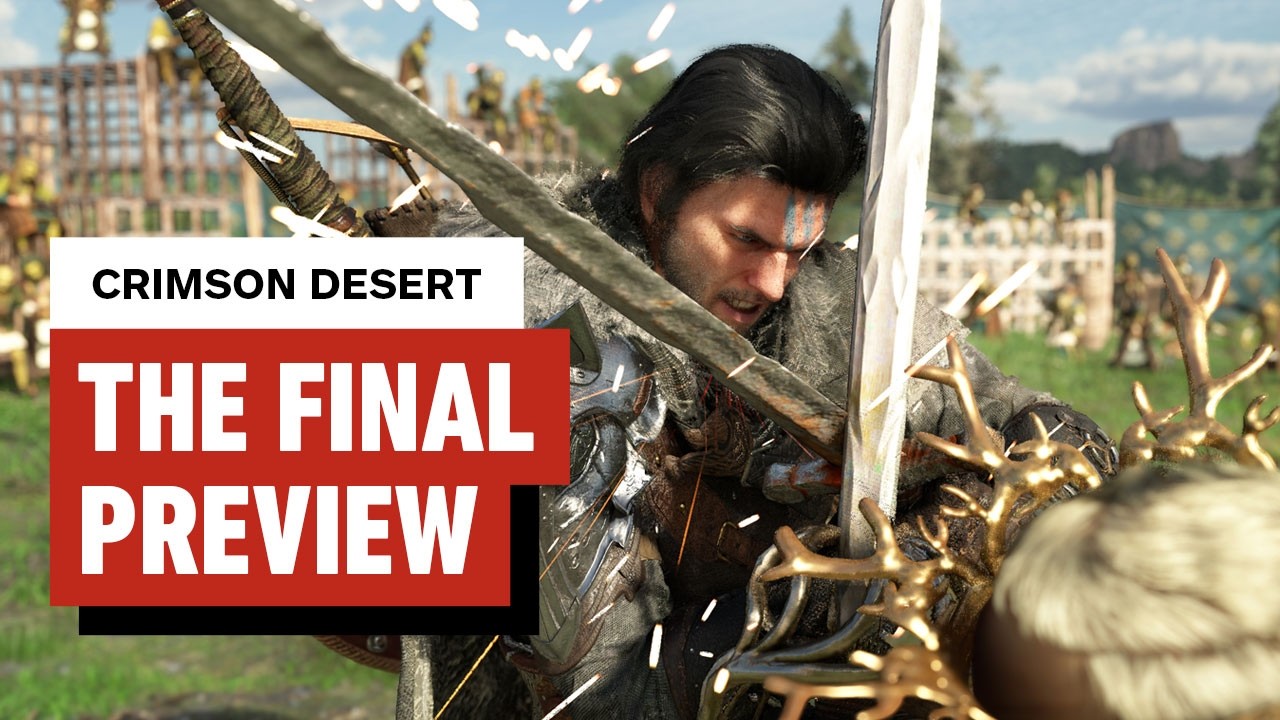
Strategic Overview: Crimson Desert Surges, Then Hits Ceiling
Crimson Desert just closed out one of its strongest weeks on Steam, topping revenue charts for March 24–31 and reversing early turbulence with Patch 1.01. Concurrency and review sentiment are climbing, suggesting the core loop and combat fantasy have landed with players. But on the high-skill front line, a new problem is emerging: the fastest operators are burning through targets so efficiently that endgame content density can’t keep up.
For Pearl Abyss, this is a high-class but urgent problem. The game’s systems are clearly resonating—advanced combat tech, traversal exploits, and build optimization are all being pushed to their limits. Yet the same mastery that drives positive buzz is now exposing a late-game void that could threaten long-term retention if not addressed with a robust development update.
Endgame Void: “Nothing Left to Kill”
Field intel from hardcore Crimson Desert operatives is blunt: after a rapid push through campaign and side content, they’re running out of meaningful enemies and scalable challenges. Engagement curves spike during the first 30–50 hours, then flatten as elite players outpace the current content pipeline.
From a #gamedev perspective, this is a classic throughput mismatch:
- Content burn vs. production cadence – High-intensity combat and generous mobility let players clear regions faster than traditional open-world pacing models assume.
- Lack of scalable endgame loops – Once bosses and major encounters are down, there’s limited systemic replay—no clear equivalent of tiered dungeons, rotating world bosses, or escalating modifiers.
Actionable design vectors Pearl Abyss could consider in future patches:
- Procedural or semi-randomized combat gauntlets that remix elite enemy packs and environmental hazards.
- Rotating “warfront” events that temporarily spike enemy density and difficulty in specific regions.
- Boss remixes and EX variants tuned around advanced combat tech (juggles, cancels, grapples) with leaderboard integration.
The upside: the “nothing left to kill” complaint confirms that Crimson Desert’s combat is compelling enough that players simply want more of it.
Combat Systems: High-APM Sandbox With Serious Skill Expression
Recent advanced combat breakdowns frame Crimson Desert less as a conventional action-RPG and more as a live physics lab with blades. Players are dissecting frame data, cancel windows, aerial juggles, grappling chains, and environmental finishers to create bespoke, high-APM routes through encounters.
Key takeaways for designers and #indiegame teams studying Crimson Desert:
- System depth pays off fast – When combat offers layered mechanics (juggles, grapples, finishers), the community will self-organize around tech discovery and optimization.
- Encounter readability matters – Bosses like Saigord the Staglord are being solved through pattern recognition and strict dodge timing, reinforcing the importance of clear telegraphs and punish windows.
- Skill ceiling drives content demand – The more expressive the toolkit, the faster top players will chew through static encounter libraries.
From a live-ops standpoint, Pearl Abyss now needs to feed that ceiling: advanced training arenas, combo challenges, and score-attack modes could transform combat mastery into a long-term progression layer.
Traversal Meta: Focus Glitch and the Speedrunner Economy
Aerial momentum exploits built around the Focus mechanic are reshaping Crimson Desert’s traversal meta. By chaining Focus with mid-air directional inputs, players are converting stamina into extreme horizontal velocity, effectively turning glides into high-speed insertion routes.
This has three major implications:
- Routing compression – Travel time between objectives plummets, accelerating content burn and amplifying the endgame void.
- Speedrun culture ignition – Any open-world game with a repeatable movement exploit becomes instant speedrunner bait, which is great for visibility but tricky for balance.
- Design fork for the dev team – Either normalize the tech (fold it into a sanctioned advanced movement tier) or patch it out and risk friction with the high-skill community.
For now, this Focus glitch is effectively an unofficial fast-travel upgrade. How Pearl Abyss responds will signal its broader philosophy on emergent tech.
Gear Progression: Spada Sword, Drake Shield, and the Power Curve
Guides around the Spada Sword and Drake Shield are trending, underscoring how tightly players are optimizing their frontline loadouts. These items function as early-to-mid game power spikes that smooth out difficulty curves and enable more aggressive play.
Design-wise, this reflects a healthy gear ecosystem:
- Clear chase items with defined routes and prerequisites.
- Low “resource bleed” acquisition paths that reward knowledge more than grind.
- Synergy with advanced combat – Strong shields and blades encourage players to push into riskier, more expressive play patterns.
To extend longevity, Pearl Abyss could expand this philosophy into late-game relics with conditional perks (e.g., bonuses tied to juggle length, perfect dodges, or environmental kills).
Cognitive Play: The Weight of Knowledge and Quest Logic
The “Contradiction” segment of The Weight of Knowledge quest shows Crimson Desert experimenting with cognitive gameplay—dialogue puzzles, testimony parsing, and logic-based progression. Community guides mapping every correct answer path indicate two things:
- Players value narrative puzzles but are quick to seek optimized routes when failure feels like a soft-lock risk.
- Quest logic must be robust – Patch 1.01’s focus on quest bug fixes and soft-lock reduction suggests Pearl Abyss is already reinforcing this layer.
For long-term health, maintaining a clean logic layer is critical. Nothing kills momentum faster than a broken quest in a story-driven open world.
Companions and Utility Systems: Dogs, Pets, and Player Retention
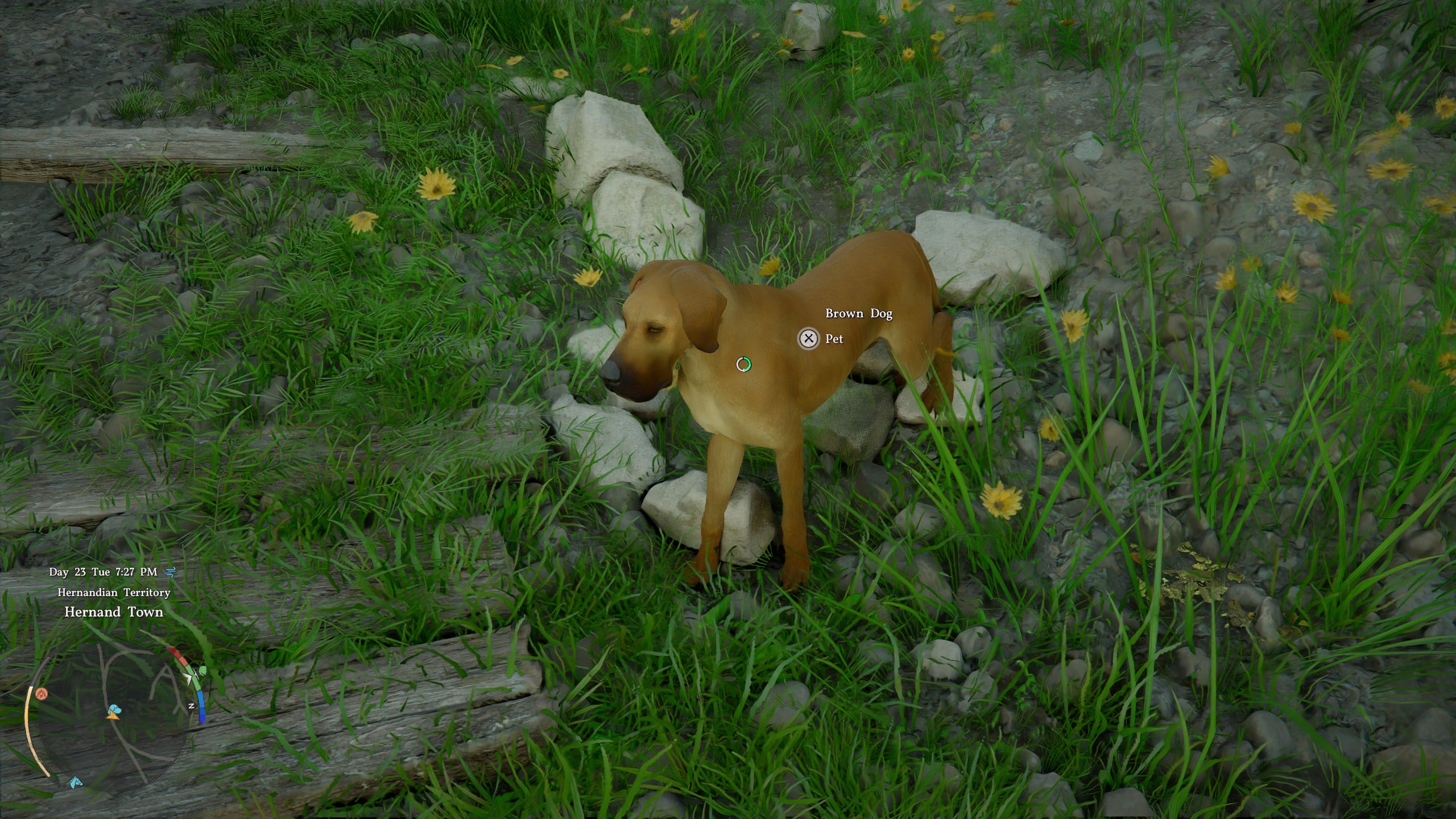
One of the week’s most-circulated guides revolves around taking in the Brown Dog and unlocking pet systems. On paper, pets are utility features—loot pickup, exploration support, and visual clarity. In practice, they’re also powerful emotional anchors.
By tying pets to light “trust” mechanics—feeding, interaction, and morale—Crimson Desert adds a low-friction, high-affinity system that keeps players engaged between major combat beats. For #gamedev teams, this is a reminder that:
- Soft systems matter – Not every retention mechanic has to be a dungeon or raid; sometimes it’s a dog that quietly optimizes your run.
- Cosmetic + utility hybrids (cute but mechanically useful) are sticky in ways pure cosmetics often aren’t.
Patch 1.01: Stabilization Before Escalation
Patch 1.01 has acted as a systems recalibration pass: combat tuning, performance stabilization, and quest logic fixes have all landed well enough to drive a measurable uptick in Steam player counts and review scores. The core tech stack now appears stable enough to support more ambitious live-ops moves.
Strategically, Pearl Abyss is entering a crucial window:
- Short term (1–2 patches) – Shore up bugs, refine balance, and decide how to handle emergent exploits like the Focus flight glitch.
- Medium term (3–6 months) – Deploy repeatable, scalable endgame content that respects the current combat skill ceiling and traversal tech.
- Long term (beyond 6 months) – Consider systemic expansions: new combat styles, AI behaviors, and world events that can be reused and recombined rather than one-and-done set pieces.
From a market perspective, Crimson Desert has momentum, visibility, and a passionate high-skill player base. The next wave of development updates will determine whether it settles into a strong single-player action-RPG with a finite tail, or evolves into a sustained platform for combat experimentation and systemic storytelling.
For now, the signal is clear: players love the fight, and they’re ready for the war to escalate.
Sources and corrections
This archive entry does not have a verified article-source list. Images and video embeds alone are not evidence for every claim.
Found an error? Request a correction. Include the passage and a supporting source.
Your games, in one place
Keep up with Crimson Desert
Follow this game to collect its posts in your personal feed. Come back to see what you missed.