Automated archive / Crimson Desert
Crimson Desert Sector Intelligence: Patches, AI Art Fallout, and a 3 Million Unit Power Play
Crimson Desert just turned a brutal launch window into a live-fire recovery exercise, stabilizing performance, climbing to a “Mostly Positive” Steam rating, and crossing 3 million units sold. But an AI art breach and a maximalist design philosophy mean Pearl Abyss is still fighting on both technical and ethical fronts.
AI-generated summary. This archive article does not have a current recorded source check. Check linked sources before relying on details. Editorial policy
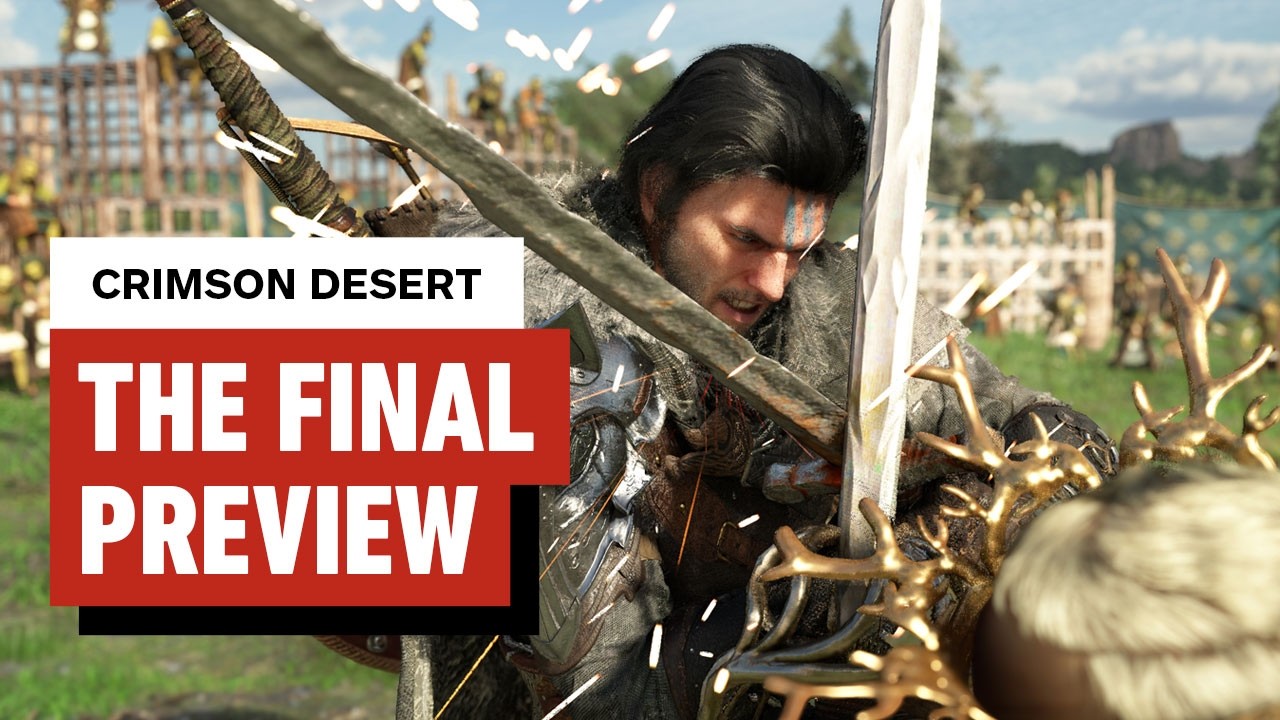
Sector Overview: From Turbulence to Tactical Stability
Crimson Desert has just wrapped one of its most volatile weeks since launch. In seven days, Pearl Abyss has:
- Shipped a major stabilization patch (1.00.03),
- Crossed 3 million units sold worldwide,
- Clawed its way to a “Mostly Positive” Steam rating after early backlash,
- And been forced into a public-facing AI art audit after generative assets were found in the game.
This is not a quiet post-launch tail. It’s an active firefight where technical triage, community trust, and systemic depth are all under live review.
Market Telemetry: Sales, Stock, and Sentiment
3 Million Units and Steam Revenue Dominance
Pearl Abyss reports over 3 million copies of Crimson Desert deployed globally, a figure that immediately fed back into the stock market. After an initial 30% share price drop triggered by harsh launch reviews, the publisher’s valuation is now stabilizing as sales and post-launch support demonstrate staying power.
On Steam, Crimson Desert has hit 239,045 concurrent players and secured the top slot in the 17–24 March 2026 revenue rankings, beating out Slay the Spire 2, Death Stranding 2, Call of Duty: Modern Warfare, and Helldivers 2. That’s a clear signal: whatever the critical discourse, player curiosity and engagement remain high.
Sentiment Shift: From Backlash to “Mostly Positive”
Early PC backlash framed Crimson Desert as another visually ambitious but technically unstable open-world. That narrative is starting to fracture:
- A major corrective patch dramatically reduced crashes and performance anomalies.
- Steam user reviews have recalibrated to “Mostly Positive”, suggesting the worst technical pain points have been triaged.
The baseline is still described by many as a “visually extravagant, combat-forward open world running on unstable systems”—but the worst fires are out, and the conversation is moving from “Is this broken?” to “Is this for me?”
Development Update: Patch 1.00.03 and Control Overhaul
Combat, Controls, and Stability
Patch 1.00.03 is the week’s central #gamedev story. Pearl Abyss has:
- Tuned combat flow and AI responsiveness, smoothing out janky reads and animation hitches.
- Improved control responsiveness, especially crucial in a game where dodge timing and stamina discipline are survival mechanics.
- Reduced crash frequency in key hotspots.
- Expanded item storage options, easing the inventory friction that was quietly sabotaging pacing.
This isn’t content expansion; it’s a platform patch—the kind of foundational work you do when you intend to support a world long-term.
AI Art Breach: Trust, Pipelines, and Policy Risk
The other major development update is less flattering. Pearl Abyss has confirmed that AI-generated art slipped into Crimson Desert, both in a recent showcase and in shipped assets. The studio has:
- Issued a public apology,
- Initiated a “comprehensive audit” of all in-game assets,
- Committed to purging unintended generative content.
From a #gamedev and #indiegame perspective, this is a canary-in-the-mine moment. The incident highlights three fault lines:
- Pipeline Governance – Tooling and review processes weren’t robust enough to flag AI artifacts before they hit public builds.
- Creative Labor Optics – In a climate already tense around AI and artistic authorship, even “accidental” inclusion is reputationally radioactive.
- Live-Service Risk – Any future content drops will be scrutinized not just for bugs and balance, but for asset provenance.
Pearl Abyss’ rapid pivot to a full-spectrum audit is damage control, but it also sets a precedent: AI policy is now a front-line production concern, not a back-office experiment.
Systems Intel: A Sandbox of Overlapping Loops
Combat: Pattern Recognition Over Panic Rolling
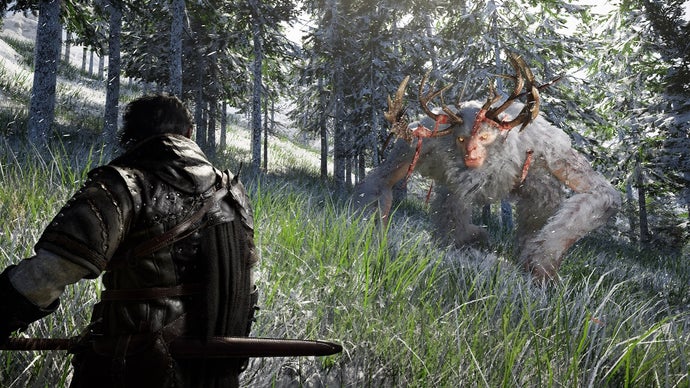
Field guides this week zero in on bosses like Excavatron, Reed Devil, Crimson Nightmare, and Tenebrum. The throughline is clear: Crimson Desert’s big encounters are pattern-bound puzzles, not stat checks.
- Stamina discipline and positional awareness are repeatedly cited as the difference between chaos and a “scripted execution loop.”
- Bosses lean on wide AoE chains and multi-phase cadences, forcing players to treat each phase as a discrete problem to solve.
This reinforces the game’s identity as a combat sandbox first, RPG second—a design choice that will appeal to some and alienate others.
Logistics: Fast Travel as a Resource, Not a Menu
Multiple reports dissect the game’s fast travel and traversal systems:
- Fast travel is framed as a “layered logistics network”, not a free teleport.
- Operators can snap back to their house as a tactical resupply node.
- Momentum-based slope sliding and mount routing turn terrain into a physics puzzle.
Movement in Crimson Desert is designed friction, not convenience. That’s a bold stance in an era of instant fast-travel, and it’s part of why the game feels dense rather than streamlined.
Economy: From Pickpocketing to Passive Income
The economic layer is quietly one of the game’s most intricate systems:
- Players can steal and pickpocket via social stealth, suspicion meters, and patrol pattern reading.
- Early-game money guides emphasize route-optimized gold generation and even free gold bar pickups.
- There’s a full-on investment loop—trade routes, livestock, properties, and regional businesses that generate passive silver while you’re off questing.
Taken together, Crimson Desert’s economy looks less like a simple loot treadmill and more like a hybrid of ARPG grinding and management sim portfolio play.
Companions, Fashion, and Mini-Systems
Other systems getting tactical breakdowns this week:
- Companion summoning and synchronized attacks, turning solo fights into squad-based skirmishes when properly timed.
- Fishing as a high-yield side economy, with guides treating each cast as a controlled experiment in timing and hotspot routing.
- Arm wrestling as a micro-DPS check about stability, not button mashing.
- Dyes and character customization as a kind of visual threat assessment, letting players broadcast build identity in a crowded battlefield.
This is consistent with the running joke in coverage: Crimson Desert’s standout feature is that it is, aggressively, Crimson Desert—a maximalist experiment in interaction density.
Watch: Transmitting Gameplay footage from the field: Official Xbox Play Anywhere cross-save trailer
Strategic Outlook: High-Fidelity Chaos With a Moving Baseline
From a sector intelligence standpoint, Crimson Desert is now defined by three intersecting vectors:
- Commercial Momentum – Top of Steam revenue, 3M units sold, and strong concurrency numbers argue that the game has already cleared the awareness hurdle.
- Technical Course Correction – Patch 1.00.03 and the Steam rating swing to “Mostly Positive” show a team willing to iterate fast on stability, controls, and UX friction.
- Pipeline Scrutiny – The AI art breach forces Pearl Abyss to harden its content pipeline in public. How transparently they handle this will shape long-term trust.
For players, the takeaway is simple: Crimson Desert is no longer a wait-and-see on basic functionality. The question now is whether its unapologetically chaotic blend of systems—cinematic melee, stealth, physics gags, economic sim, and traversal experiments—aligns with your tolerance for friction.
For #gamedev watchers, it’s a live case study in how a big-budget, non-indiegame sandbox can pivot from launch backlash to cautious optimism in a matter of weeks—provided it’s willing to patch hard, talk openly, and confront uncomfortable questions about how its world is actually made.
Sources and corrections
This archive entry does not have a verified article-source list. Images and video embeds alone are not evidence for every claim.
Found an error? Request a correction. Include the passage and a supporting source.
Your games, in one place
Keep up with Crimson Desert
Follow this game to collect its posts in your personal feed. Come back to see what you missed.